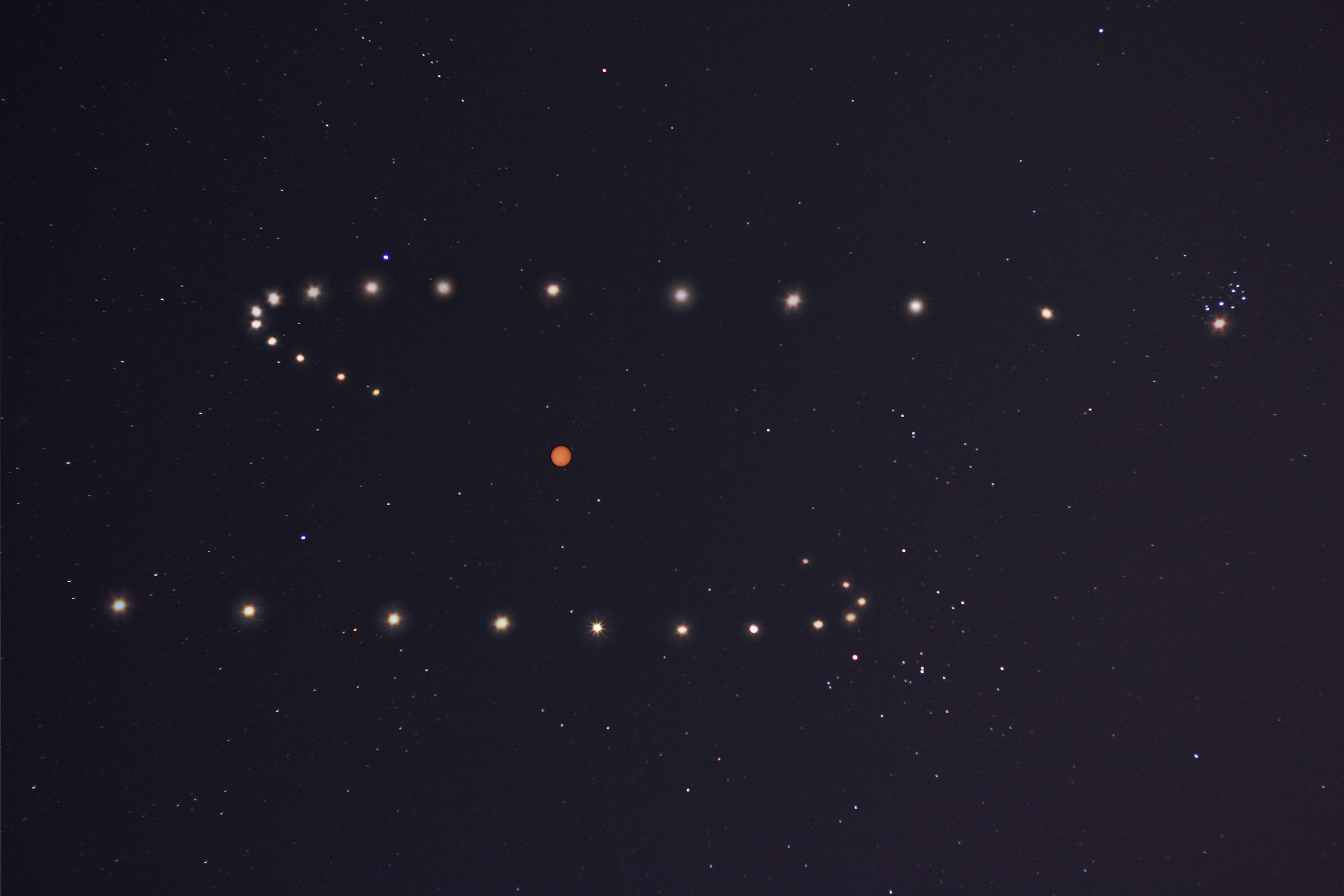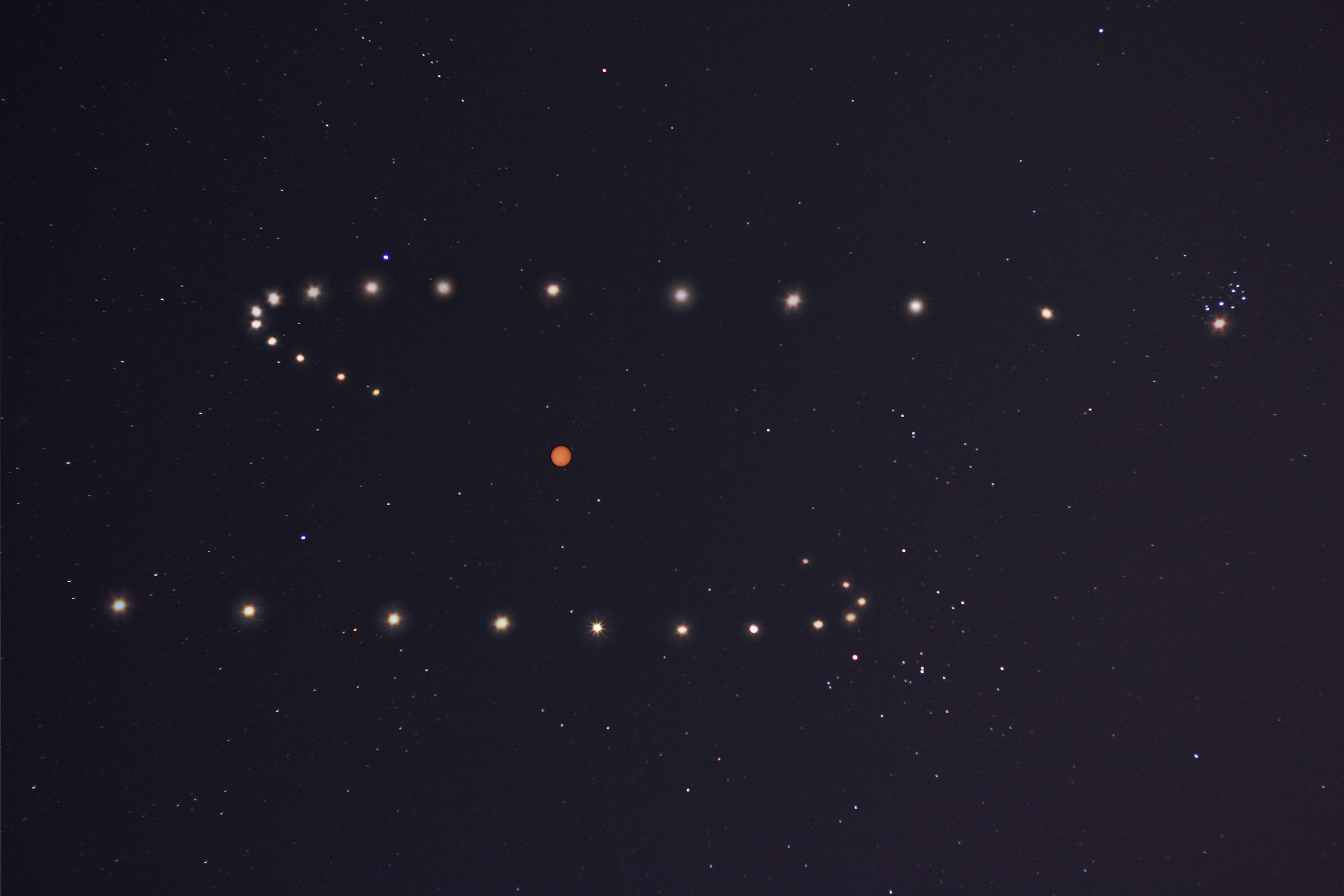
Planet Venus traced out this S shape in Earth's sky during 2004. Following the second planet from the Sun in a series of 29 images recorded from April 3rd through August 7th (top right to bottom left) of that year, astronomer Tunc Tezel constructed this composite illustrating the wandering planet's path against the background stars. The series reveals Venus' apparent retrograde motion transporting it from a brilliant evening star to morning's celestial beacon. Of course, in 2004, after sinking into the evening twilight but before rising above the predawn horizon, Venus was seen in silhouette against the Sun (near center) - the first transit of Venus since 1882. The next time Venus will wander across the solar disk is in 2012.
El planeta Venus trazó esta forma de S en el cielo de la Tierra durante 2004. Siguiendo al segundo planeta del Sol en una serie de 29 imágenes registradas del 3 de abril al 7 de agosto de ese año (de arriba a la derecha hacia abajo a la izquierda), el astrónomo Tunc Tezel construyó este composite que ilustra la trayectoria del planeta errante contra el fondo de estrellas. La serie revela el movimiento retrógrado aparente de Venus, transportándolo de una brillante estrella vespertina a la baliza celeste matutina. Por supuesto, en 2004, después de hundirse en el crepúsculo vespertino pero antes de elevarse sobre el horizonte previo al amanecer, Venus fue visto en silueta contra el Sol (cerca del centro) —el primer tránsito de Venus desde 1882. La próxima vez que Venus errará a través del disco solar será en 2012.