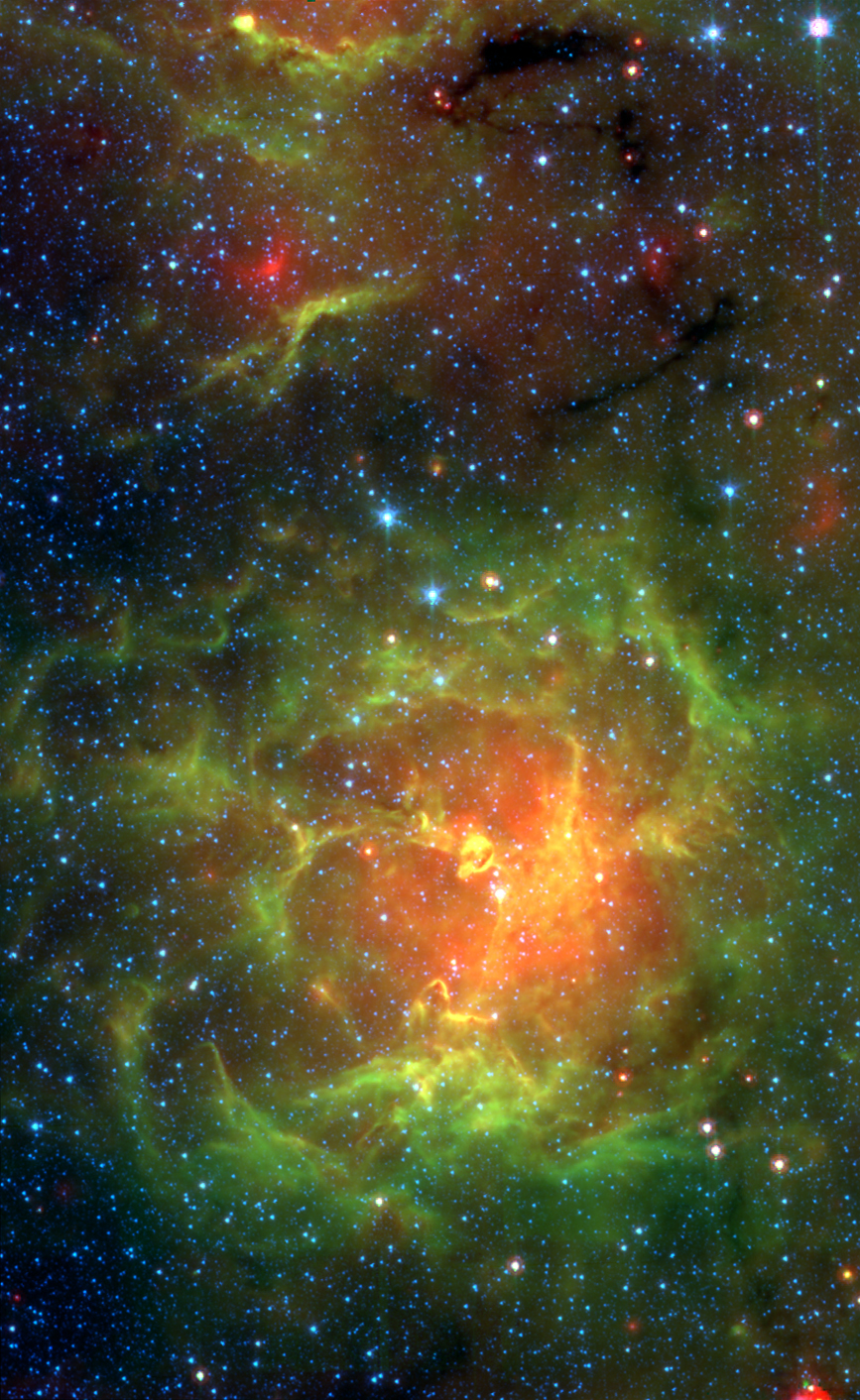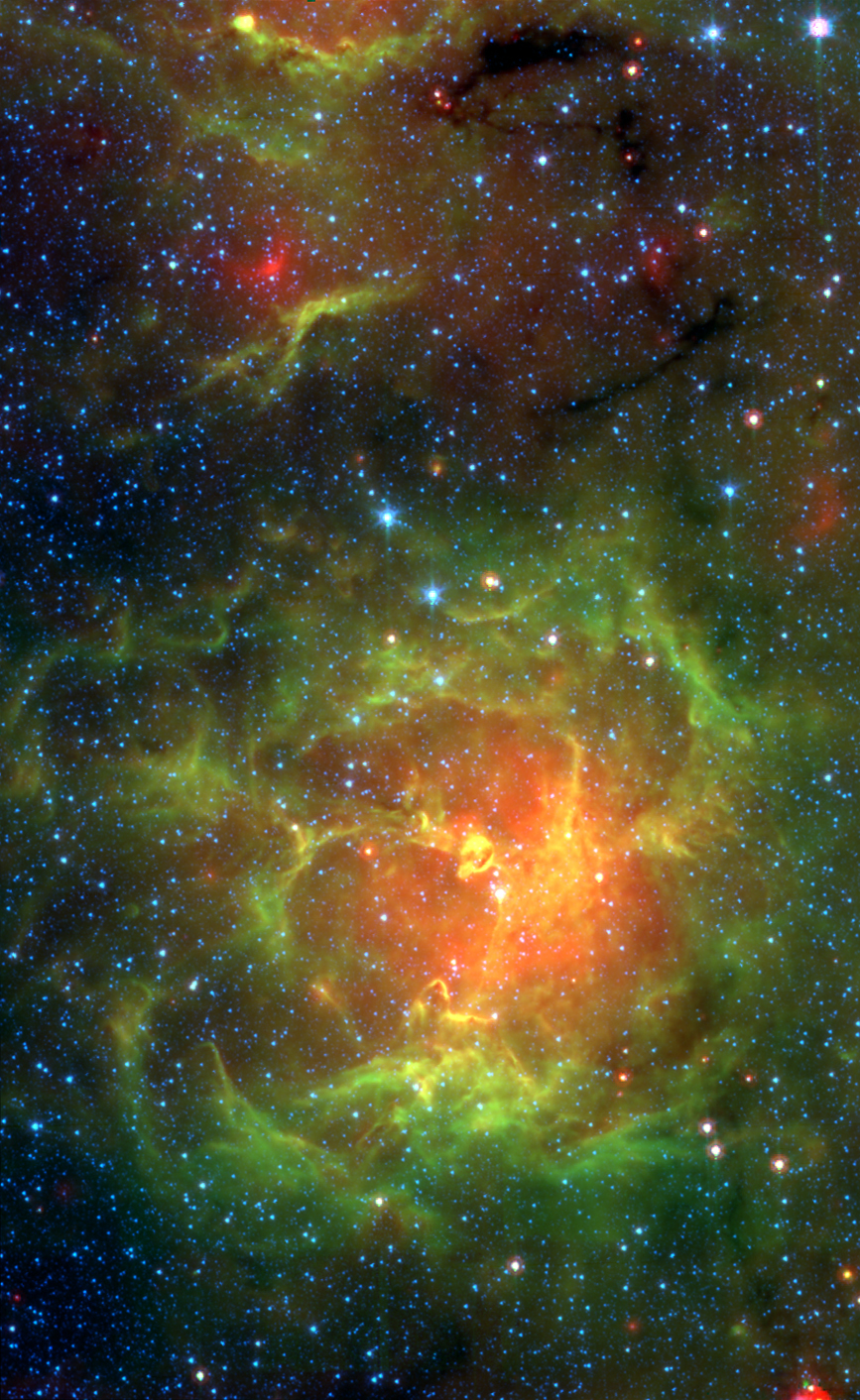
The Trifid Nebula, aka M20, is easy to find with a small telescope, a well known stop in the nebula rich constellation Sagittarius. But where visible light pictures show the nebula divided into three parts by dark, obscuring dust lanes, this penetrating infrared image reveals filaments of luminous gas and newborn stars. The spectacular false-color view is courtesy of the Spitzer Space Telescope. Astronomers have used the Spitzer infrared image data to count newborn and embryonic stars which otherwise can lie hidden in the natal dust and glowing clouds of this intriguing stellar nursery. As seen here, the Trifid is about 30 light-years across and lies only 5,500 light-years away. News: Huygens Probe Descends to Titan on Friday
La Nebulosa Trifida, también conocida como M20, es fácil de encontrar con un pequeño telescopio y constituye una parada bien conocida en la constelación de Sagitario, rica en nebulosas. Mientras que las imágenes en luz visible muestran la nebulosa dividida en tres partes por franjas de polvo oscuro y opaco, esta penetrante imagen infrarroja revela filamentos de gas luminoso y estrellas recién nacidas. Esta espectacular vista en falsos colores es cortesía del Telescopio Espacial Spitzer. Los astrónomos han utilizado los datos de la imagen infrarroja del Spitzer para contar las estrellas recién nacidas y embrionarias que de otro modo permanecerían ocultas en el polvo natal y las nubes luminosas de este fascinante vivero estelar. Como se puede apreciar aquí, la Trifida mide aproximadamente 30 años luz de diámetro y se encuentra a solo 5.500 años luz de distancia.