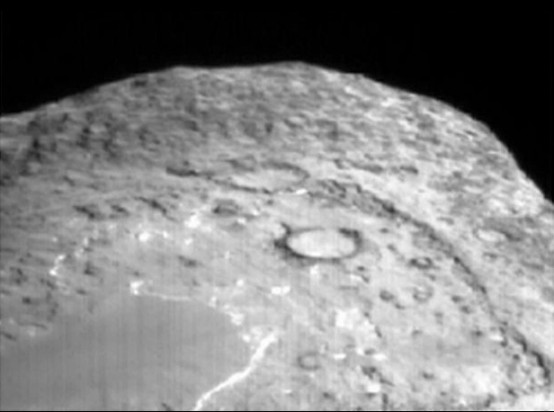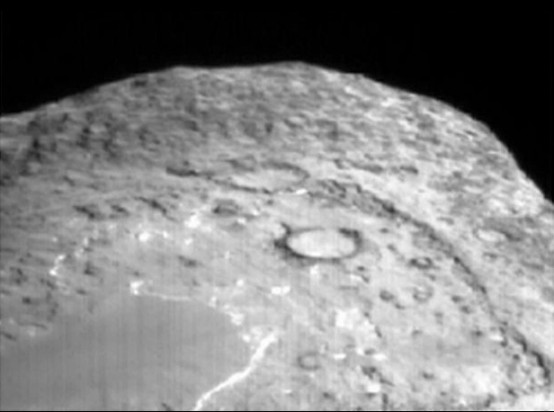
This diverse landscape is the surface of comet Temple 1's nucleus as seen by the Deep Impact probe's Impactor Targeting Sensor. Within minutes of recording the rugged view, the landscape had changed dramatically though, as the impactor smashed into the surface near the two large, half kilometer-sized craters at picture center. Indications are that the probe penetrated well below the surface before vaporizing, sending a relatively narrow plume of debris blasting back into space. Researchers are still speculating on the final size of the crater produced by the July 4th comet crash, but material continues to spew from the impact site and has caused the faint comet to brighten significantly. Determining the crater dimensions and analyzing the debris ejected from the comet's interior will provide premier insights into the formation of comet Tempel 1, a primordial chunk of our own solar system.
Este diverso paisaje es la superficie del núcleo del cometa Tempel 1 tal como fue visto por el Sensor de Orientación del Impactador de la sonda Deep Impact. Minutos después de registrar esta vista escabrosa, el paisaje cambió dramáticamente cuando el impactador se estrelló contra la superficie cerca de los dos grandes cráteres de aproximadamente medio kilómetro de diámetro en el centro de la imagen. Las indicaciones sugieren que la sonda penetró bien bajo la superficie antes de vaporizarse, enviando una columna relativamente estrecha de escombros disparada hacia el espacio. Los investigadores aún especulan sobre el tamaño final del cráter producido por el impacto del cometa del 4 de julio, pero el material continúa siendo expulsado del sitio del impacto y ha causado que el cometa, anteriormente débil, brille significativamente. Determinar las dimensiones del cráter y analizar los escombros eyectados del interior del cometa proporcionará perspectivas de primer orden sobre la formación del cometa Tempel 1, un fragmento primordial de nuestro propio sistema solar.