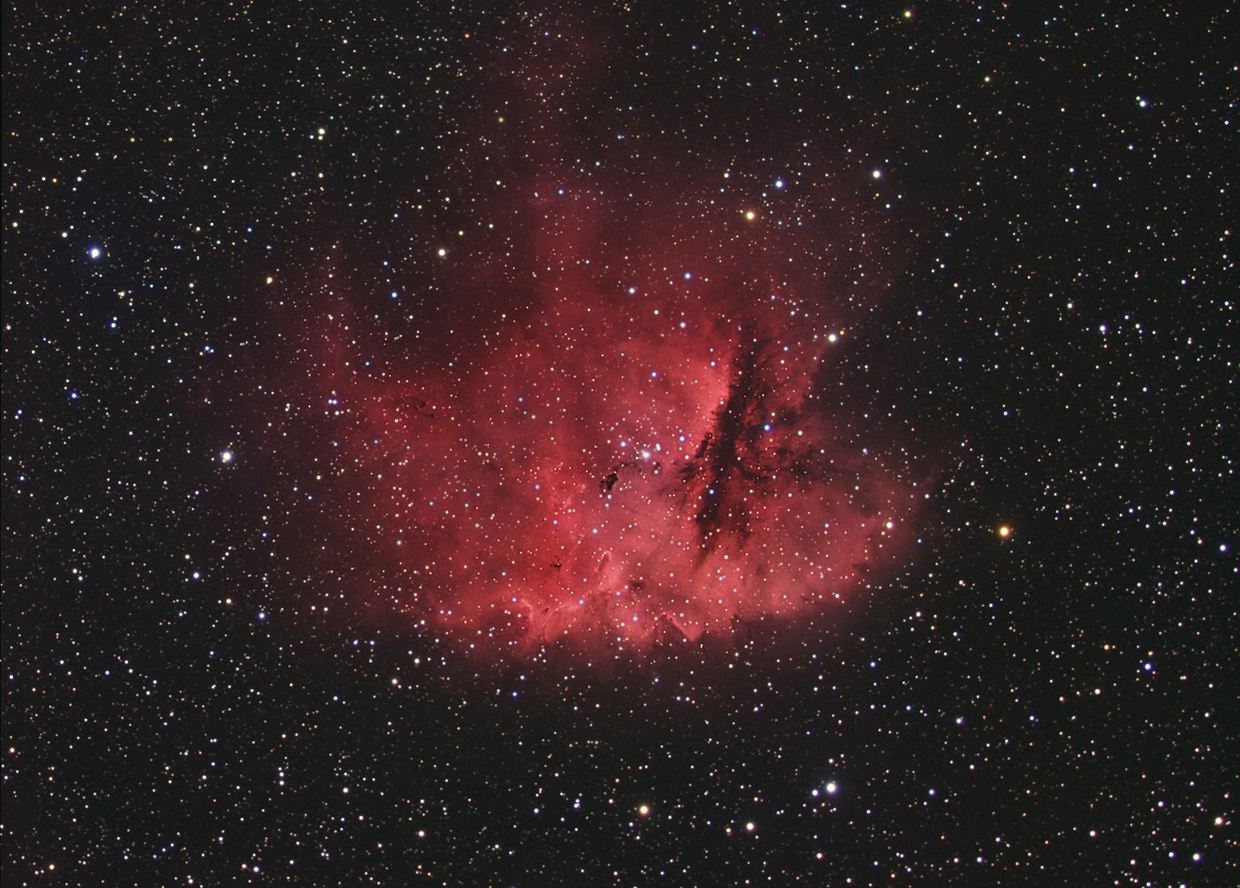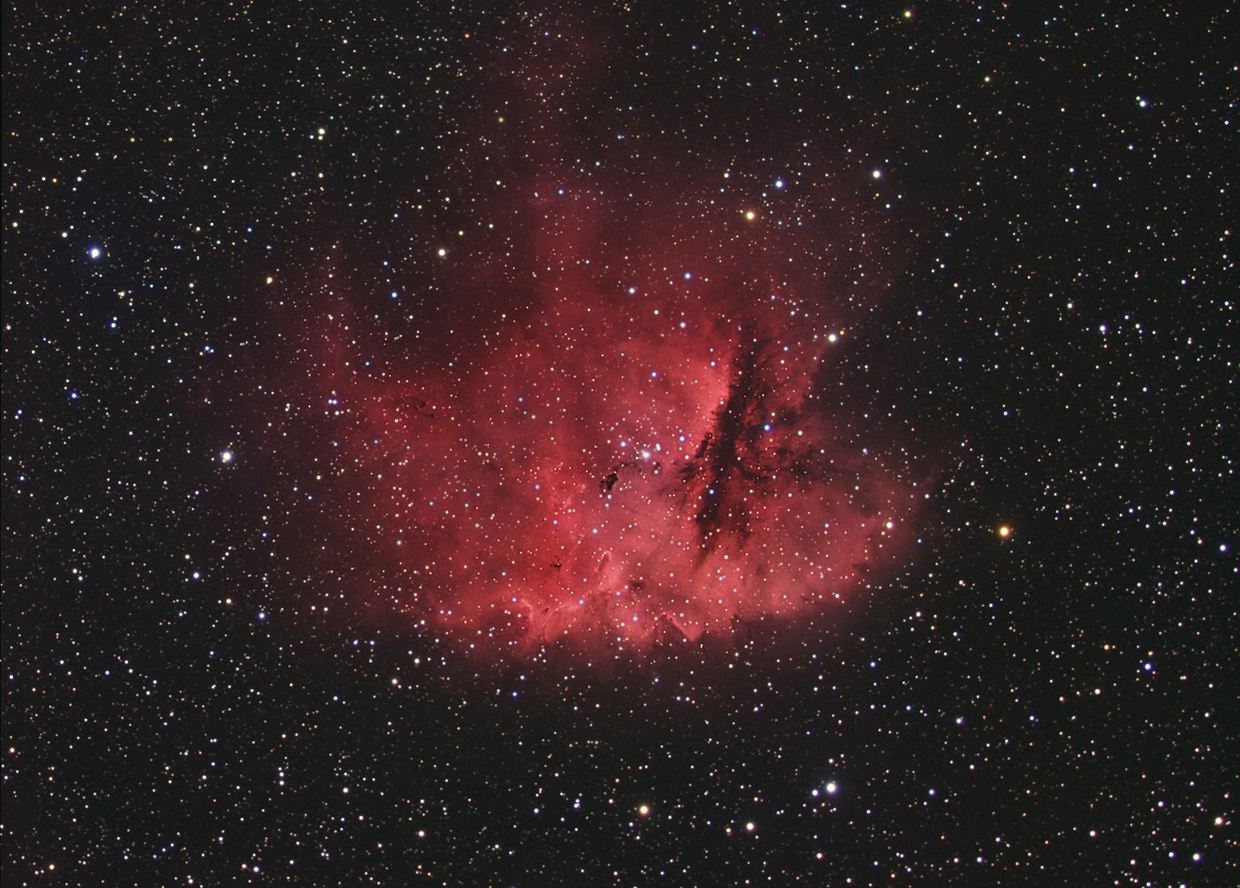
NGC 281 is a busy workshop of star formation. Prominent features include a small open cluster of stars, a diffuse red-glowing emission nebula, large lanes of obscuring gas and dust, and dense knots of dust and gas in which stars may still be forming. The open cluster of stars IC 1590 visible around the center has formed only in the last few million years. The brightest member of this cluster is actually a multiple-star system shining light that helps ionize the nebula's gas, causing the red glow visible throughout. The lanes of dust visible left of center are likely homes of future star formation. Particularly striking in the above photograph are the dark Bok globules visible against the bright nebula. The NGC 281 system, dubbed the Pacman nebula for its overall shape, lies about 10 thousand light years distant.
NGC 281 es un taller activo de formación estelar. Entre sus características prominentes se encuentran un pequeño cúmulo abierto de estrellas, una nebulosa de emisión difusa que brilla en rojo, grandes franjas de gas y polvo oscurecedor, y condensaciones densas de polvo y gas en las que aún pueden estar formándose estrellas. El cúmulo abierto de estrellas IC 1590, visible alrededor del centro, se ha formado solo en los últimos millones de años. El miembro más brillante de este cúmulo es en realidad un sistema de estrellas múltiples cuya luz ayuda a ionizar el gas de la nebulosa, causando el brillo rojo visible en toda ella. Las franjas de polvo visibles a la izquierda del centro son probablemente lugares de futuras formaciones estelares. Particularmente llamativas en la fotografía anterior son los glóbulos de Bok oscuros visibles contra la nebulosa brillante. El sistema NGC 281, denominado nebulosa Pacman por su forma general, se encuentra a aproximadamente 10 mil años luz de distancia.