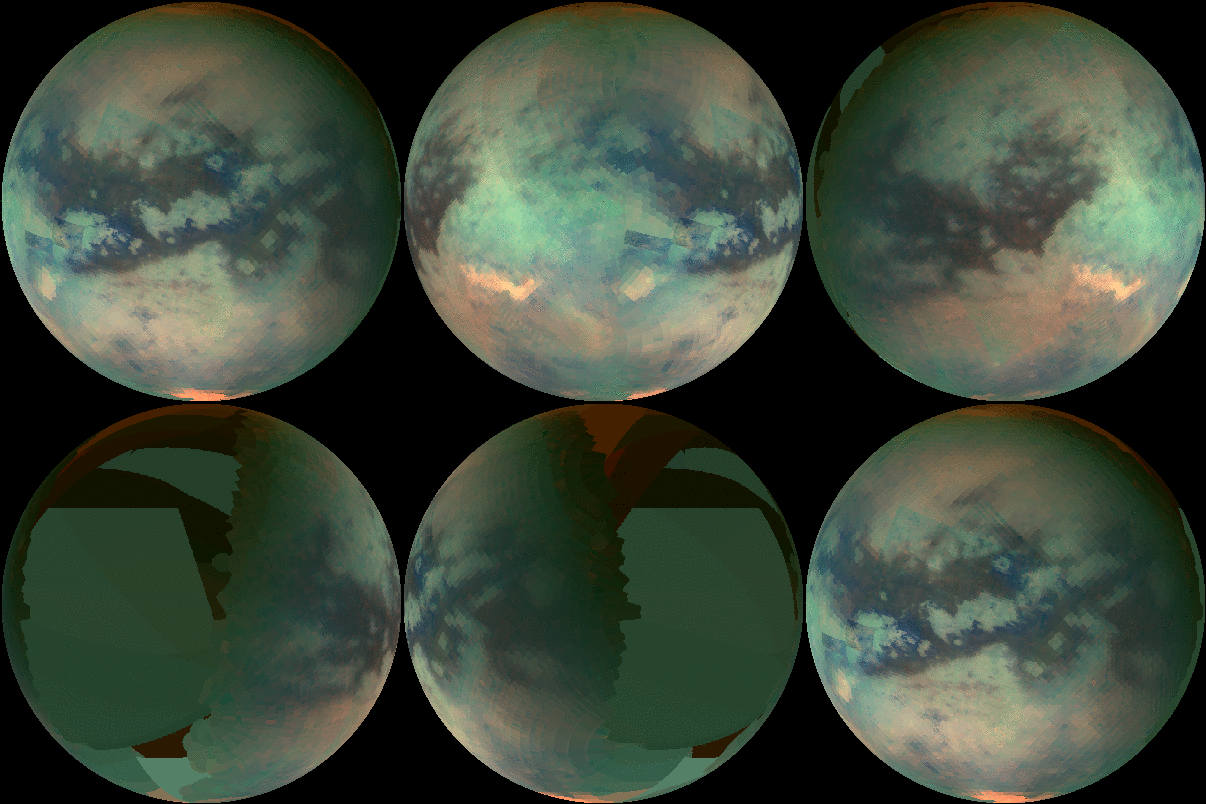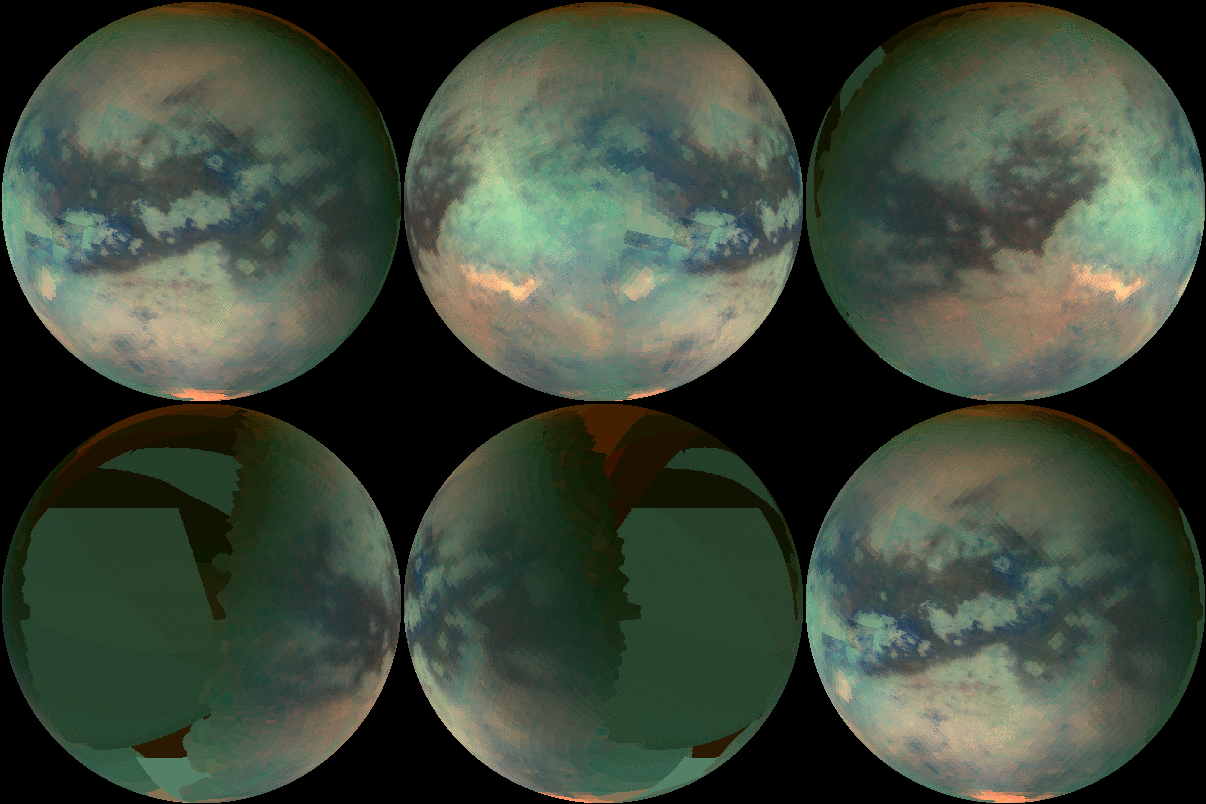
Titan is one of the strangest places in our Solar System. The only moon known with thick clouds, this unusual satellite of Saturn shows evidence of evaporating lakes created by methane rain. The clouds that make Titan featureless in visible light have now been pierced several times in infrared light by the robot Cassini spacecraft currently orbiting Saturn. These images have been compiled into the above time-lapse movie. Like Earth's Moon, Titan always shows the same face toward its central planet. It therefore takes Titan about 16 days to complete one rotation. Titan has numerous areas of light terrain with some large areas of dark terrain visible near the equator. Small areas of brightest terrain might arise from ice-volcanoes and have a high amount of reflective frozen water-ice. Titan's surface was imaged for the first time early last year by the Huygens probe, which survived for three hours on a cold and sandy dark region.
Titán es uno de los lugares más extraordinarios de nuestro Sistema Solar. El único satélite conocido con nubes densas, este satélite inusual de Saturno muestra evidencia de lagos evaporados creados por lluvia de metano. Las nubes que hacen que Titán sea sin características en luz visible han sido penetradas varias veces en luz infrarroja por la nave robótica Cassini, que actualmente orbita Saturno. Estas imágenes han sido compiladas en la película de lapso de tiempo anterior. Como la Luna terrestre, Titán siempre muestra la misma cara hacia su planeta central. Por lo tanto, le toma a Titán aproximadamente 16 días completar una rotación. Titán tiene numerosas áreas de terreno claro con algunas grandes áreas de terreno oscuro visible cerca del ecuador. Las pequeñas áreas de terreno más brillante podrían surgir de volcanes de hielo y tienen una alta cantidad de hielo de agua congelada reflectante. La superficie de Titán fue fotografiada por primera vez a principios del año pasado por la sonda Huygens, que sobrevivió durante tres horas en una región oscura, fría y arenosa.