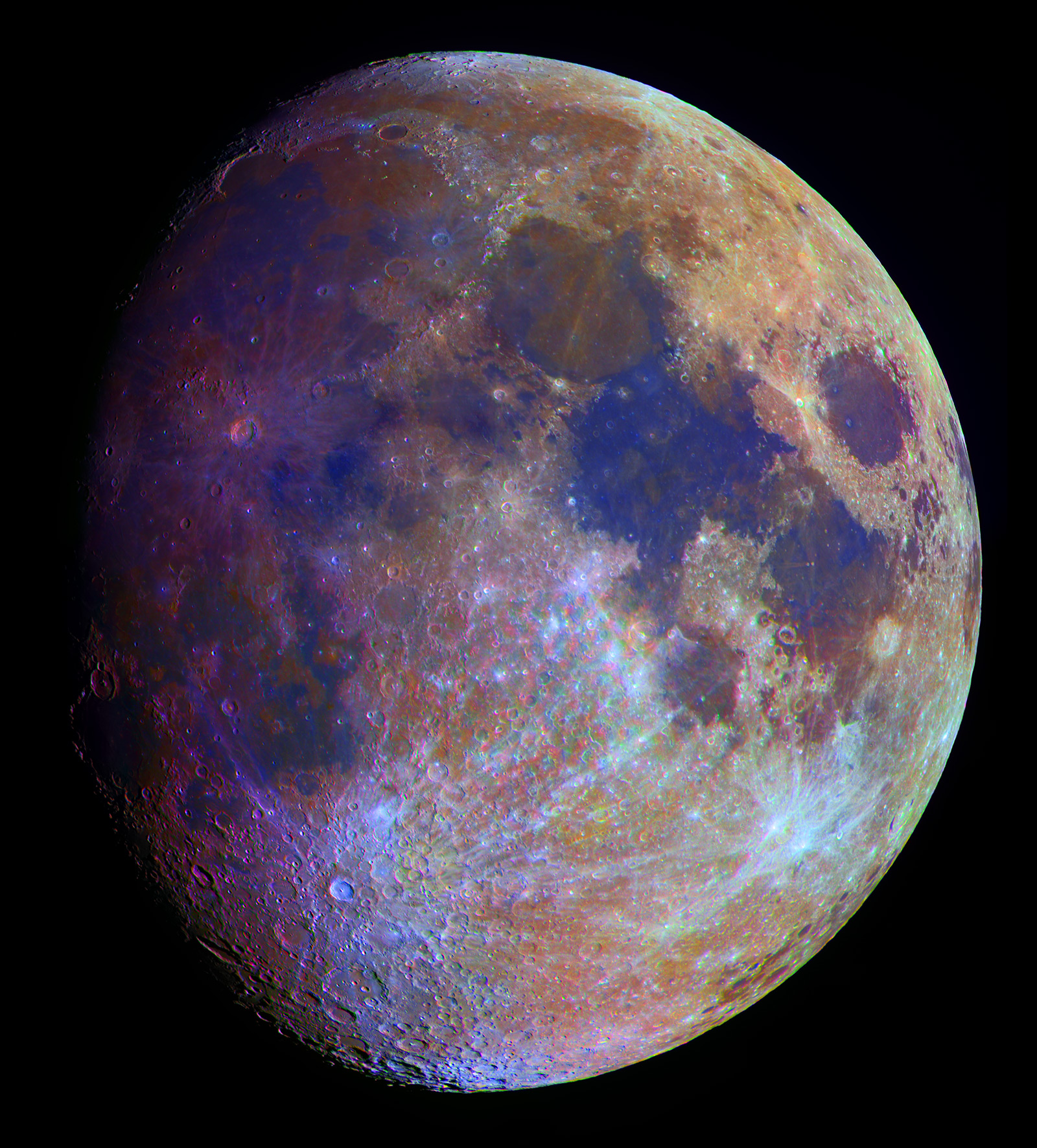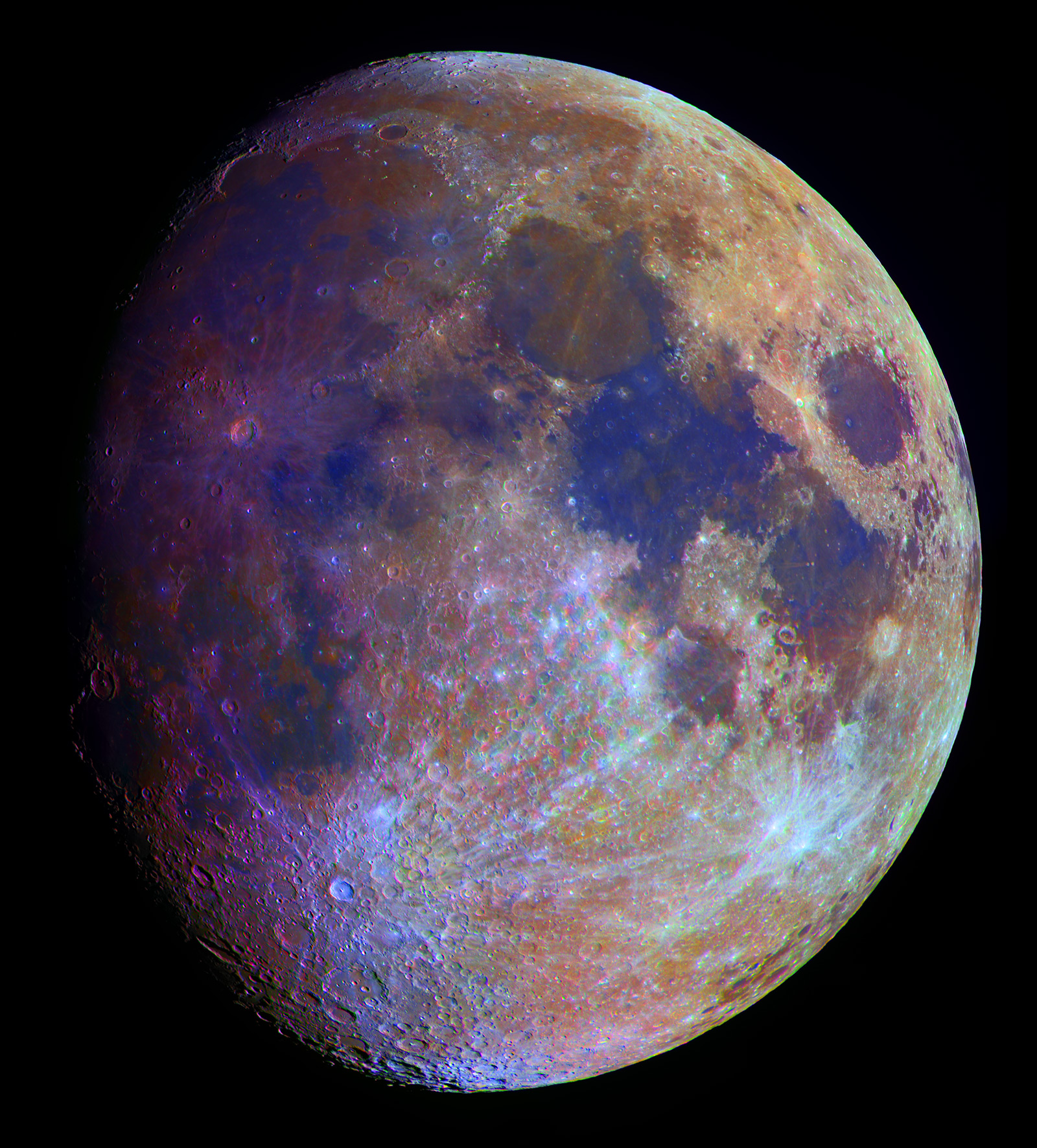
rth's Moon is normally seen in subtle shades of grey or yellow. But small color differences have been greatly exaggerated to make this dramatic mosaic image of the Moon's gibbous phase. The familiar Sea of Tranquility (Mare Tranquillitatis) is the blue area right of center. White lines radiate from the crater Tycho at bottom left, while purplish tones mottle the crater Copernicus left of center. Though exaggerated, the different colors are recognized to correspond to real differences in the chemical makeup of the lunar surface - blue hues reveal titanium rich areas while orange and purple colors show regions relatively poor in titanium and iron. Calibrated by rock samples from the Apollo missions, similar multicolor images from spacecraft have been used to explore the Moon's global surface composition.
La Luna de la Tierra normalmente se ve en tonos sutiles de gris o amarillo. Sin embargo, las pequeñas diferencias de color han sido enormemente exageradas para crear este dramático mosaico de la Luna en fase gibosa. El familiar Mar de la Tranquilidad (Mare Tranquillitatis) es el área azul a la derecha del centro. Líneas blancas irradian desde el cráter Tycho en la parte inferior izquierda, mientras que tonos púrpuras salpican el cráter Copérnico a la izquierda del centro. Aunque exagerados, se reconoce que los diferentes colores corresponden a diferencias reales en la composición química de la superficie lunar: los tonos azules revelan áreas ricas en titanio, mientras que los colores naranja y púrpura muestran regiones relativamente pobres en titanio y hierro. Calibradas por muestras de roca de las misiones Apolo, imágenes multicolores similares de naves espaciales se han utilizado para explorar la composición de la superficie global de la Luna.