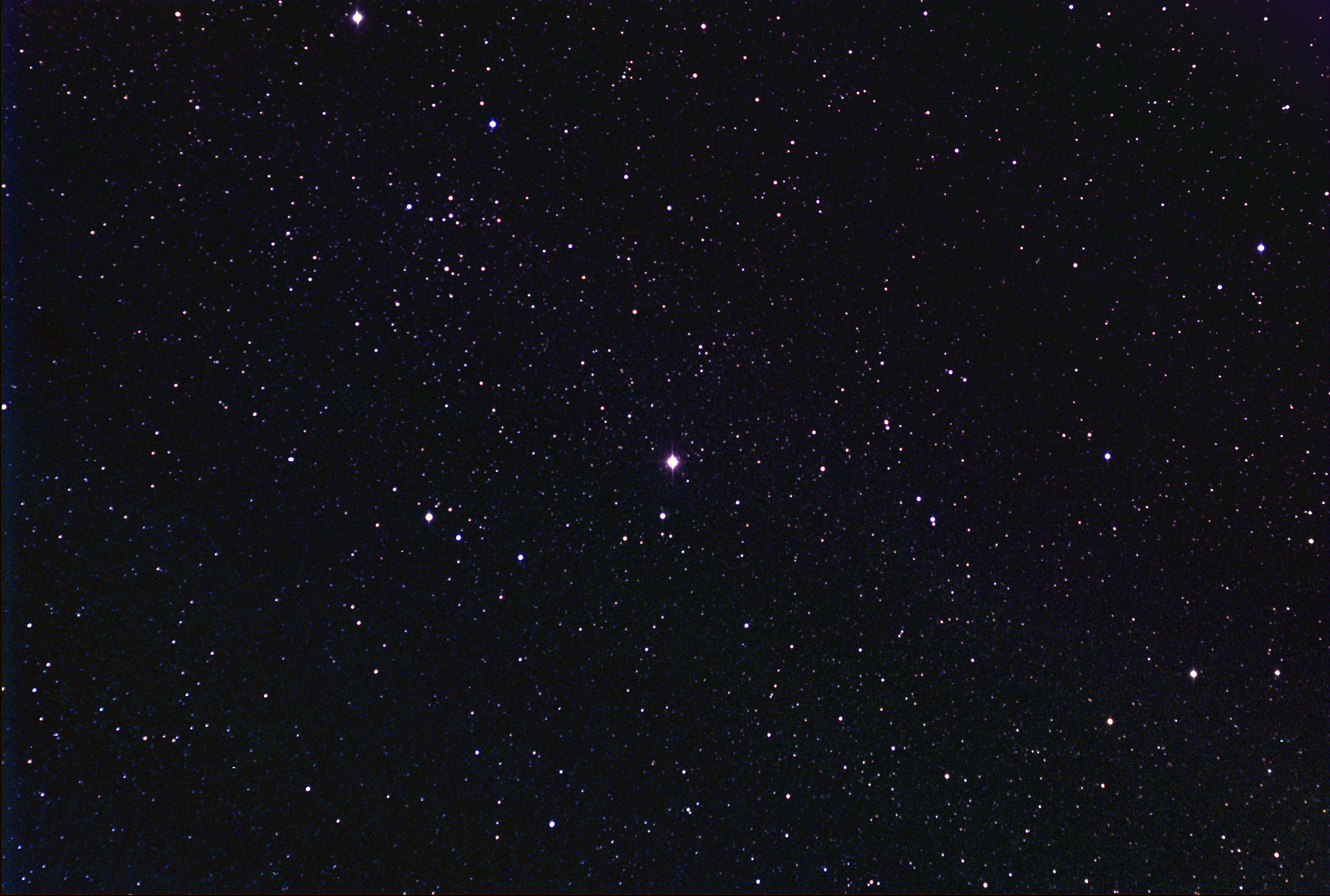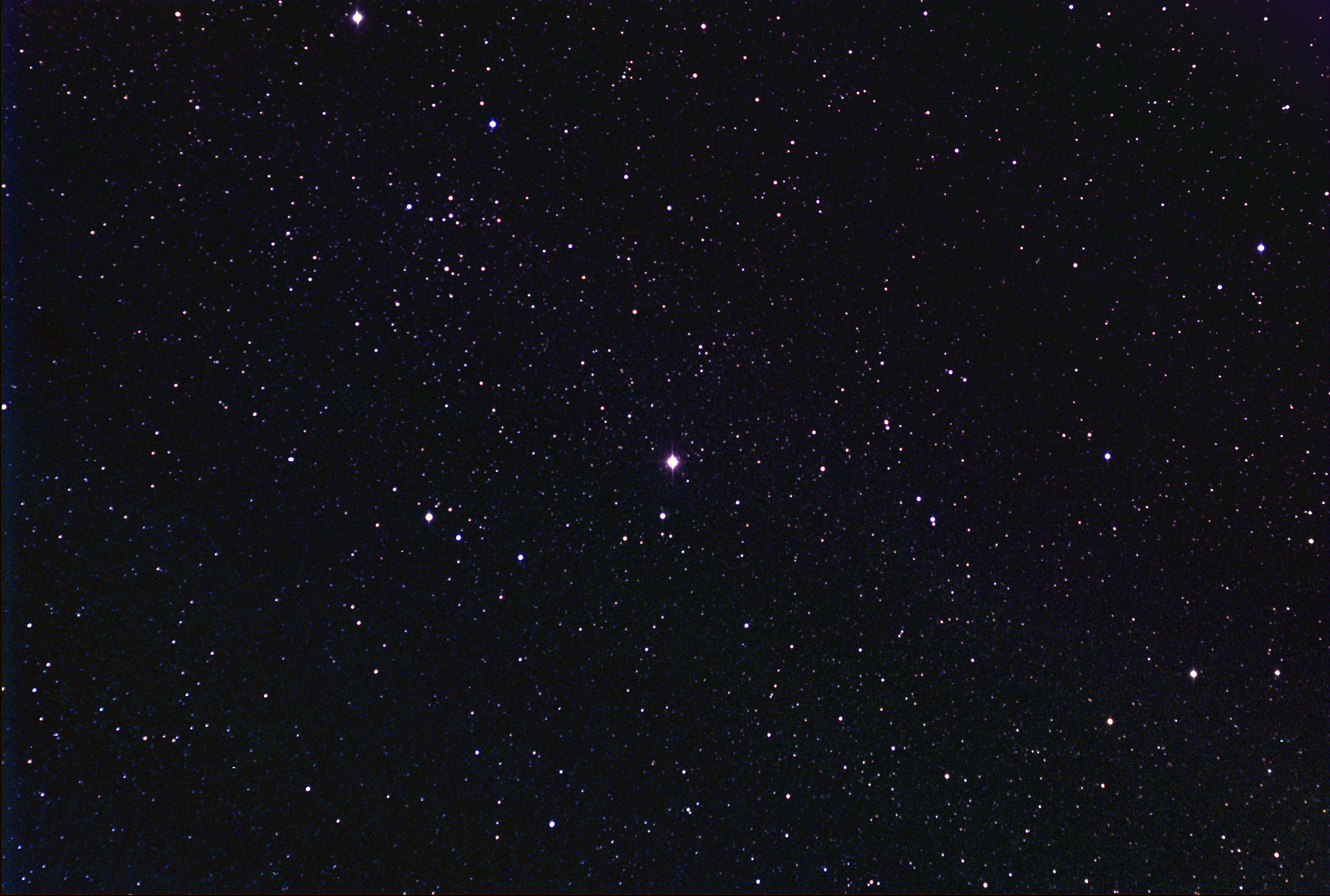
This pretty star field in the constellation Ophiucus is centered on a star not often seen - RS Ophiuci. In fact, early last week RS Oph suddenly became visible to the naked eye for the first time since 1985. A type of cataclysmic variable star classified as a recurrent nova, RS Oph dramatically increased in brightness from 11th magnitude, too faint to appear on some star charts. Historically, RS Oph was seen to go through only four similar outbursts since 1898. Such stars are now modeled as interacting binary star systems, composed of a compact white dwarf star co-orbiting with a swollen red giant. As material falls away from the red giant it collects in a rotating accretion disk before ultimately falling on to the white dwarf. Disk instabilities, or a build up of material on the compact star result in the occasional but rapid release of energy through nuclear burning. At an estimated distance of 3,000 light-years, RS Ophiuci is now reported to be fading rapidly. This telescopic view spans about 2 degrees (4 full moons) and was captured on the morning of February 16 from the RAS Observatory under New Mexico skies.
Este hermoso campo estelar en la constelación de Ofiuco está centrado en una estrella que rara vez se ve: RS Ophiuchi. De hecho, a principios de la semana pasada, RS Oph se hizo repentinamente visible a simple vista por primera vez desde 1985. Este tipo de estrella variable cataclísmica, clasificada como nova recurrente, aumentó dramáticamente su brillo desde la magnitud 11, demasiado débil para aparecer en algunos mapas estelares. Históricamente, se ha registrado que RS Oph ha experimentado solo cuatro estallidos similares desde 1898. Estas estrellas se modelan actualmente como sistemas binarios interactuantes, compuestos por una estrella enana blanca compacta que coorbita con una gigante roja hinchada. Conforme el material se desprende de la gigante roja, se acumula en un disco de acreción rotatorio antes de caer finalmente sobre la enana blanca. Las inestabilidades del disco o la acumulación de material sobre la estrella compacta resultan en la liberación ocasional pero rápida de energía mediante combustión nuclear. A una distancia estimada de 3.000 años luz, se reporta que RS Ophiuchi está desapareciendo rápidamente. Esta vista telescópica abarca aproximadamente 2 grados (4 lunas llenas) y fue capturada en la mañana del 16 de febrero desde el Observatorio RAS bajo los cielos de Nuevo México.