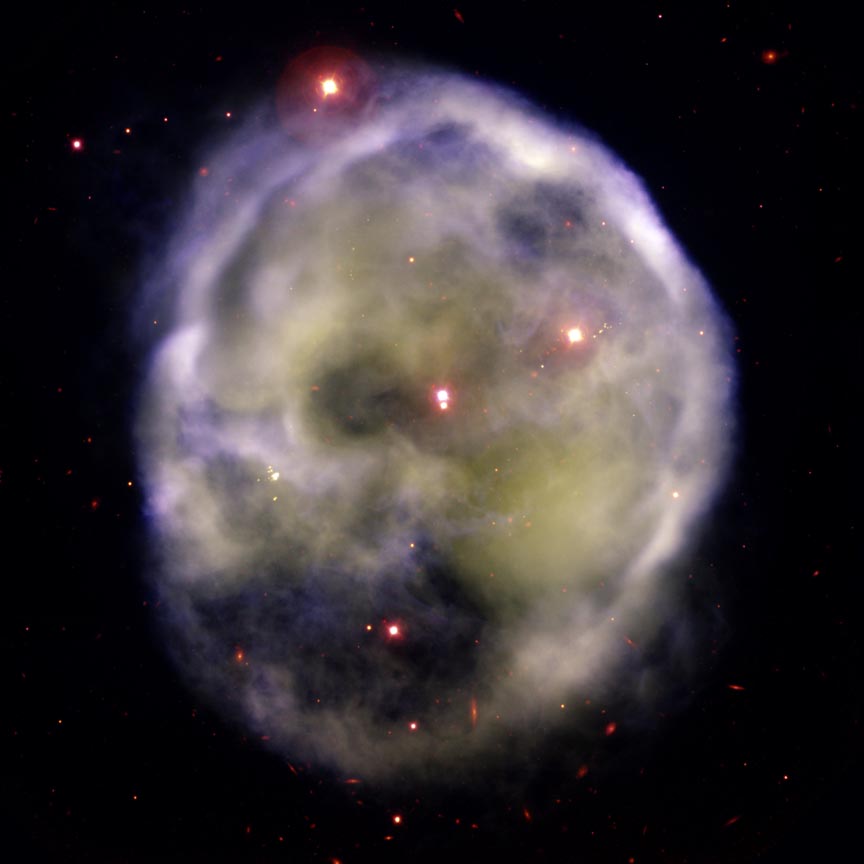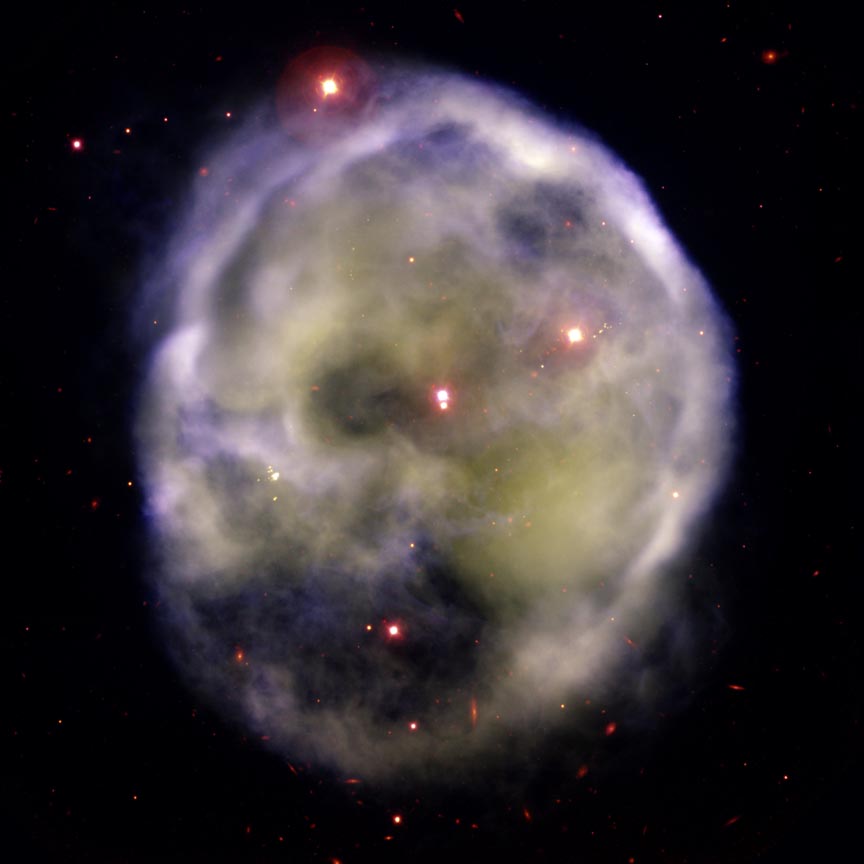
Appropriately nicknamed "the Skull Nebula", planetary nebula NGC 246 really does surround a dying star some 1,600 light-years away in the constellation Cetus. Expelled over a period of thousands of years, the lovely, intricate nebula is the outer atmosphere of a once sun-like star. The expanding outer atmosphere is interacting with the gas and dust in the interstellar medium, while the star itself, the fainter member of the binary star system seen at the nebula's center, is entering its final phase of evolution, becoming a dense, hot white dwarf. Star and nebula are moving rapidly toward the top of the detailed view, as suggested by the nebula's brighter, upper, leading edge. The sharp image spans just over 2.5 light-years at the estimated distance of NGC 246 and also reveals distant background galaxies, some visible right through the nebula along the bottom.
Apodada apropiadamente «la Nebulosa de la Calavera», la nebulosa planetaria NGC 246 rodea realmente a una estrella moribunda a unos 1.600 años luz de distancia en la constelación de Cetus. Expulsada durante un período de miles de años, la hermosa y intrincada nebulosa es la atmósfera externa de una estrella que una vez fue similar al Sol. La atmósfera externa en expansión interactúa con el gas y el polvo del medio interestelar, mientras que la estrella misma, el miembro más débil del sistema binario visible en el centro de la nebulosa, entra en su fase final de evolución, convirtiéndose en una enana blanca densa y caliente. La estrella y la nebulosa se mueven rápidamente hacia la parte superior de la vista detallada, como sugiere el borde superior y más brillante de la nebulosa. La imagen nítida abarca poco más de 2,5 años luz a la distancia estimada de NGC 246 y también revela galaxias de fondo distantes, algunas visibles a través de la nebulosa en la parte inferior.