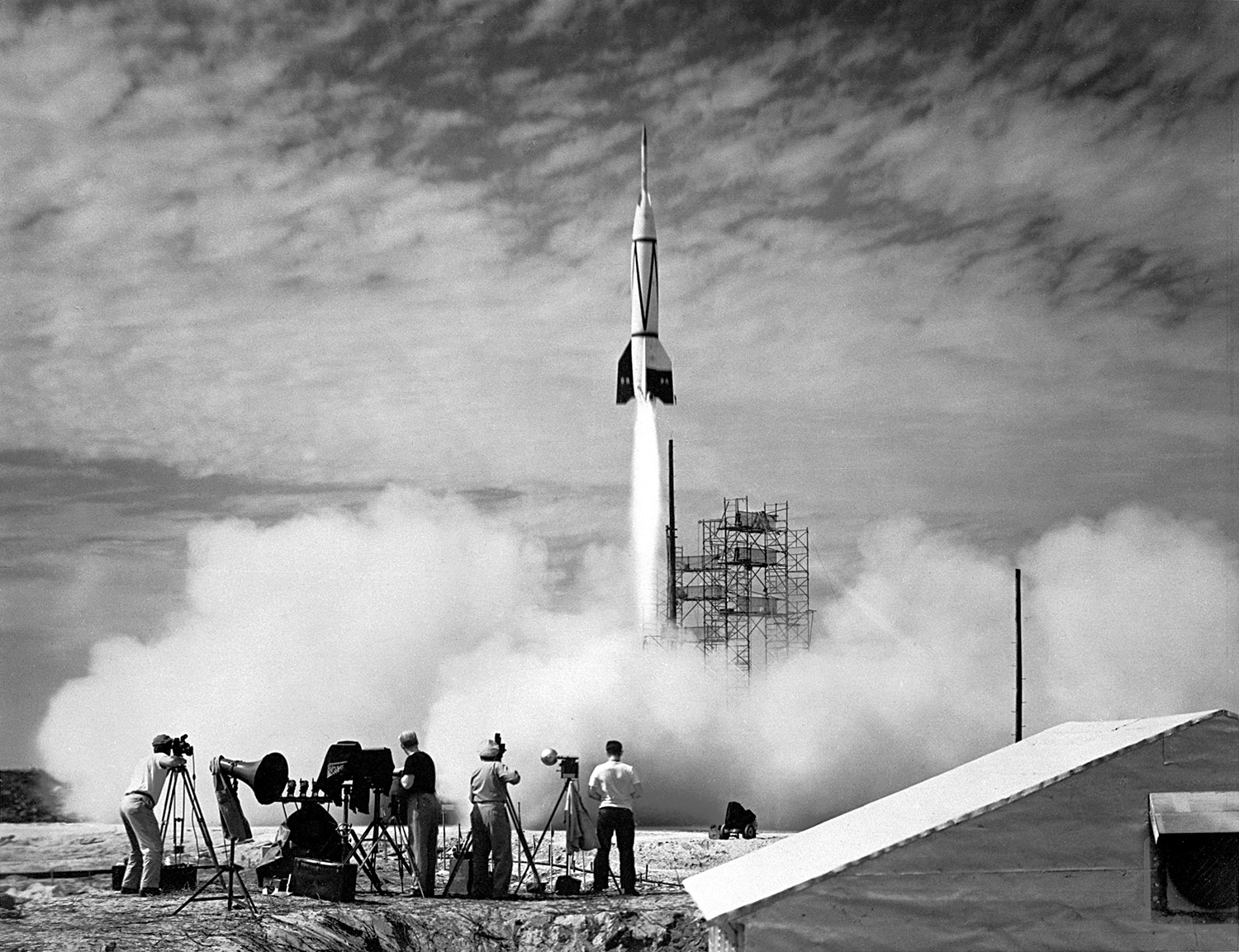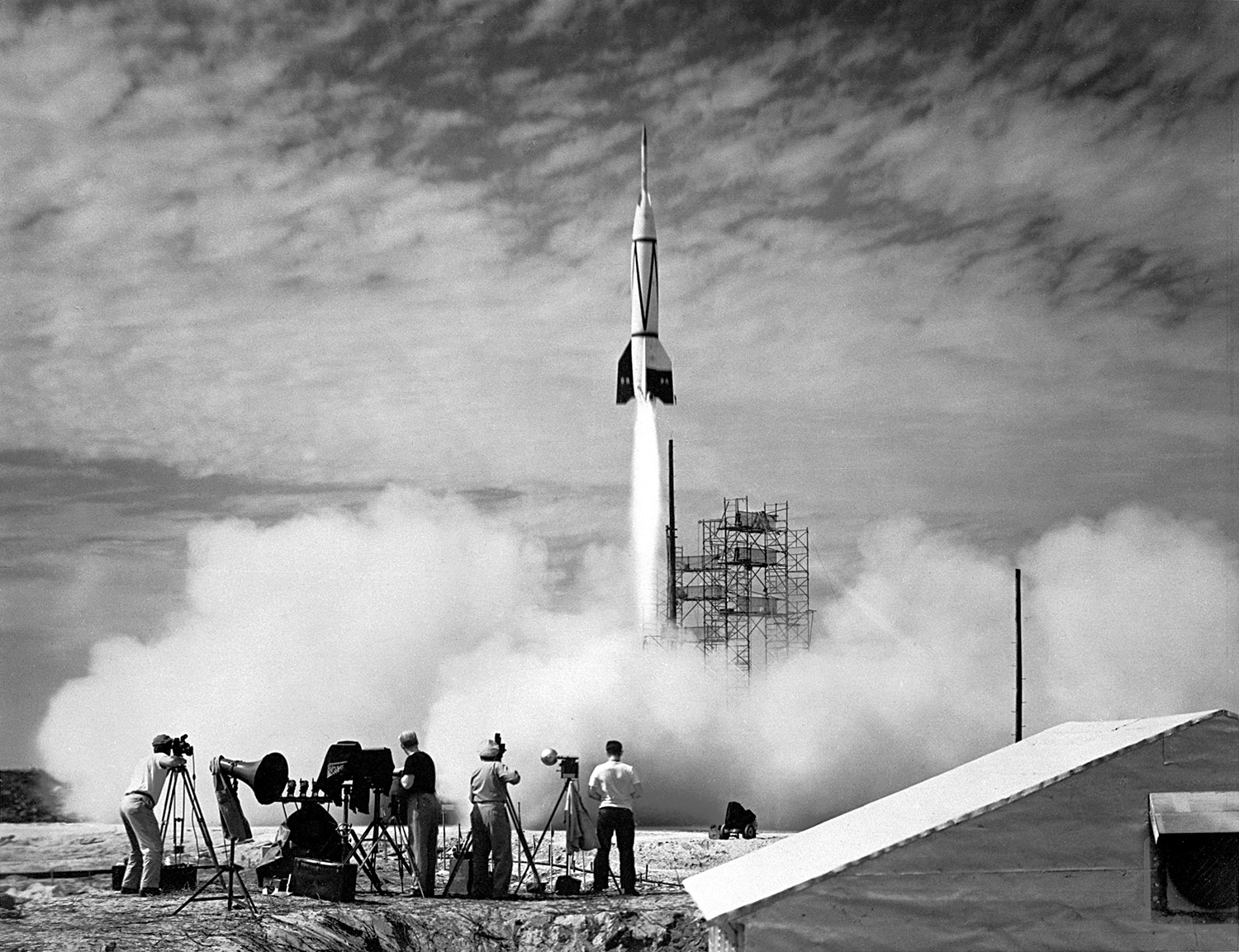
A new chapter in space flight began on 1950 July with the launch of the first rocket from Cape Canaveral, Florida: the Bumper 2. Shown above, the Bumper 2 was an ambitious two-stage rocket program that topped a V-2 missile base with a WAC Corporal rocket. The upper stage was able to reach then-record altitudes of almost 400 kilometers, higher than even modern Space Shuttles fly today. Launched under the direction of the General Electric Company, the Bumper 2 was used primarily for testing rocket systems and for research on the upper atmosphere. Bumper 2 rockets carried small payloads that allowed them to measure attributes including air temperature and cosmic ray impacts. Seven years later, the Soviet Union launched Sputnik I and Sputnik II, the first satellites into Earth orbit. In response, in 1958, the US created NASA.
Un nuevo capítulo en la exploración espacial comenzó en julio de 1950 con el lanzamiento del primer cohete desde Cabo Cañaveral, Florida: el Bumper 2. Como se muestra en la imagen anterior, el Bumper 2 fue un ambicioso programa de cohete de dos etapas que combinaba un misil V-2 como base con un cohete WAC Corporal en la parte superior. La etapa superior fue capaz de alcanzar altitudes récord en ese momento de casi 400 kilómetros, superior incluso a la altura a la que vuelan los transbordadores espaciales modernos en la actualidad. Lanzado bajo la dirección de la compañía General Electric, el Bumper 2 se utilizó principalmente para probar sistemas de cohetes e investigar la atmósfera superior. Los cohetes Bumper 2 llevaban cargas útiles pequeñas que les permitían medir atributos como la temperatura del aire y los impactos de rayos cósmicos. Siete años después, la Unión Soviética lanzó el Sputnik I y el Sputnik II, los primeros satélites en órbita terrestre. En respuesta, en 1958, Estados Unidos creó la NASA.