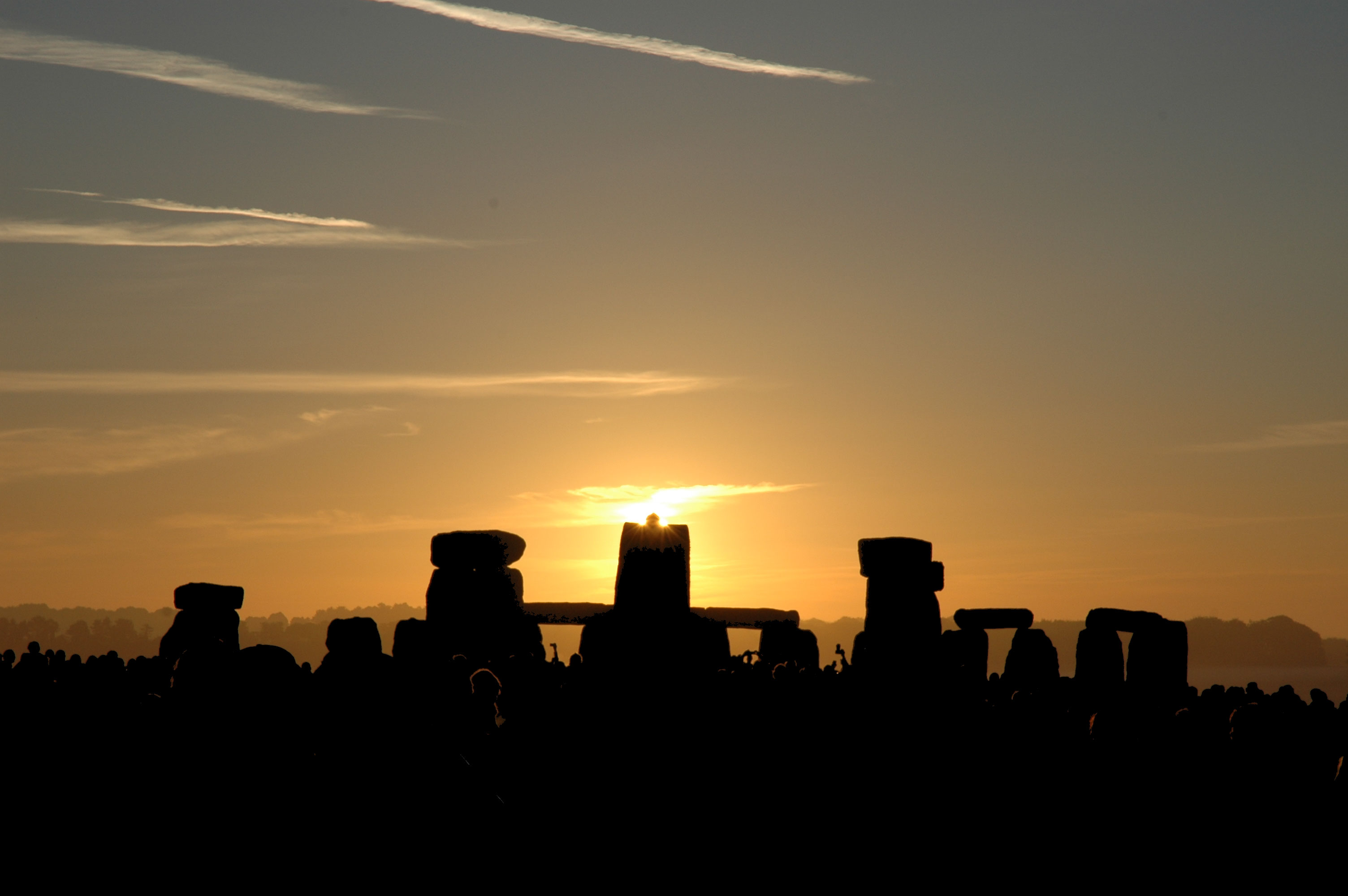
Today the Sun reaches its northernmost point in the planet Earth's sky. Called a solstice, the date traditionally marks a change of seasons -- from spring to summer in Earth's Northern Hemisphere and from fall to winter in Earth's Southern Hemisphere. Pictured above is the 2005 Summer Solstice celebration at Stonehenge in England. The event was rare because Stonehenge was not always open to the public, and because recent summer solstices there had been annoyingly cloudy. In 2005, however, thousands of people gathered at sunrise to see the sun rise through the 4,000 year old solar monument. Even given the precession of the Earth's rotational axis over the millennia, the Sun continues to rise over Stonehenge in an astronomically significant way. In fact, the photographer was able to find a good spot where the rising Sun appeared over one of Stonehenge's massive standing stones.
Hoy el Sol alcanza su punto más septentrional en el cielo del planeta Tierra. Llamado solsticio, esta fecha marca tradicionalmente un cambio de estaciones: de primavera a verano en el Hemisferio Norte terrestre y de otoño a invierno en el Hemisferio Sur terrestre. La imagen superior muestra la celebración del Solsticio de Verano de 2005 en Stonehenge, en Inglaterra. El evento fue raro porque Stonehenge no siempre estuvo abierto al público, y porque los solsticios de verano recientes allí habían sido desagradablemente nubosos. Sin embargo, en 2005, miles de personas se reunieron al amanecer para ver el sol salir a través del monumento solar de 4.000 años de antigüedad. Incluso considerando la precesión del eje de rotación terrestre a lo largo de los milenios, el Sol continúa saliendo sobre Stonehenge de una manera astronómicamente significativa. De hecho, el fotógrafo pudo encontrar un buen lugar donde el Sol naciente aparecía sobre una de las piedras de pie macizas de Stonehenge.