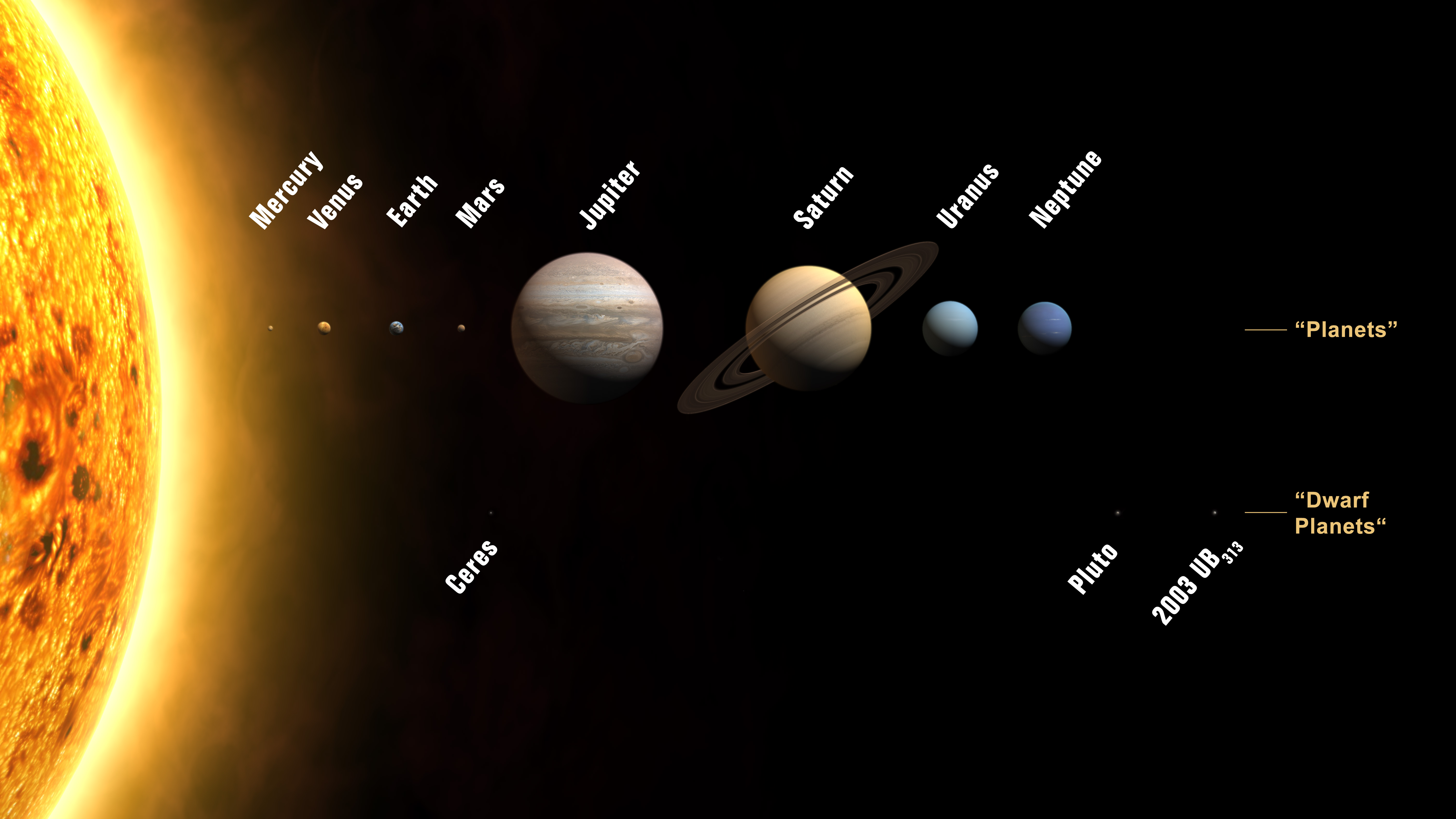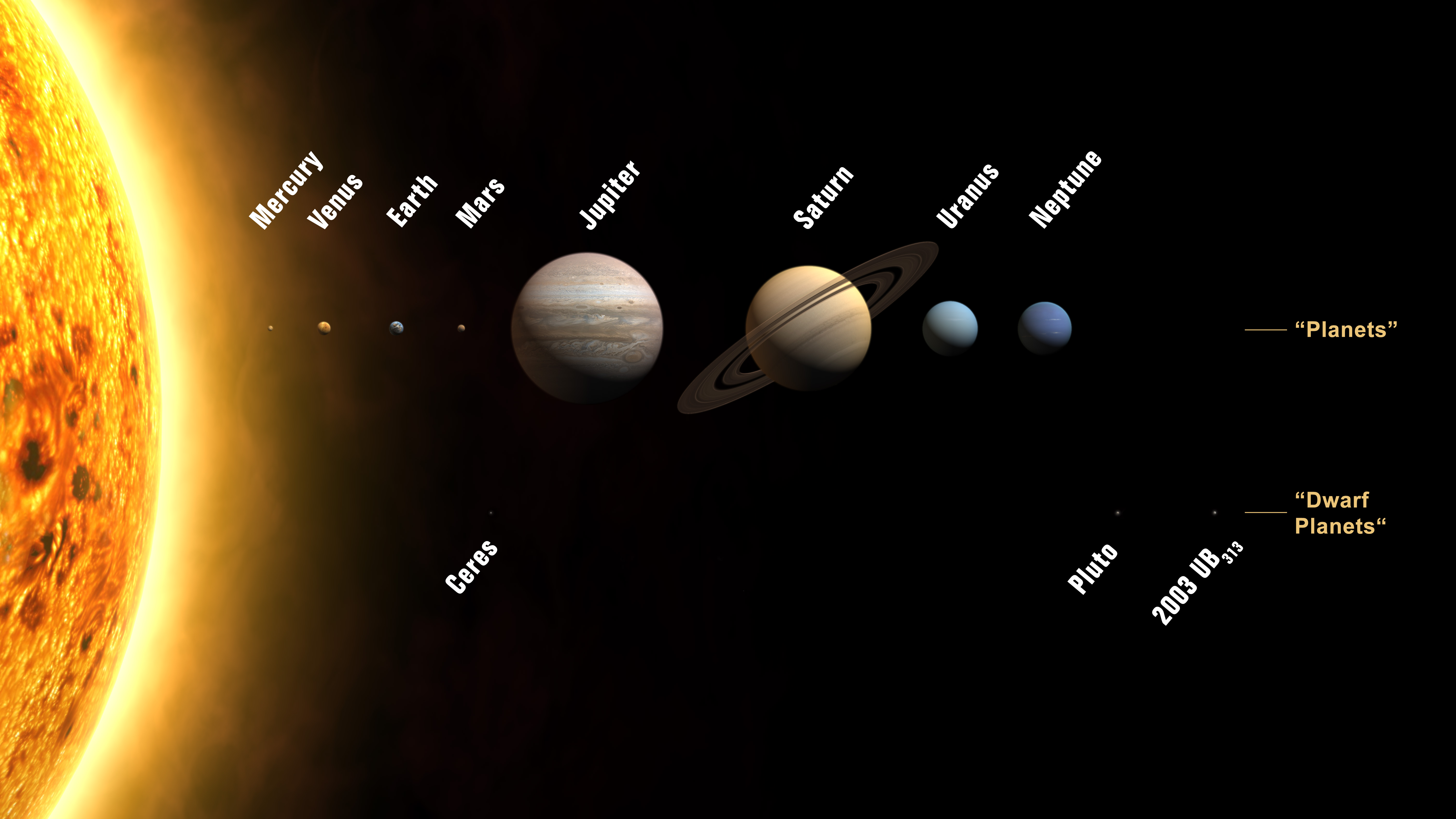
How many planets are in the Solar System? This popular question now has a new formal answer according the International Astronomical Union (IAU): eight. Last week, the IAU voted on a new definition for planet and Pluto did not make the cut. Rather, Pluto was re-classified as a dwarf planet and is considered as a prototype for a new category of trans-Neptunian objects. The eight planets now recognized by the IAU are: Mercury, Venus, Earth, Mars, Jupiter, Saturn, Uranus, and Neptune. Solar System objects now classified as dwarf planets are: Ceres, Pluto, and the currently unnamed 2003 UB313. Planets, by the new IAU definition, must be in orbit around the sun, be nearly spherical, and must have cleared the neighborhood around their orbits. The demotion of Pluto to dwarf planet status is a source of continuing dissent and controversy in the astronomical community.
¿Cuántos planetas hay en el Sistema Solar? Esta pregunta popular ahora tiene una nueva respuesta formal según la Unión Astronómica Internacional (UAI): ocho. La semana pasada, la UAI votó una nueva definición de planeta y Plutón no logró cumplir con los requisitos. En lugar de eso, Plutón fue reclasificado como planeta enano y se considera un prototipo para una nueva categoría de objetos transneptunianos. Los ocho planetas ahora reconocidos por la UAI son: Mercurio, Venus, Tierra, Marte, Júpiter, Saturno, Urano y Neptuno. Los objetos del Sistema Solar clasificados ahora como planetas enanos son: Ceres, Plutón y el actualmente sin nombre 2003 UB313. Según la nueva definición de la UAI, los planetas deben orbitar alrededor del Sol, ser casi esféricos y deben haber despejado la vecindad alrededor de sus órbitas. La reclusión de Plutón a la categoría de planeta enano sigue siendo una fuente de desacuerdo y controversia en la comunidad astronómica.