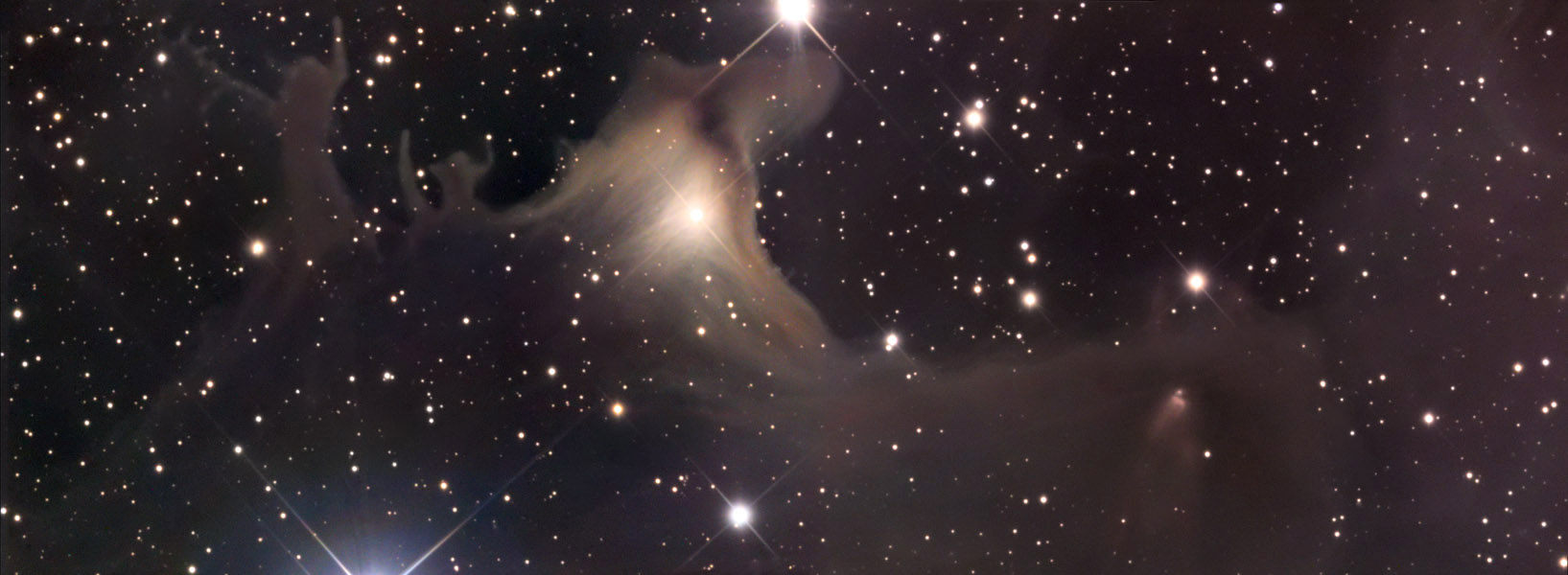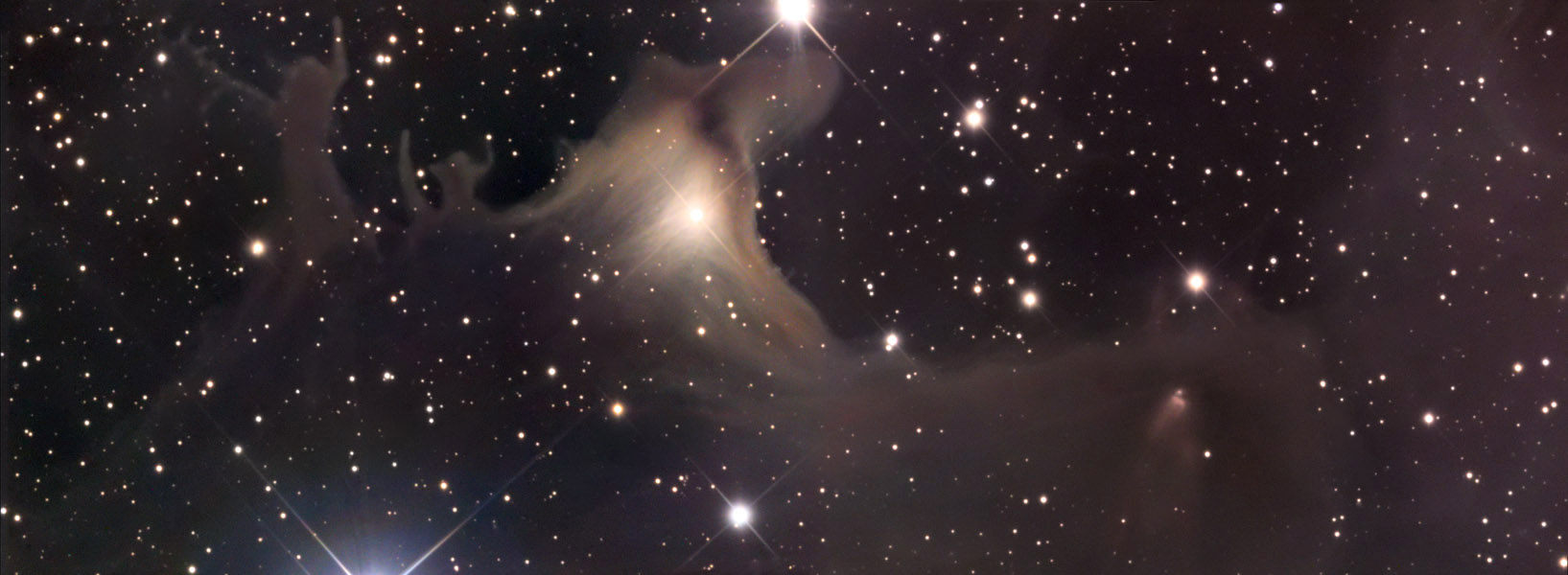
The dark nebula SH2-136 appears to be celebrating Halloween all of the time. The complex process of star formation create dust clouds of many shapes and sizes -- it is human perception that might identify a ghoulish creature, on the right of the above image, chasing humans. Halloween's modern celebration retains historic roots in dressing to scare away the spirits of the dead. Since the fifth century BC, Halloween has been celebrated as a cross-quarter day, a day halfway between an equinox (equal day / equal night) and a solstice (minimum day / maximum night in the northern hemisphere). With our modern calendar, however, the real cross-quarter day will occur next week. Other cross-quarter markers include Groundhog Day and Walpurgis Night.
La nebulosa oscura SH2-136 parece estar celebrando Halloween todo el tiempo. El complejo proceso de formación estelar crea nubes de polvo de muchas formas y tamaños — es la percepción humana la que podría identificar una criatura espeluznante, a la derecha de la imagen anterior, persiguiendo a humanos. La celebración moderna de Halloween conserva raíces históricas en disfrazarse para asustar a los espíritus de los muertos. Desde el quinto siglo a.C., Halloween ha sido celebrado como un día intermedio, un día a medio camino entre un equinoccio (día igual / noche igual) y un solsticio (mínimo día / máximo noche en el hemisferio norte). Sin embargo, con nuestro calendario moderno, el verdadero día intermedio ocurrirá la próxima semana. Otros marcadores de días intermedios incluyen el Día del Oso de Tierra y la Noche de Walpurgis.