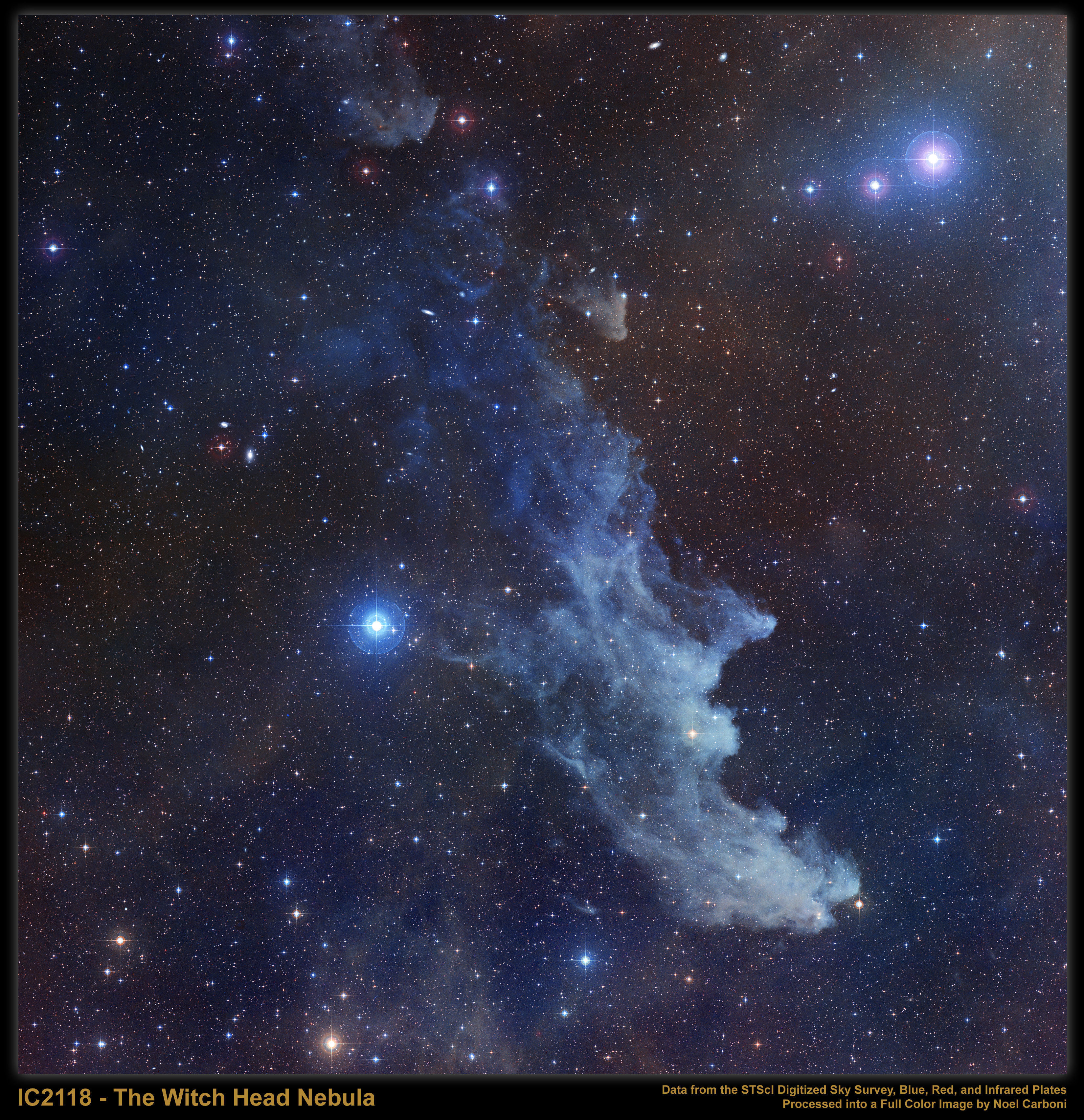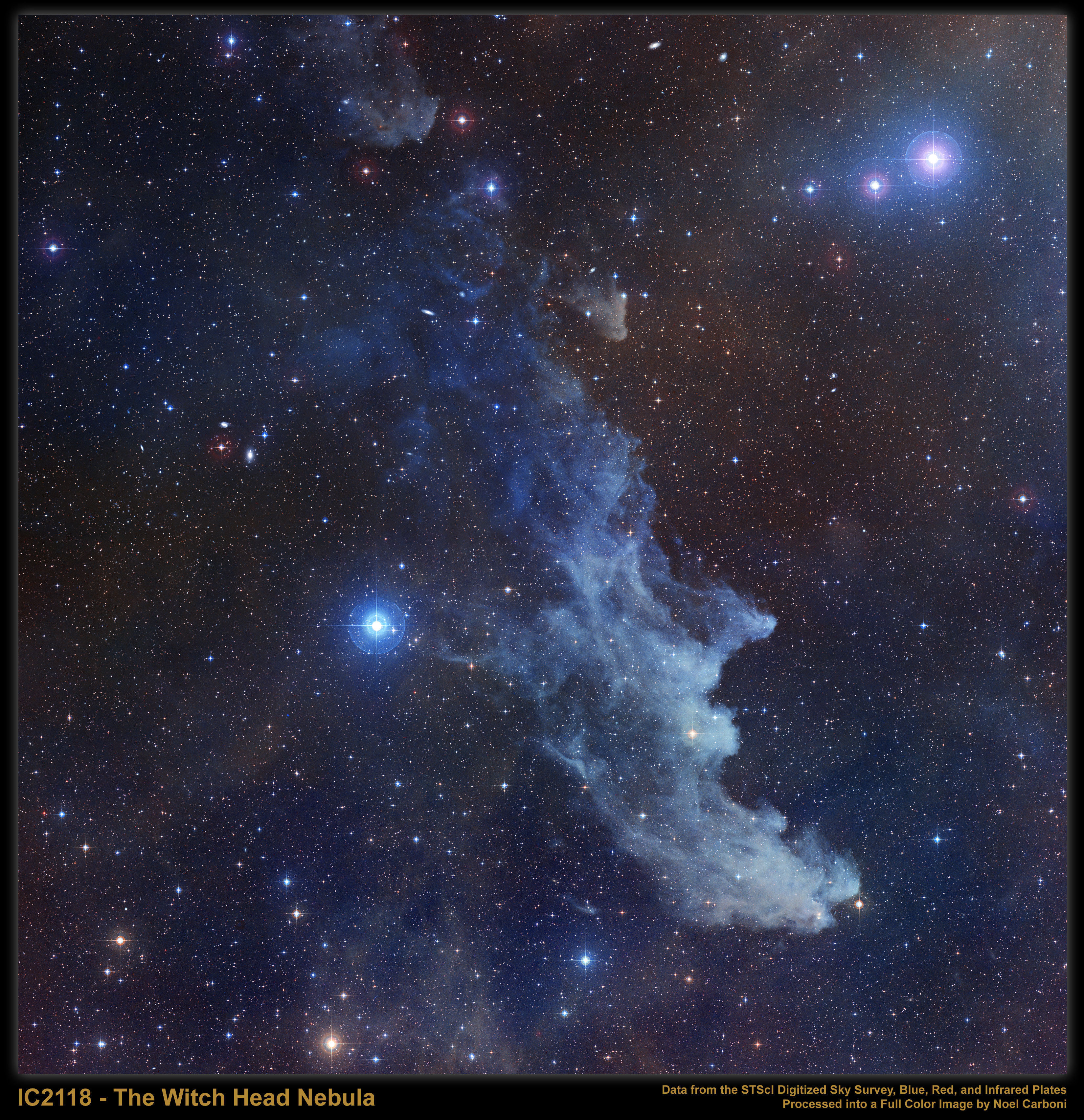
Double, double toil and trouble; Fire burn, and cauldron bubble -- maybe Macbeth should have consulted the Witch Head Nebula. This suggestively shaped reflection nebula is associated with the bright star Rigel in the constellation Orion. More formally known as IC 2118, the Witch Head Nebula glows primarily by light reflected from bright star Rigel, located just off the upper right edge of the full image. Fine dust in the nebula reflects the light. The blue color is caused not only by Rigel's blue color but because the dust grains reflect blue light more efficiently than red. The same physical process causes Earth's daytime sky to appear blue, although the scatterers in Earth's atmosphere are molecules of nitrogen and oxygen. The nebula lies about 1000 light-years away.
Doble, doble trabajo y conflicto; Fuego arde, y la caldera burbujea — quizás Macbeth debería haber consultado a la Nebulosa de la Cabeza de Bruja. Esta nebulosa de reflexión, cuya forma sugiere cierta semejanza con una bruja, está asociada con la brillante estrella Rigel en la constelación de Orión. Conocida formalmente como IC 2118, la Nebulosa de la Cabeza de Bruja brilla principalmente por la luz reflejada de la brillante estrella Rigel, ubicada justo fuera del borde superior derecho de la imagen completa. El fino polvo en la nebulosa refleja esta luz. El color azul se debe no solo al color azul de Rigel, sino también al hecho de que los granos de polvo reflejan la luz azul con mayor eficiencia que la roja. El mismo proceso físico hace que el cielo terrestre durante el día aparezca azul, aunque los dispersores en la atmósfera terrestre son moléculas de nitrógeno y oxígeno. La nebulosa se encuentra a unos 1000 años luz de distancia.