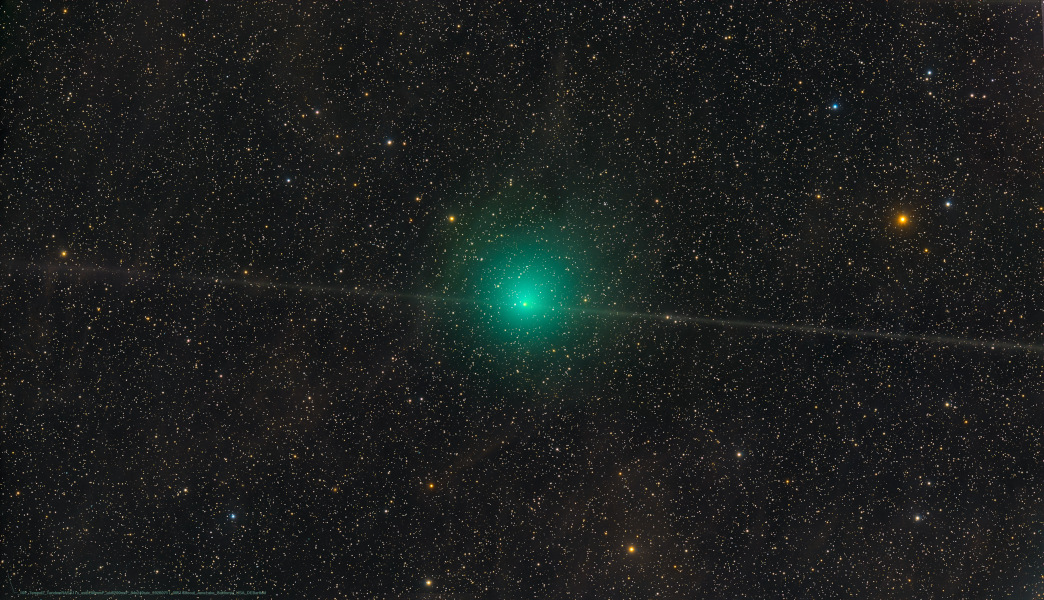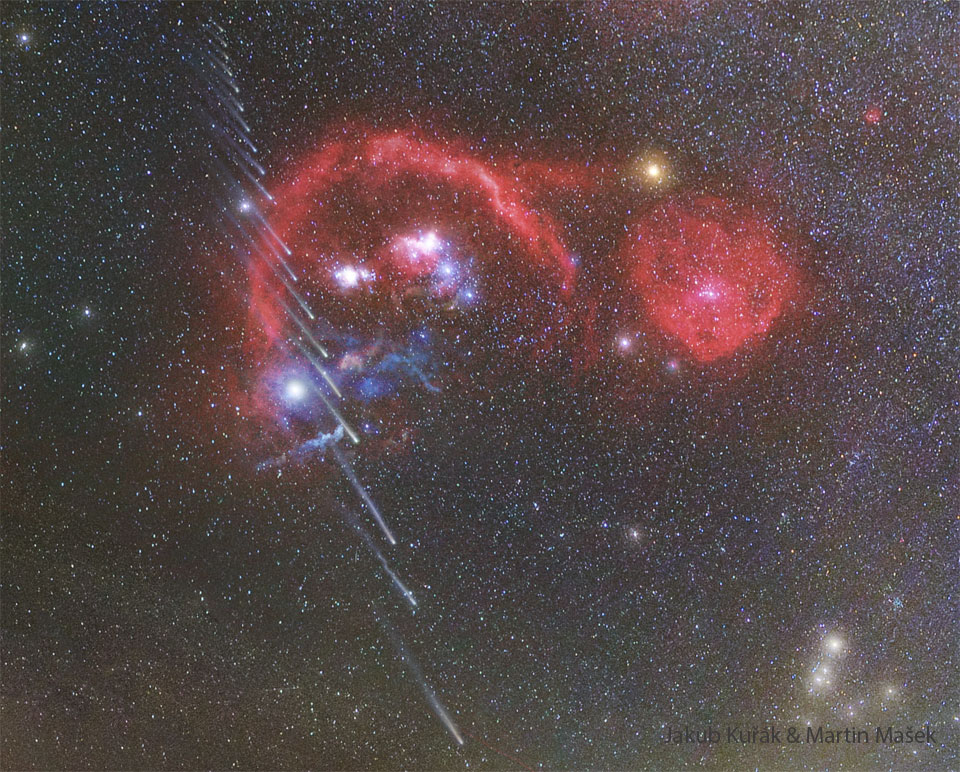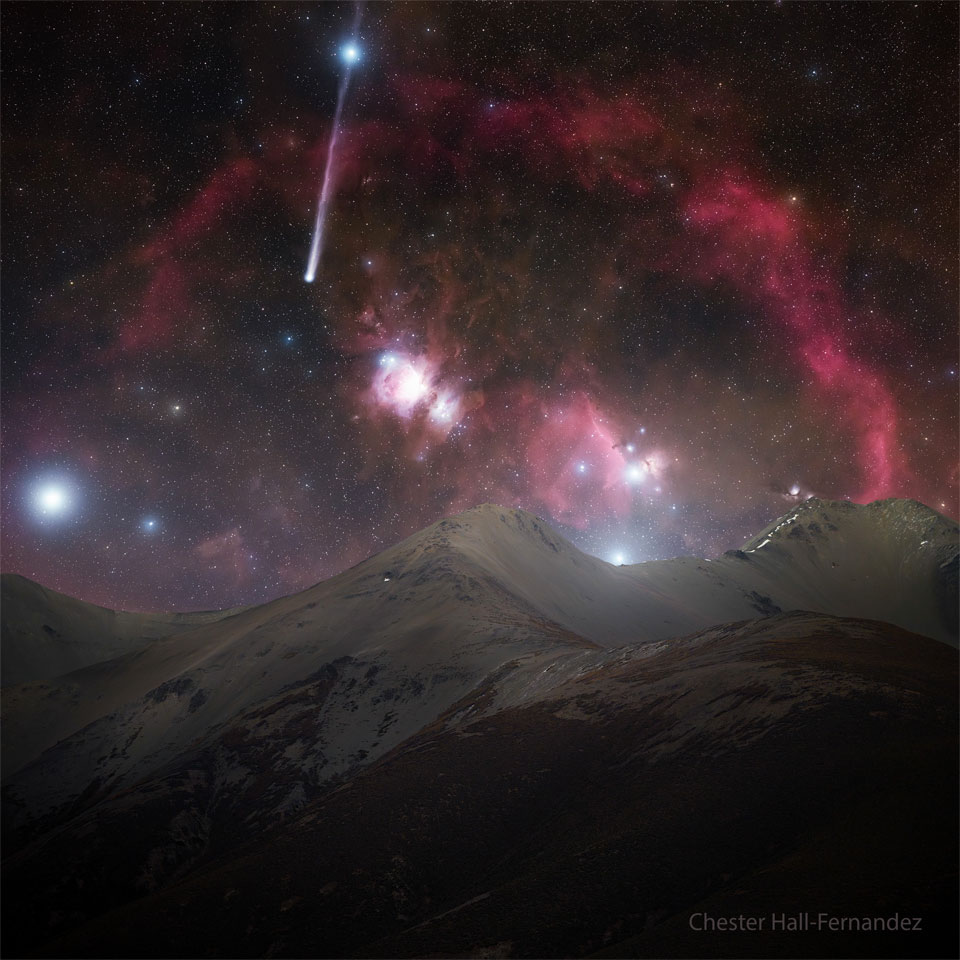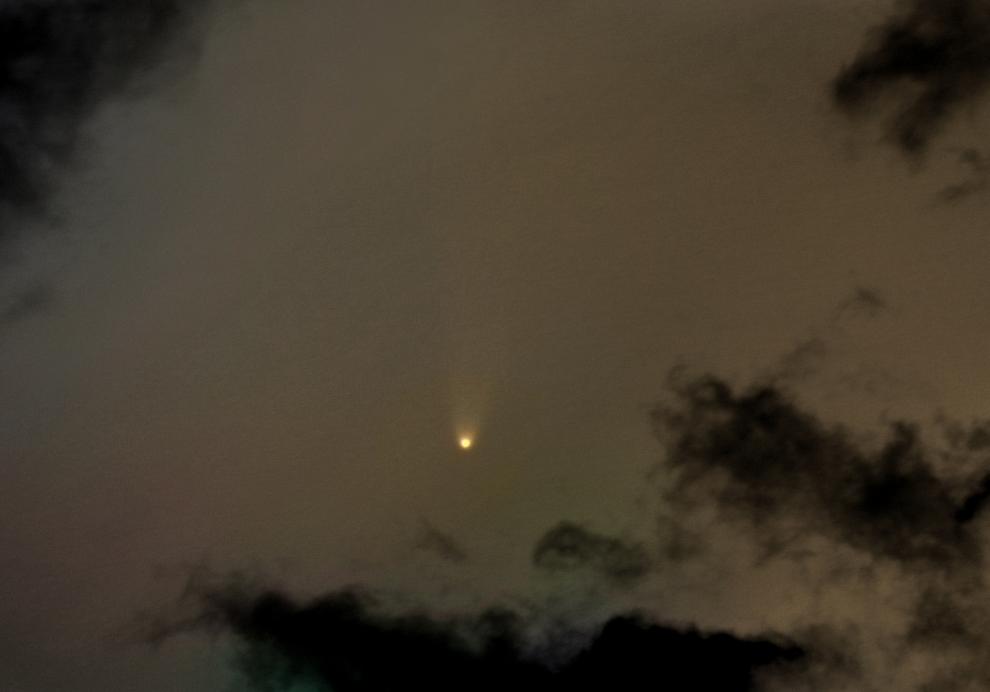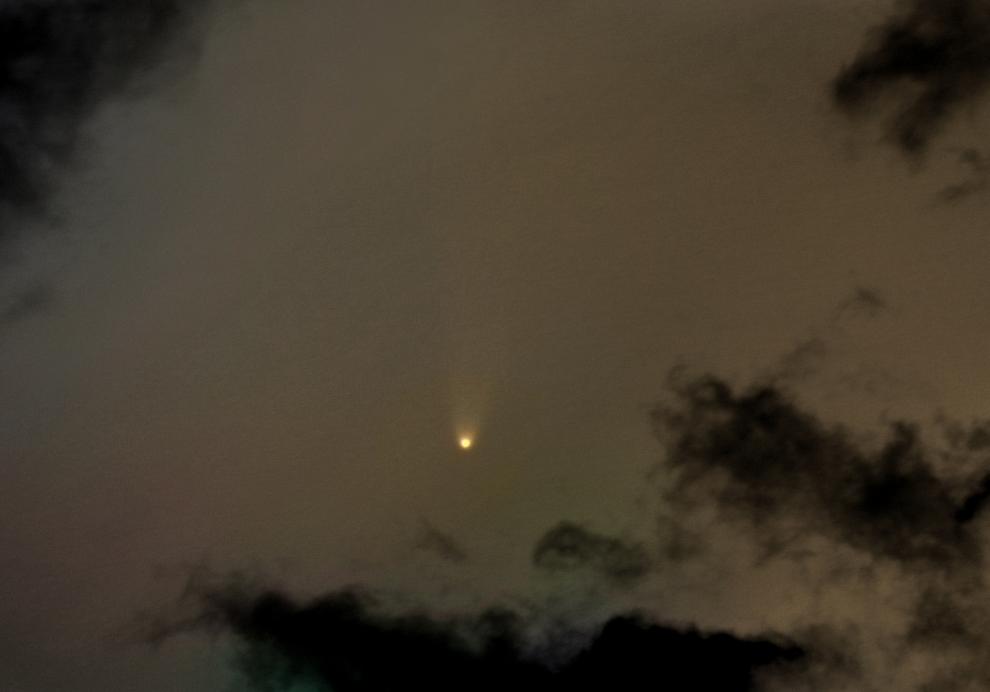
rly morning risers with a clear and unobstructed eastern horizon can enjoy the sight of Comet McNaught (C/2006 P1) in dawn skies over the next few days. Discovered in August by R. H. McNaught (Siding Spring Survey) the comet has grown bright enough to see with the unaided eye but will soon be lost in the glare of the Sun. Still, by January 11 sun-staring spacecraft SOHO should be able to offer web-based views as the comet heads toward a perihelion passage inside the orbit of Mercury. This image captures the new naked-eye comet at about 2nd magnitude in twilight skies near sunset on January 3rd. After rounding the Sun and emerging from the solar glare later this month, Comet McNaught could be even brighter.
Los madrugadores con un horizonte oriental despejado y sin obstrucciones pueden disfrutar de la vista del Cometa McNaught (C/2006 P1) en los cielos del alba durante los próximos días. Descubierto en agosto por R. H. McNaught (Siding Spring Survey), el cometa se ha vuelto lo suficientemente brillante para verse a simple vista, pero pronto se perderá en el resplandor del Sol. Sin embargo, para el 11 de enero, la nave espacial SOHO, que observa el Sol, debería poder ofrecer vistas en línea mientras el cometa se dirige hacia su paso de perihelio dentro de la órbita de Mercurio. Esta imagen captura al nuevo cometa visible a ojo desnudo con una magnitud de aproximadamente 2 en los cielos crepusculares cerca de la puesta de Sol el 3 de enero. Después de rodear el Sol y emerger del resplandor solar más adelante este mes, el Cometa McNaught podría ser aún más brillante.