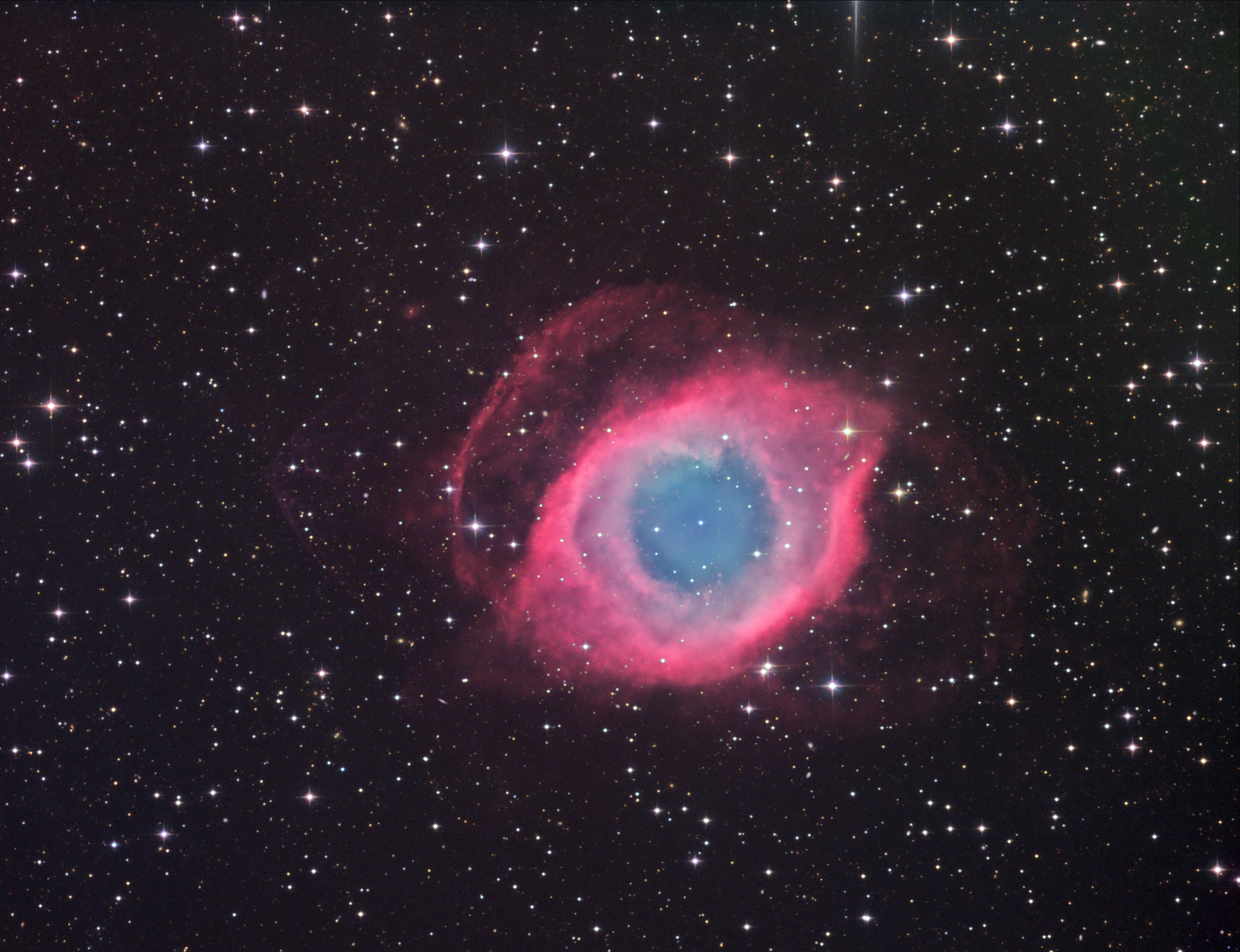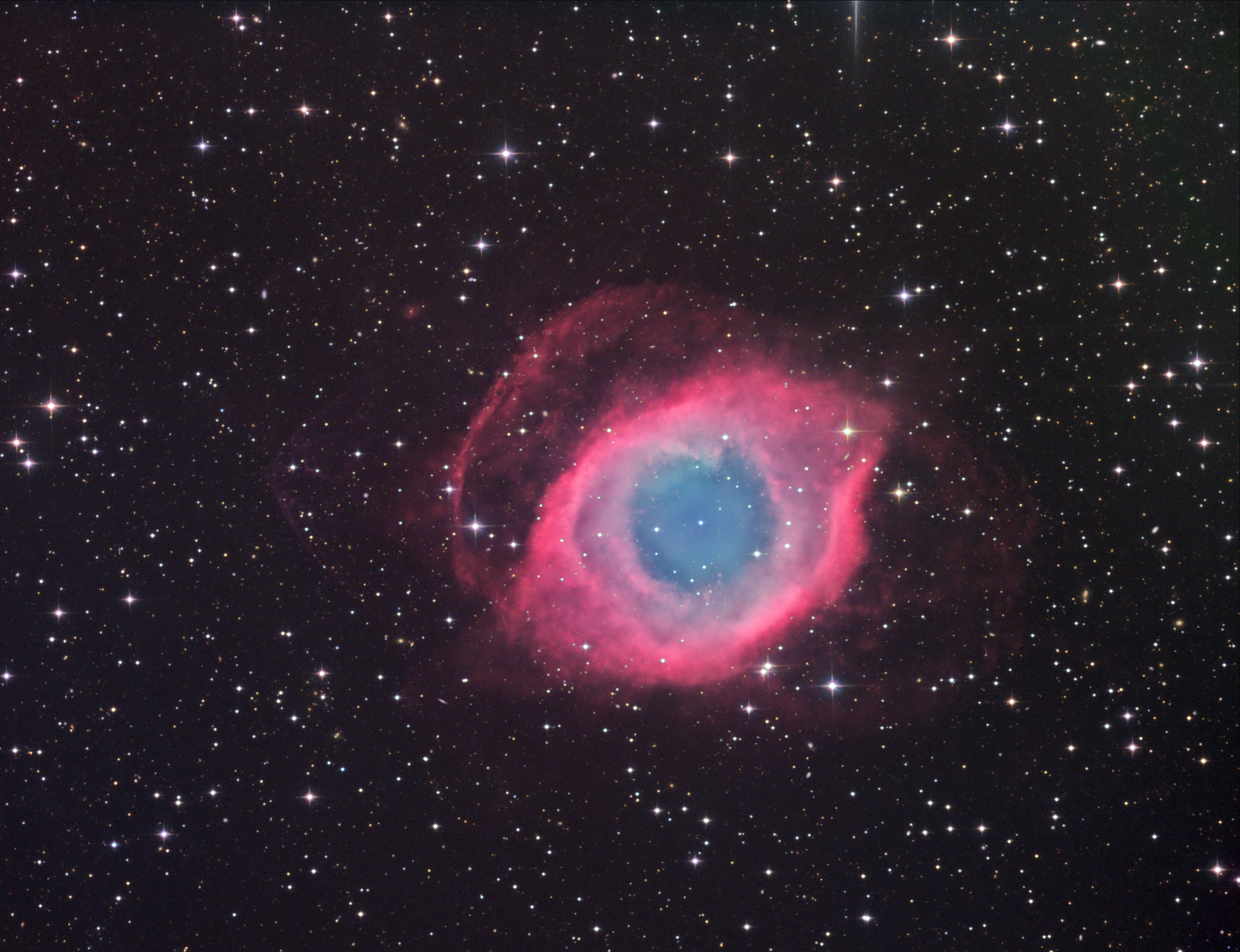
A mere seven hundred light years from Earth, in the constellation Aquarius, a sun-like star is dying. Its last few thousand years have produced the Helix Nebula (NGC 7293), a well studied and nearby example of a Planetary Nebula, typical of this final phase of stellar evolution. Nearly 11 hours of exposure time have gone in to creating this remarkably deep view of the nebula. It shows details of the Helix's brighter inner region, about 3 light-years across, but also follows fainter outer halo features that give the nebula a span of well over six light-years. The white dot at the Helix's center is this Planetary Nebula's hot, central star. A simple looking nebula at first glance, the Helix is now understood to have a surprisingly complex geometry.
A apenas setecientos años luz de la Tierra, en la constelación de Acuario, una estrella similar al Sol se encuentra en proceso de extinción. Sus últimos miles de años han producido la Nebulosa de la Hélice (NGC 7293), un ejemplo bien estudiado y cercano de una Nebulosa Planetaria, típica de esta fase final de la evolución estelar. Casi 11 horas de tiempo de exposición han sido invertidas en la creación de esta vista notablemente profunda de la nebulosa. Muestra detalles de la región interior más brillante de la Hélice, de aproximadamente 3 años luz de diámetro, pero también revela características de un halo exterior más débil que dan a la nebulosa un tamaño de más de seis años luz. El punto blanco en el centro de la Hélice es la estrella central caliente de esta Nebulosa Planetaria. A primera vista una nebulosa de apariencia simple, la Hélice se entiende ahora que posee una geometría sorprendentemente compleja.