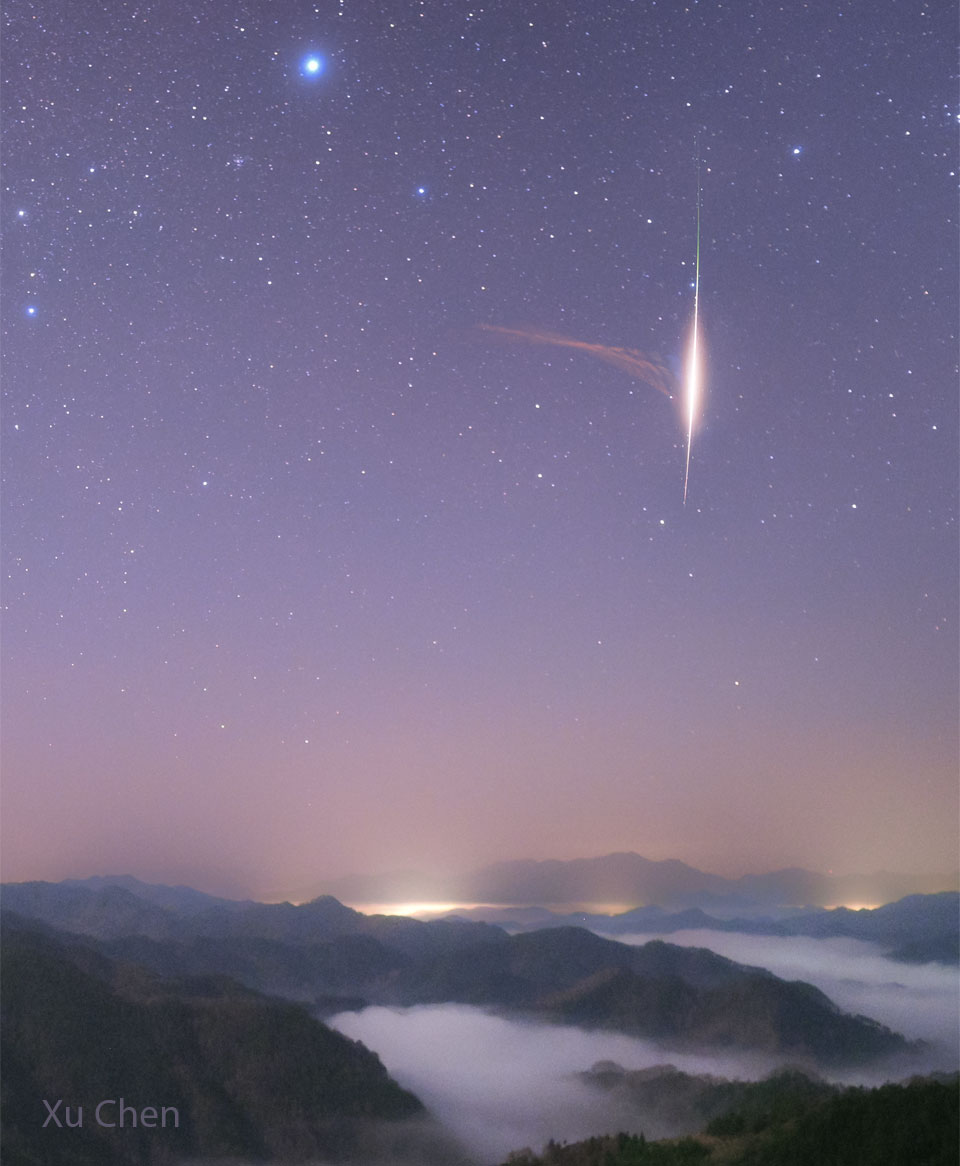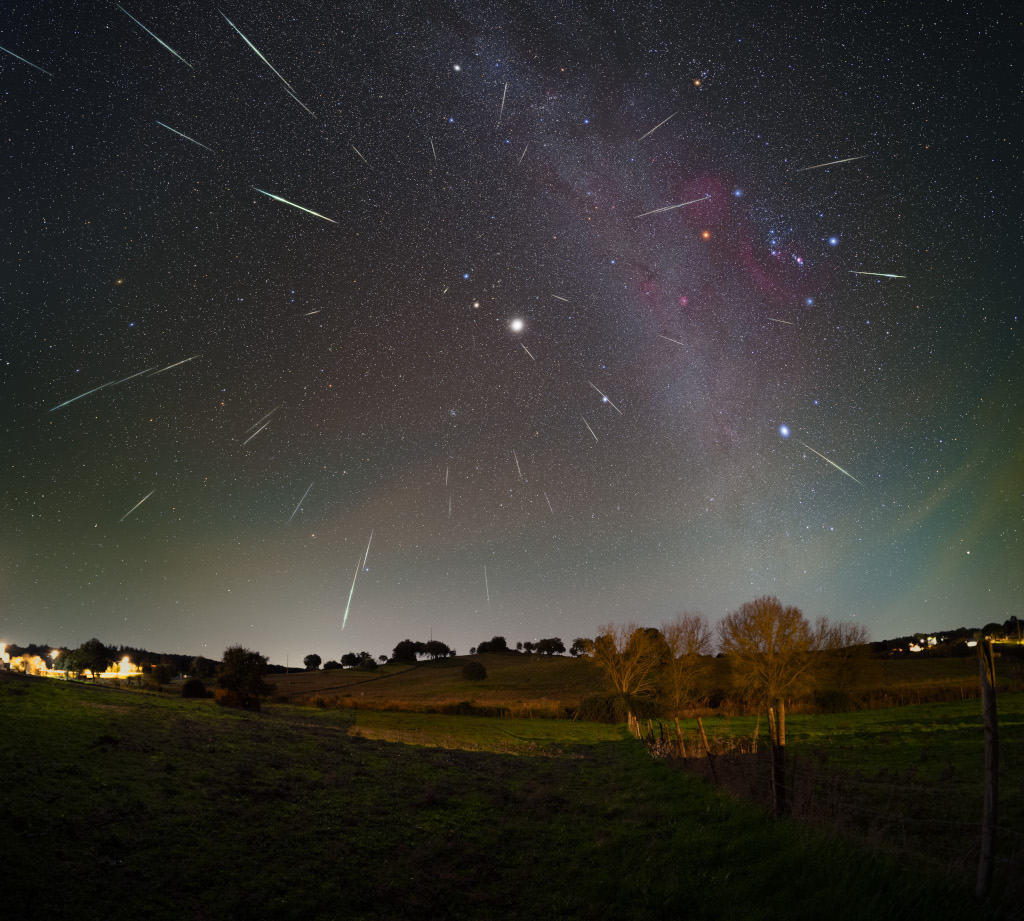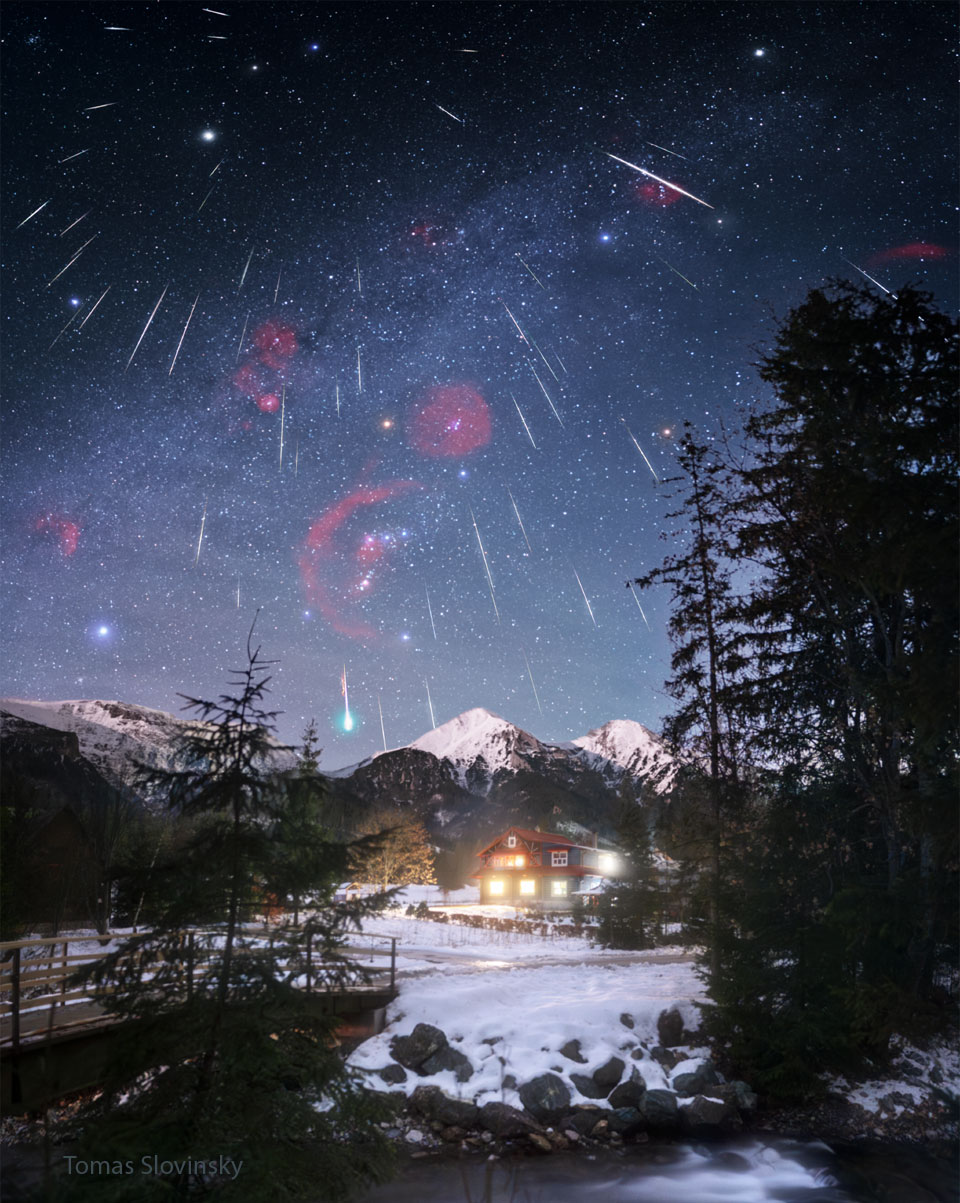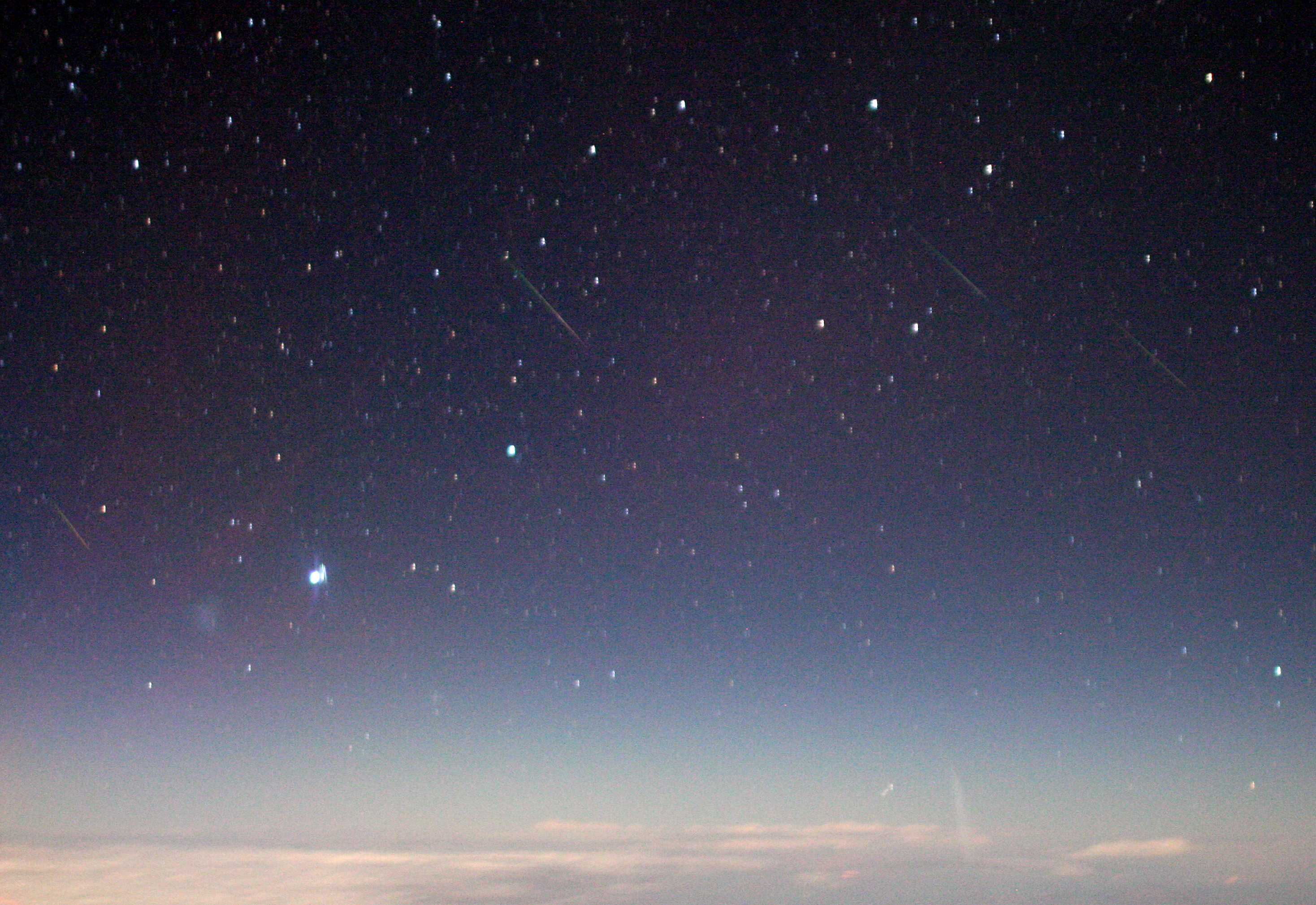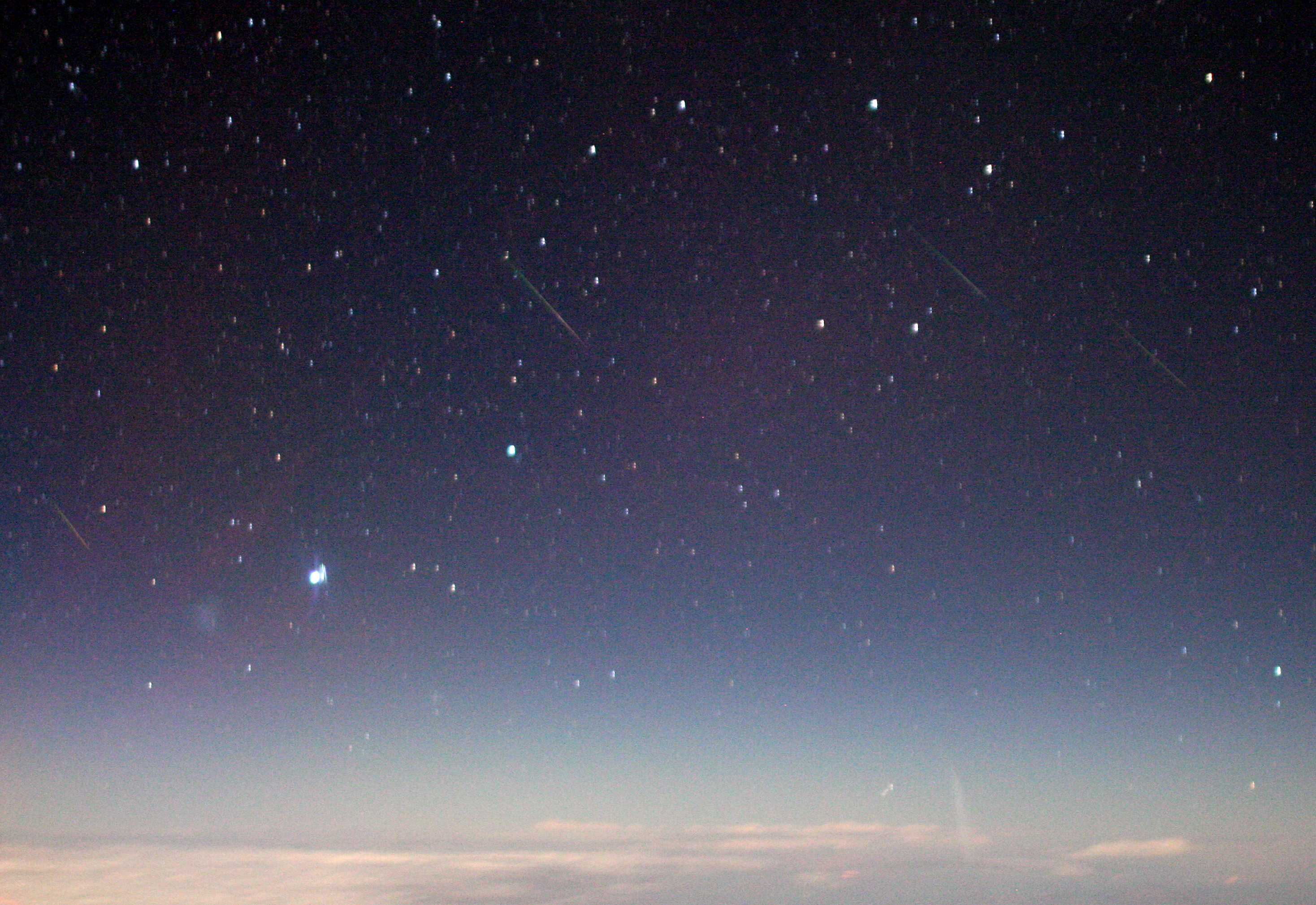
On September 1, Aurigid meteors filled the sky, in keeping with an innovative prediction of an outburst from this historically tentative meteor shower. The prediction was made by Peter Jenniskens of the SETI Institute, in work with Esko Lyytinen of Finland and Jeremie Vaubaillon of Caltech. Astronomers flying at 47,000 feet on a dedicated mission to observe the outburst collected image data for this composite photo of the Aurigids' bright and colorful streaks. The source of the shower is understood to be Comet Kiess, a comet that would have swung through the inner solar system around 2,000 years ago, and again in 1911. Pushed outward by solar radiation pressure, dust from the tail of the comet has been drifting toward the Earth's orbit, creating the 2007 outburst as well as outbursts of the Aurigids recorded in 1935, 1986, and 1994. Of course, the shower's radiant point is in the eponymous constellation Auriga, the Charioteer.
El 1 de septiembre, los meteoros Aurígidas llenaron el cielo, en consonancia con una predicción innovadora de un brote de esta lluvia de meteoros históricamente incierta. La predicción fue realizada por Peter Jenniskens del Instituto SETI, en colaboración con Esko Lyytinen de Finlandia y Jeremie Vaubaillon del Caltech. Astrónomos que volaban a 47,000 pies en una misión dedicada a observar el brote recopilaron datos de imágenes para esta fotografía compuesta de los brillantes y coloridos trazos de las Aurígidas. Se entiende que la fuente de la lluvia es el Cometa Kiess, un cometa que habría atravesado el sistema solar interno hace alrededor de 2,000 años, y nuevamente en 1911. Empujado hacia afuera por la presión de la radiación solar, el polvo de la cola del cometa ha estado a la deriva hacia la órbita terrestre, creando el brote de 2007 así como brotes de las Aurígidas registrados en 1935, 1986 y 1994. Por supuesto, el punto radiante de la lluvia se encuentra en la constelación homónima Auriga, el Auriga.