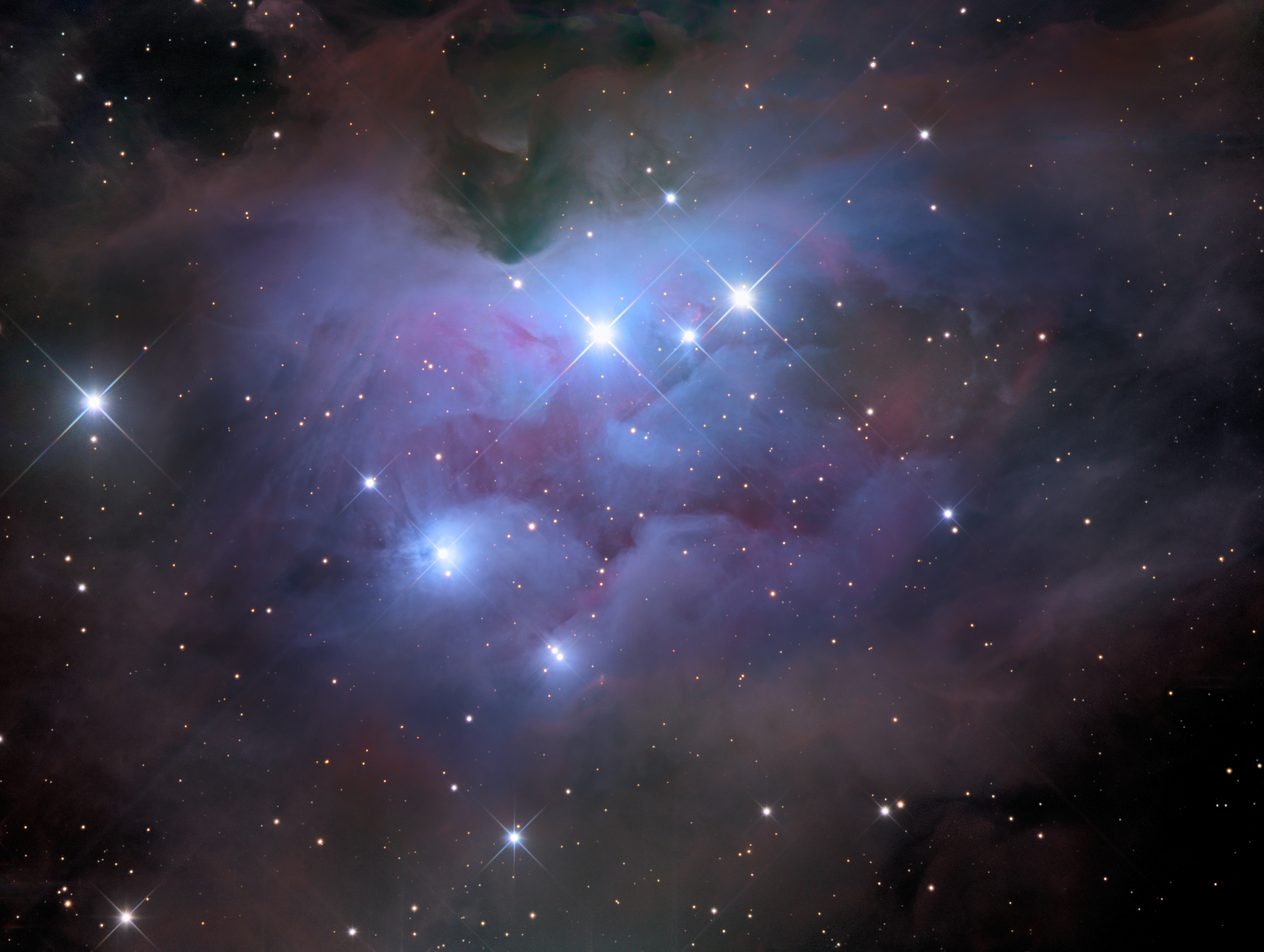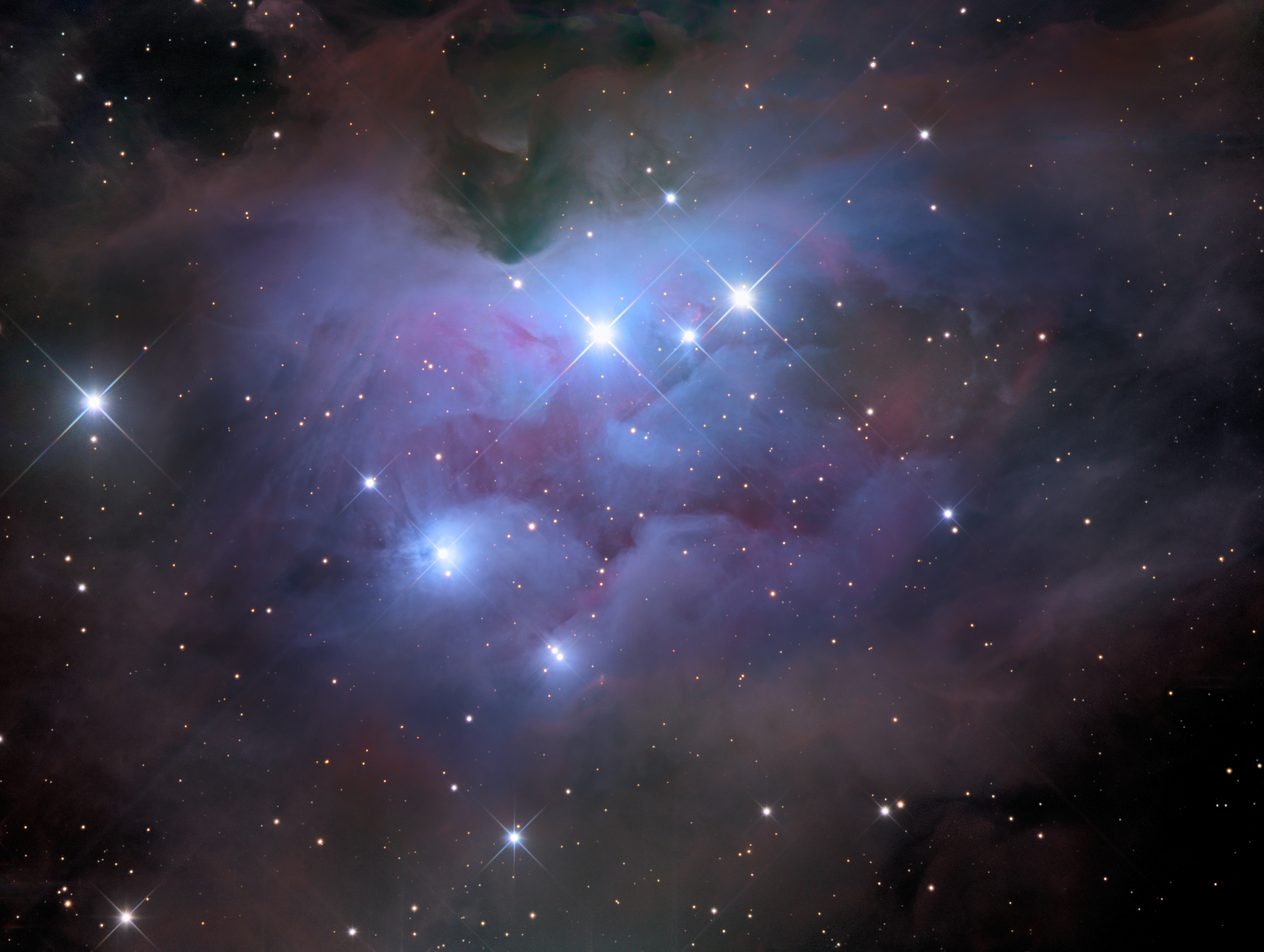
The 1970s are sometimes ignored by astronomers. In particular, this beautiful grouping of reflection nebulae in Orion - NGC 1977, NGC 1975, and NGC 1973 - are usually overlooked in favor of the substantial glow from the nearby stellar nursery better known as the Orion Nebula. Found along Orion's sword just north of the bright Orion Nebula complex, these reflection nebulae are also associated with Orion's giant molecular cloud about 1,500 light-years away, but are dominated by the characteristic blue color of interstellar dust reflecting light from hot young stars. North is down in this sharp color telescopic image from New South Wales, Australia, so the more familiar Orion Nebula borders the top of the view. NGC 1977 stretches across the field just above center, separated from NGC 1973 (below left) and NGC 1975 (below right) by darker regions of obscuring dust. Many northern hemisphere observers claim to see the general shape of a running man in the cosmic dust cloud but, of course, they're looking at the view upside down. APOD presents: Astronomy Pictures of the Year for 2007
Los años 70 a veces son ignorados por los astrónomos. En particular, este hermoso agrupamiento de nebulosas de reflexión en Orión —NGC 1977, NGC 1975 y NGC 1973— generalmente se pasa por alto en favor del brillo sustancial de la guardería estelar cercana más conocida como la Nebulosa de Orión. Ubicadas a lo largo de la espada de Orión, justo al norte del brillante complejo de la Nebulosa de Orión, estas nebulosas de reflexión también están asociadas con la nube molecular gigante de Orión, a aproximadamente 1.500 años luz de distancia, pero están dominadas por el color azul característico del polvo interestelar reflejando la luz de jóvenes estrellas calientes. El norte está hacia abajo en esta nítida imagen telescópica a color tomada desde Nueva Gales del Sur, Australia, por lo que la más familiar Nebulosa de Orión bordea la parte superior de la vista. NGC 1977 se extiende a través del campo justo por encima del centro, separada de NGC 1973 (abajo a la izquierda) y NGC 1975 (abajo a la derecha) por regiones más oscuras de polvo opaco. Muchos observadores del hemisferio norte afirman ver la forma general de un hombre corriendo en la nube de polvo cósmico, pero, por supuesto, están mirando la vista al revés.