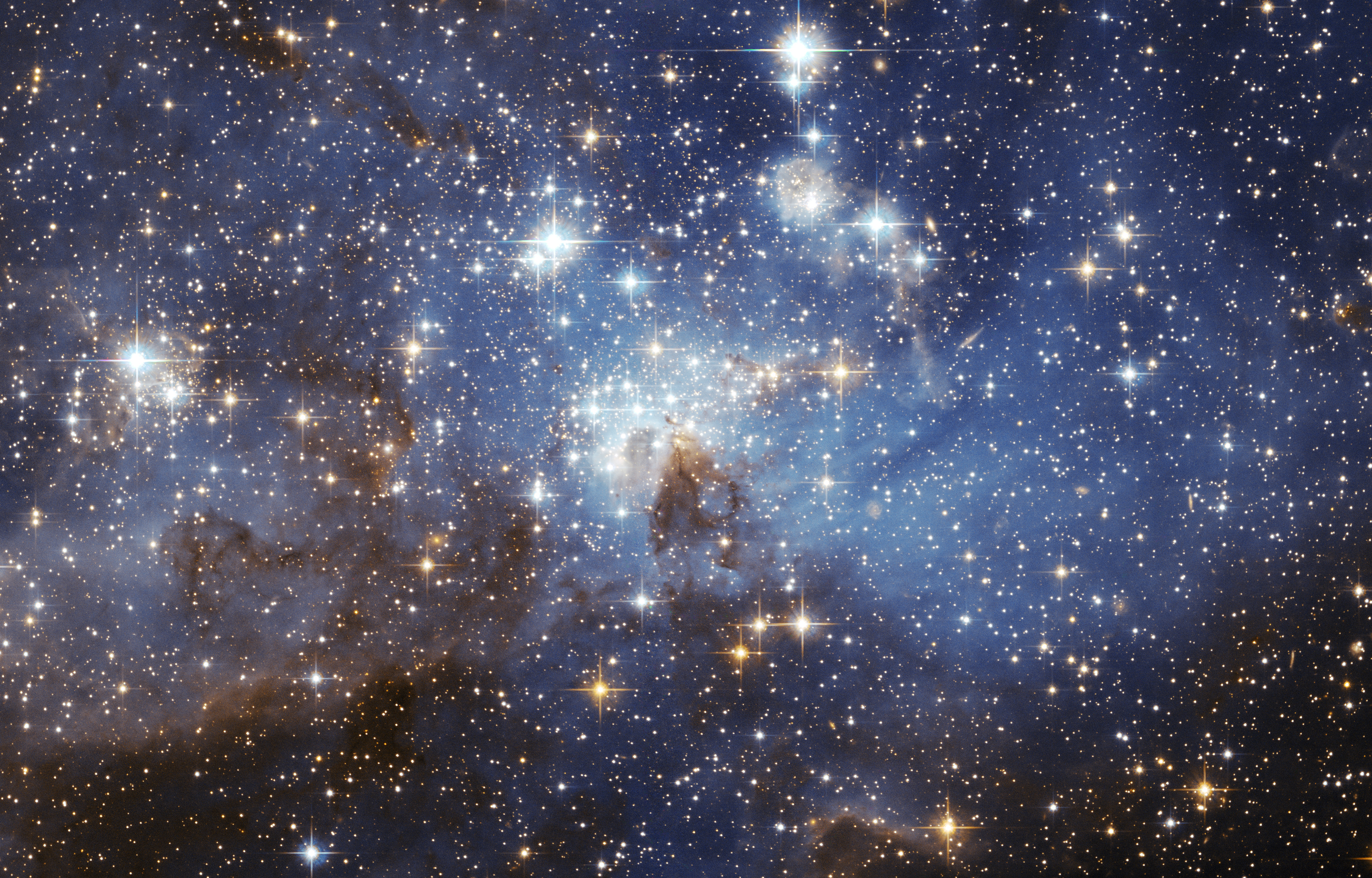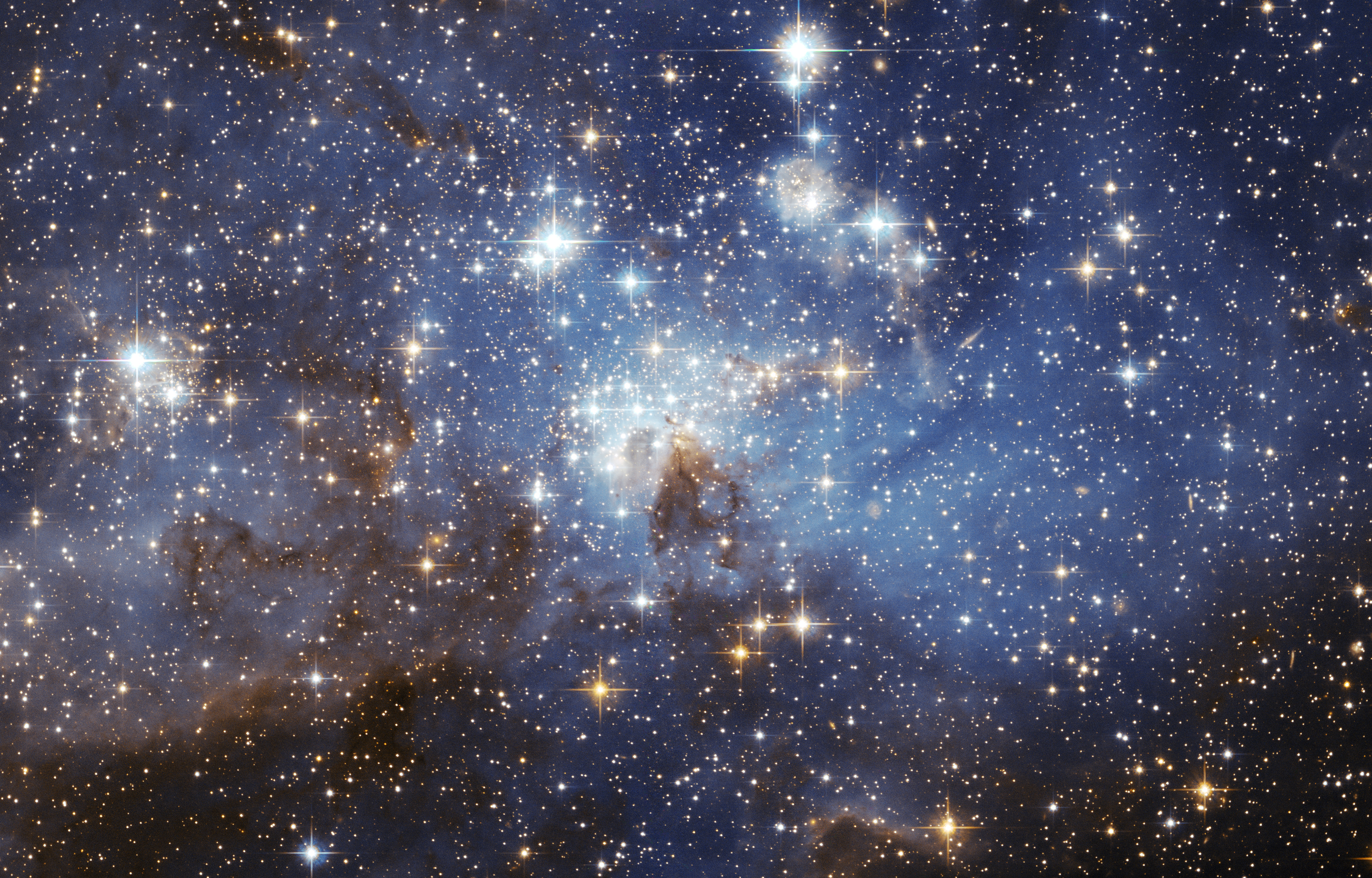
How do stars form? To better understand this complex and chaotic process, astronomers used the Hubble Space Telescope to image in unprecedented detail the star forming region LH 95 in the nearby Large Magellanic Cloud galaxy. Usually only the brightest, bluest, most massive stars in a star forming region are visible, but the above image was taken in such high resolution and in such specific colors that many recently formed stars that are more yellow, more dim, and less massive are also discernable. Also visible in the above scientifically colored image is a blue sheen of diffuse hydrogen gas heated by the young stars, and dark dust created by stars or during supernova explosions. Studying the locations and abundances of lower mass stars in star forming regions and around molecular clouds helps uncover what conditions were present when they formed. LH 95 spans about 150 light years and lies about 160,000 light years away toward the southern constellation of the Swordfish (Dorado).
¿Cómo se forman las estrellas? Para comprender mejor este proceso complejo y caótico, los astrónomos utilizaron el Telescopio Espacial Hubble para obtener imágenes con un detalle sin precedentes de la región de formación estelar LH 95 en la cercana galaxia de la Gran Nube de Magallanes. Normalmente, solo las estrellas más brillantes, más azules y más masivas de una región de formación estelar son visibles, pero la imagen anterior fue tomada con una resolución tan alta y en colores tan específicos que también se pueden distinguir muchas estrellas recientemente formadas que son más amarillas, más débiles y menos masivas. También visible en la imagen científicamente coloreada anterior hay un brillo azulado de gas hidrógeno difuso calentado por las estrellas jóvenes, y polvo oscuro creado por estrellas o durante explosiones de supernova. El estudio de las ubicaciones y abundancias de estrellas de menor masa en regiones de formación estelar y alrededor de nubes moleculares ayuda a revelar qué condiciones estaban presentes cuando se formaron. LH 95 abarca aproximadamente 150 años luz y se encuentra a unos 160,000 años luz de distancia hacia la constelación meridional de la Espada (Dorado).