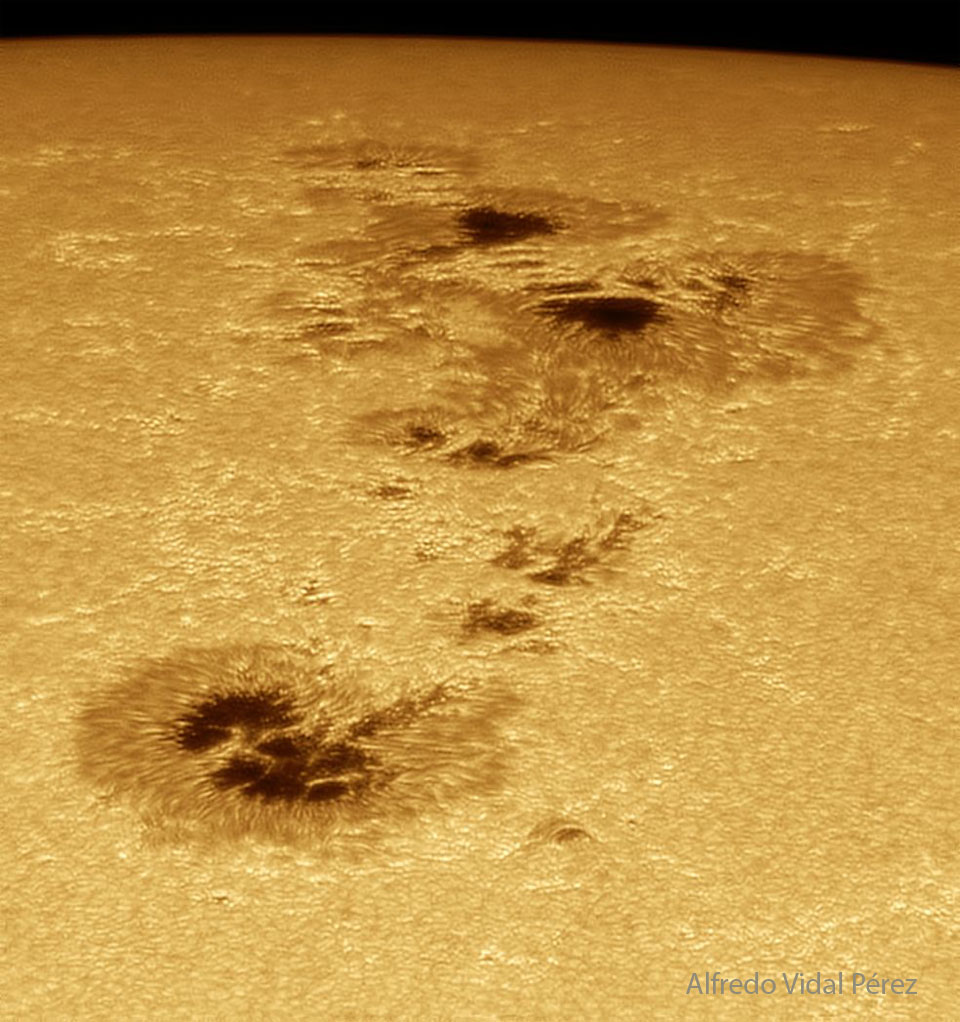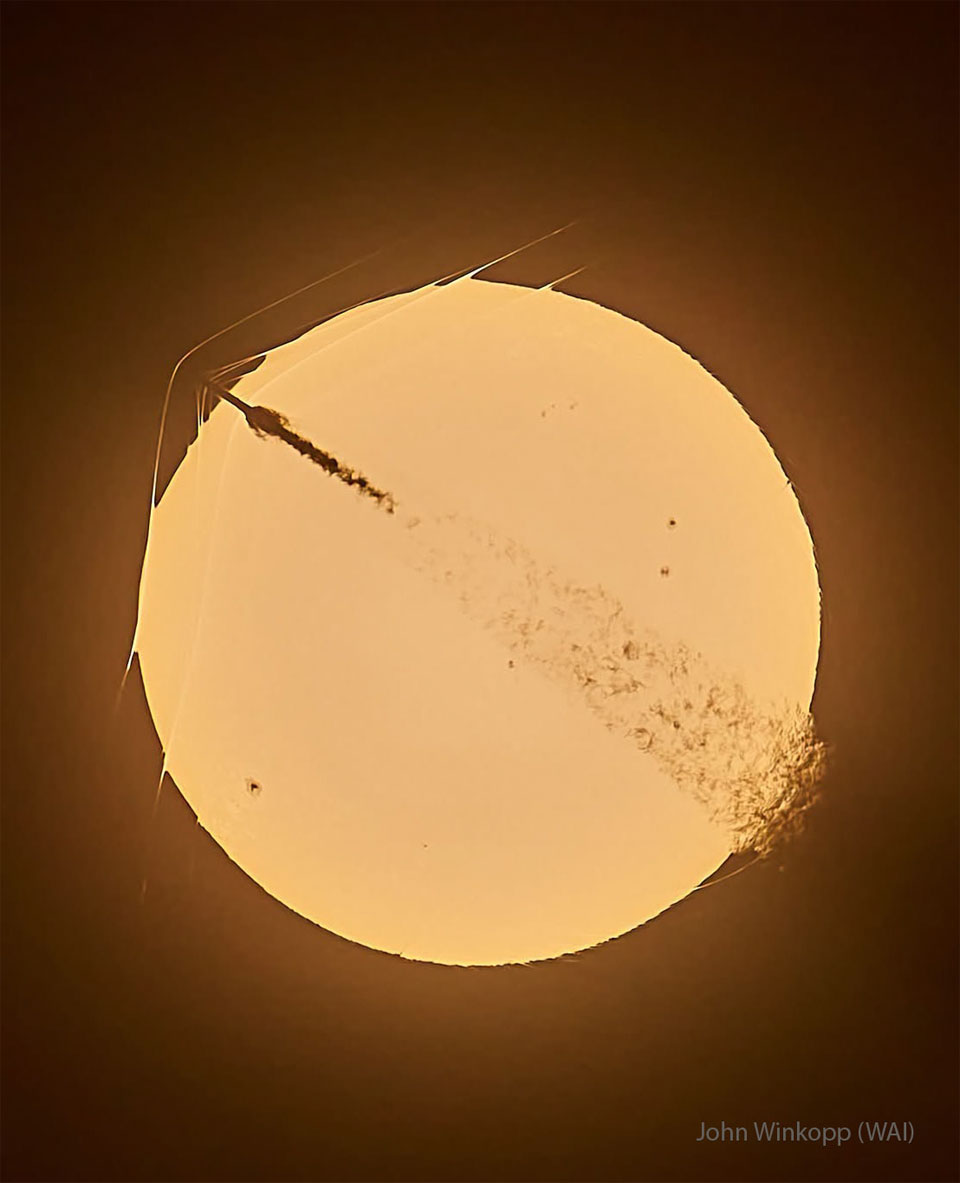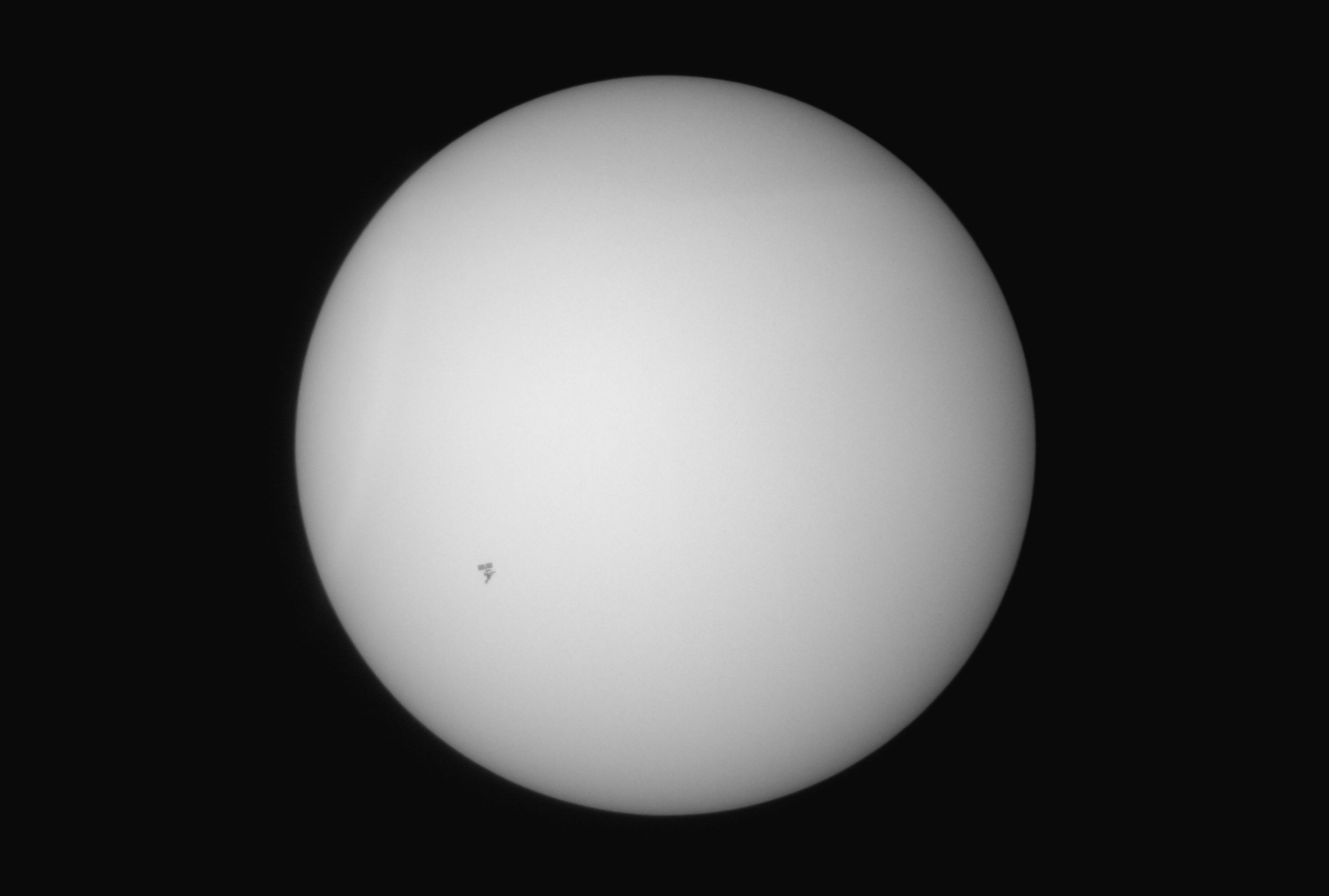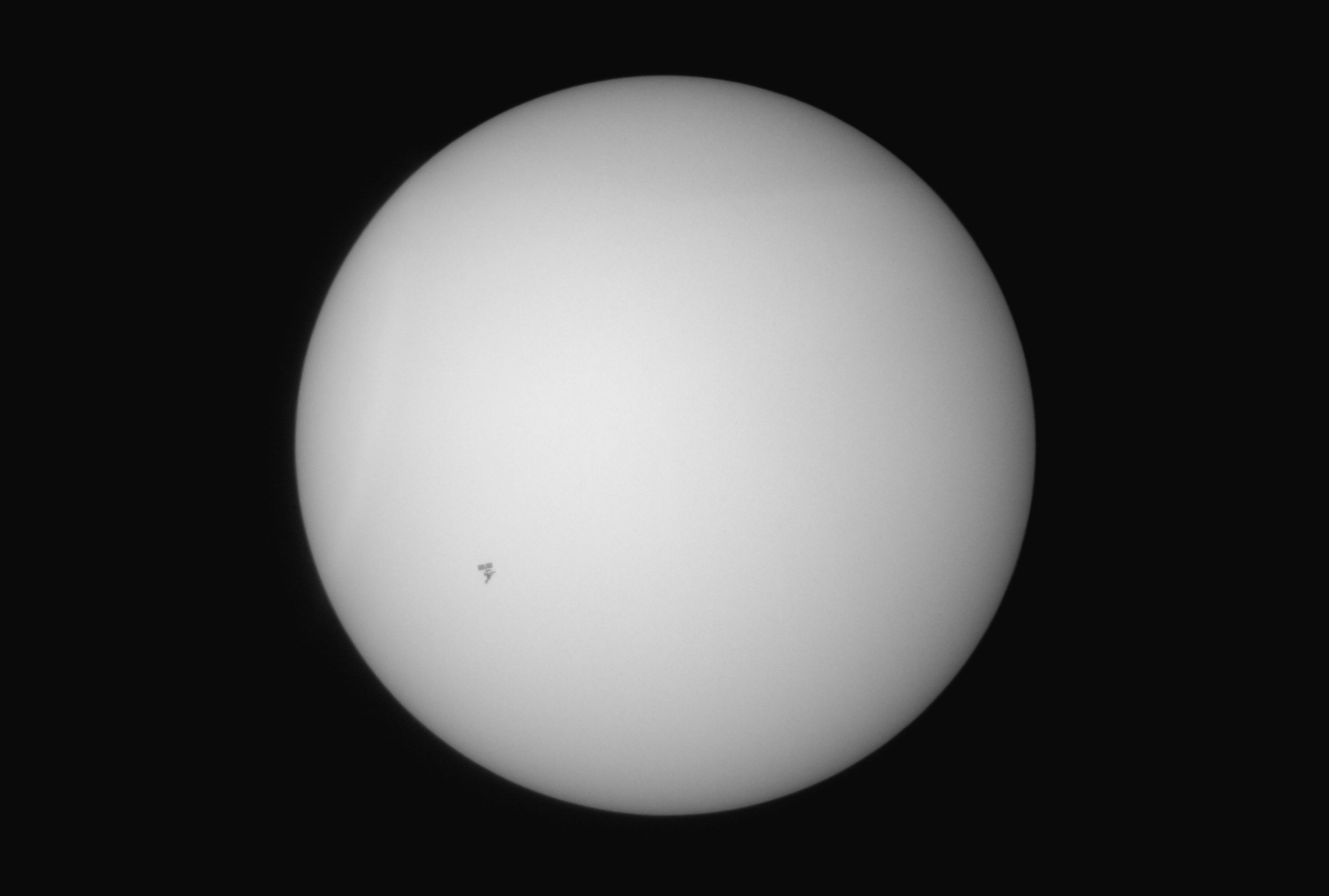
That's no sunspot. It's the International Space Station (ISS) caught by chance passing in front of the Sun. Sunspots, individually, have a dark central umbra, a lighter surrounding penumbra, and no solar panels. By contrast, the ISS is a complex and multi-spired mechanism, one of the largest and most sophisticated machines ever created by humanity. Also, sunspots occur on the Sun, whereas the ISS orbits the Earth. Transiting the Sun is not very unusual for the ISS, which orbits the Earth about every 90 minutes, but getting one's timing and equipment just right for a great image is rare. Strangely, besides that fake spot, the Sun, last week, lacked any real sunspots. Sunspots have been rare on the Sun since the dawn of the current Solar Minimum, a period of low solar activity. Although fewer sunspots have been recorded during this Solar Minimum than for many previous decades, the low solar activity is not, as yet, very unusual.
No se trata de una mancha solar. Es la Estación Espacial Internacional (EEI) capturada por casualidad pasando frente al Sol. Las manchas solares, individualmente, tienen una umbra central oscura, una penumbra circundante más clara y ningún panel solar. Por el contrario, la EEI es un mecanismo complejo y multirramificado, una de las máquinas más grandes y sofisticadas jamás creadas por la humanidad. Además, las manchas solares ocurren en el Sol, mientras que la EEI orbita la Tierra. El tránsito frente al Sol no es muy inusual para la EEI, que orbita la Tierra aproximadamente cada 90 minutos, pero lograr el tiempo y equipo precisos para obtener una imagen excelente es raro. Curiosamente, además de esa mancha falsa, el Sol, la semana pasada, carecía de manchas solares reales. Las manchas solares han sido raras en el Sol desde el comienzo del actual Mínimo Solar, un período de baja actividad solar. Aunque se han registrado menos manchas solares durante este Mínimo Solar que en muchas décadas anteriores, la baja actividad solar no es, aún, muy inusual.