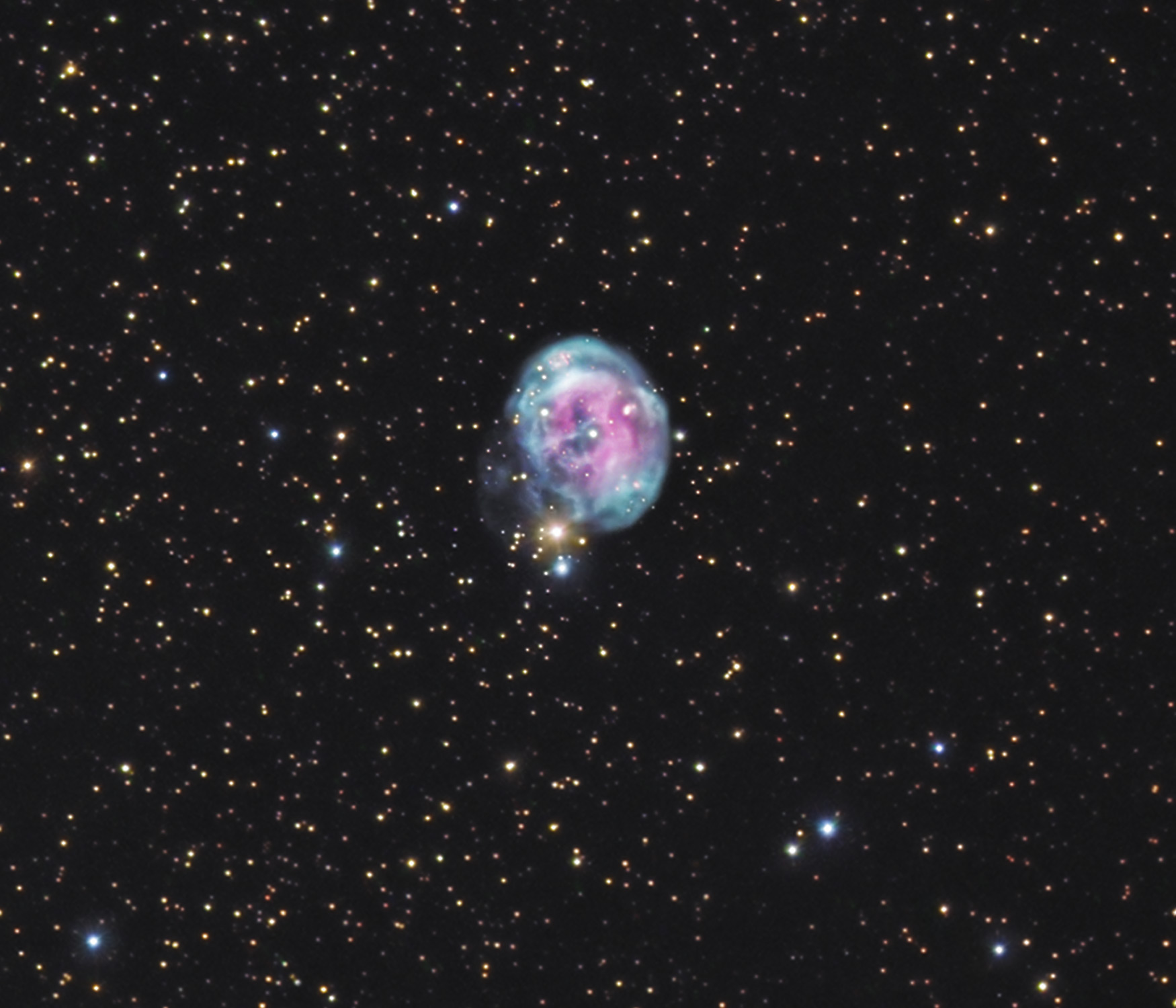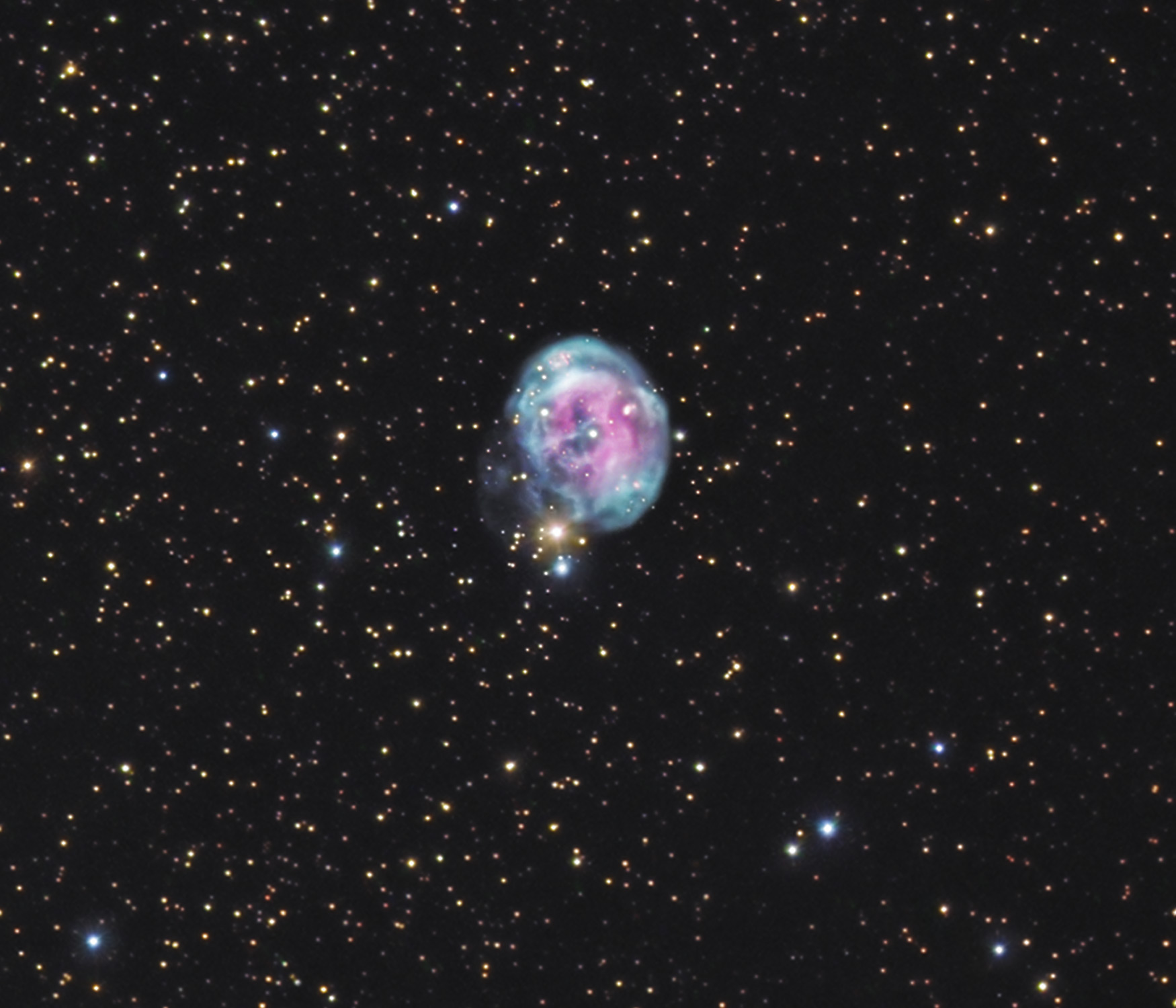
Compact and round, NGC 7008 is recognized as a planetary nebula about 2,800 light-years distant in the nebula rich constellation of Cygnus. This impressive telescopic view shows off NGC 7008's remarkable colors and details by the skillful combination of broad band and narrow band images from two different telescopes with about 12 hours of total exposure time. The intriguing assortment of features within the nebula's approximately 1 light-year diameter suggest its popular name, the Fetus Nebula, but planetary nebulae are not associated with star birth. Instead, nebulae like NGC 7008 are produced during a brief phase that sun-like stars pass through toward the end of their lives. Ejecting their outer layers, the stars cool to eventually become white dwarf stars, like the star seen near the center of NGC 7008. This colorful image also includes an unrelated but still lovely gold and blue binary star system just below NGC 7008. Announcement: APOD Editor RJN to open Final Frontier art exhibit in Ireland on August 28
Compacta y redondeada, NGC 7008 es reconocida como una nebulosa planetaria a aproximadamente 2.800 años luz de distancia en la constelación de Cisne, rica en nebulosas. Esta impresionante vista telescópica muestra los colores y detalles notables de NGC 7008 mediante la combinación hábil de imágenes de banda ancha y banda estrecha de dos telescopios diferentes, con un tiempo de exposición total de aproximadamente 12 horas. El intrigante conjunto de características dentro del diámetro aproximado de 1 año luz de la nebulosa sugiere su nombre popular, la Nebulosa del Feto, pero las nebulosas planetarias no están asociadas con el nacimiento de estrellas. En cambio, nebulosas como NGC 7008 se producen durante una breve fase que las estrellas similares al Sol atraviesan hacia el final de sus vidas. Al expulsar sus capas externas, las estrellas se enfrían para convertirse eventualmente en enanas blancas, como la estrella vista cerca del centro de NGC 7008. Esta imagen colorida también incluye un sistema de estrellas binarias oro y azul no relacionado pero aún hermoso justo debajo de NGC 7008.