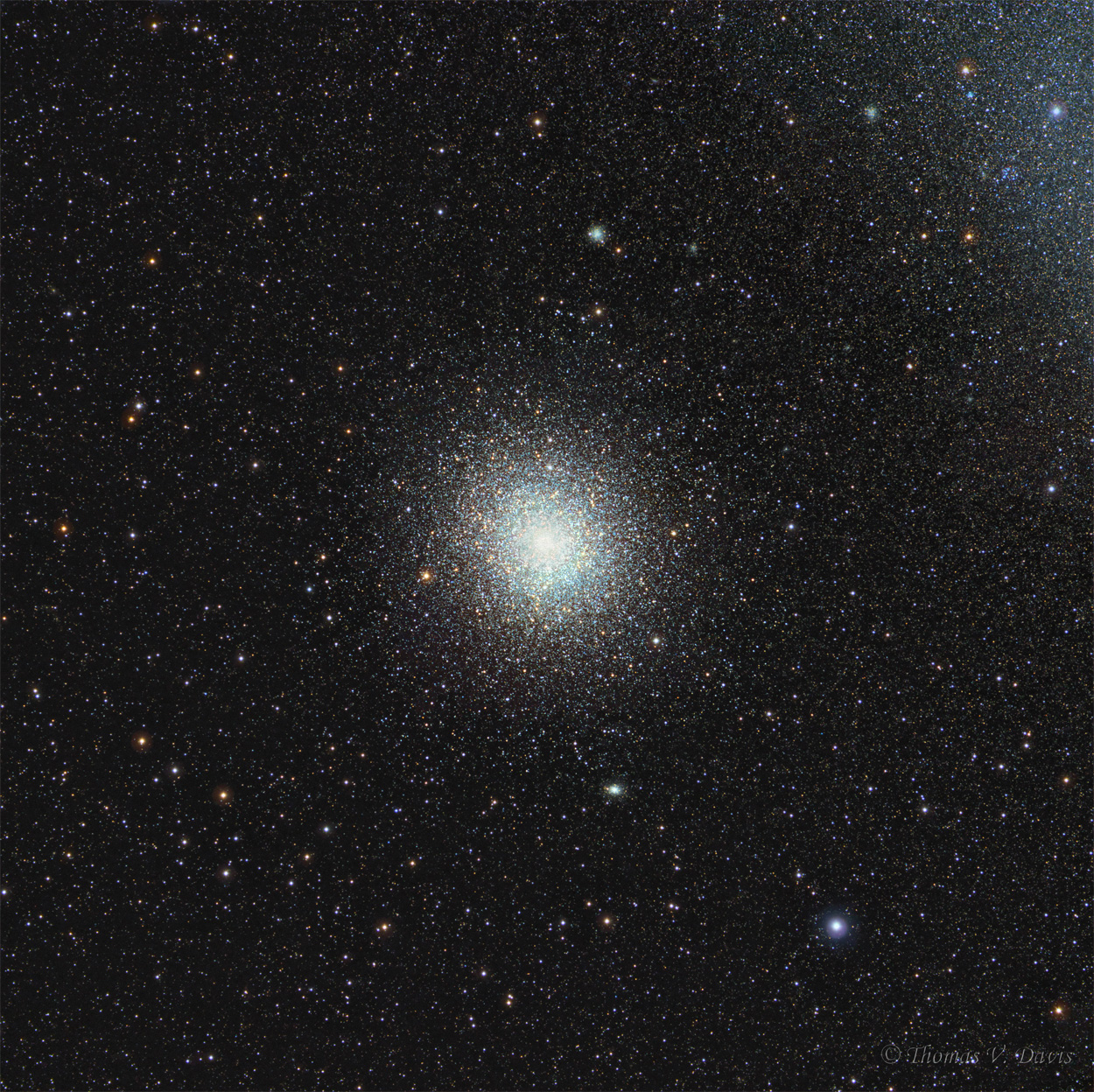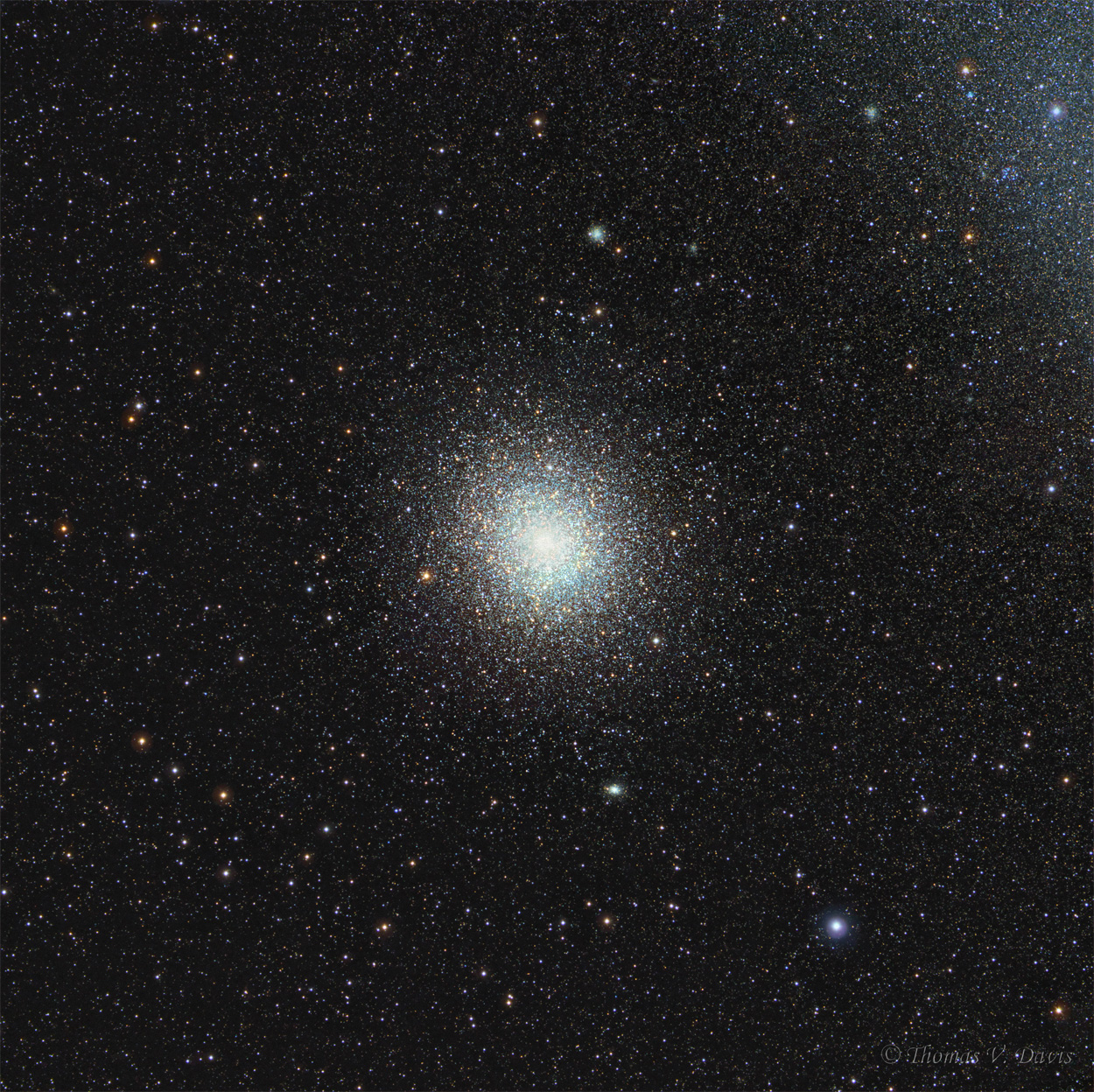
Stars come in bunches. Of the over 200 globular star clusters that orbit the center of our Milky Way Galaxy, 47 Tucanae is the second brightest globular cluster (behind Omega Centauri). Light takes about 13,000 years to reach us from 47 Tuc which can be seen on the sky near the Small Magellanic Cloud in the southern constellation of Tucana. Also known as NGC 104, the dense cluster is made up of several million stars in a volume only about 120 light-years across. The cluster's red giant stars are particularly easy to see in this picture. The globular cluster is also home to exotic x-ray binary star systems. Announcement: APOD Editor RJN to open Final Frontier art exhibit in Ireland on August 28
Las estrellas vienen en grupos. De los más de 200 cúmulos globulares de estrellas que orbitan alrededor del centro de nuestra galaxia Vía Láctea, 47 Tucanae es el segundo cúmulo globular más brillante (detrás de Omega Centauri). La luz tarda aproximadamente 13 000 años en llegarnos desde 47 Tuc, que se puede ver en el cielo cerca de la Pequeña Nube de Magallanes en la constelación austral de Tucana. También conocido como NGC 104, el denso cúmulo está compuesto por varios millones de estrellas en un volumen de solo unos 120 años luz de diámetro. Las gigantes rojas del cúmulo son particularmente fáciles de ver en esta imagen. El cúmulo globular también es hogar de exóticos sistemas de estrellas binarias de rayos X.