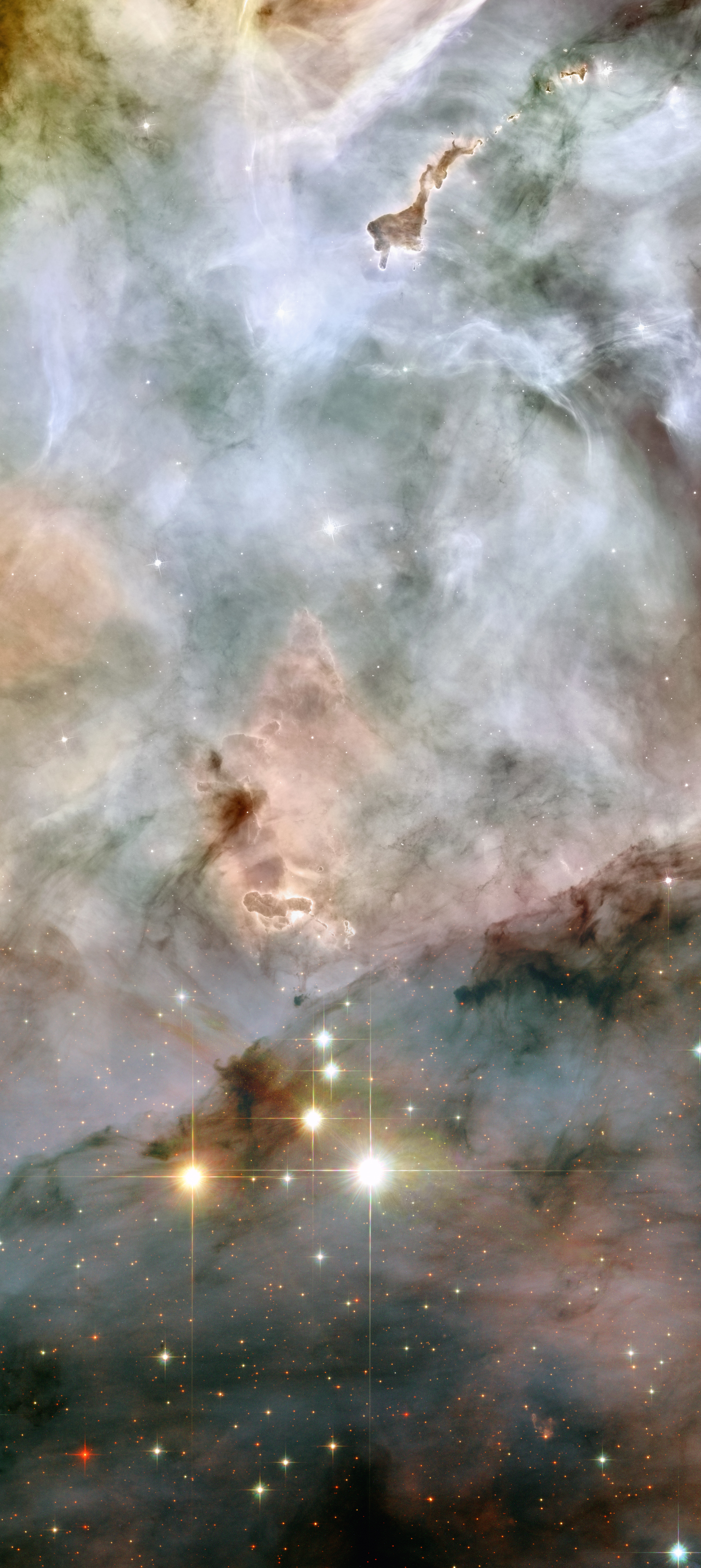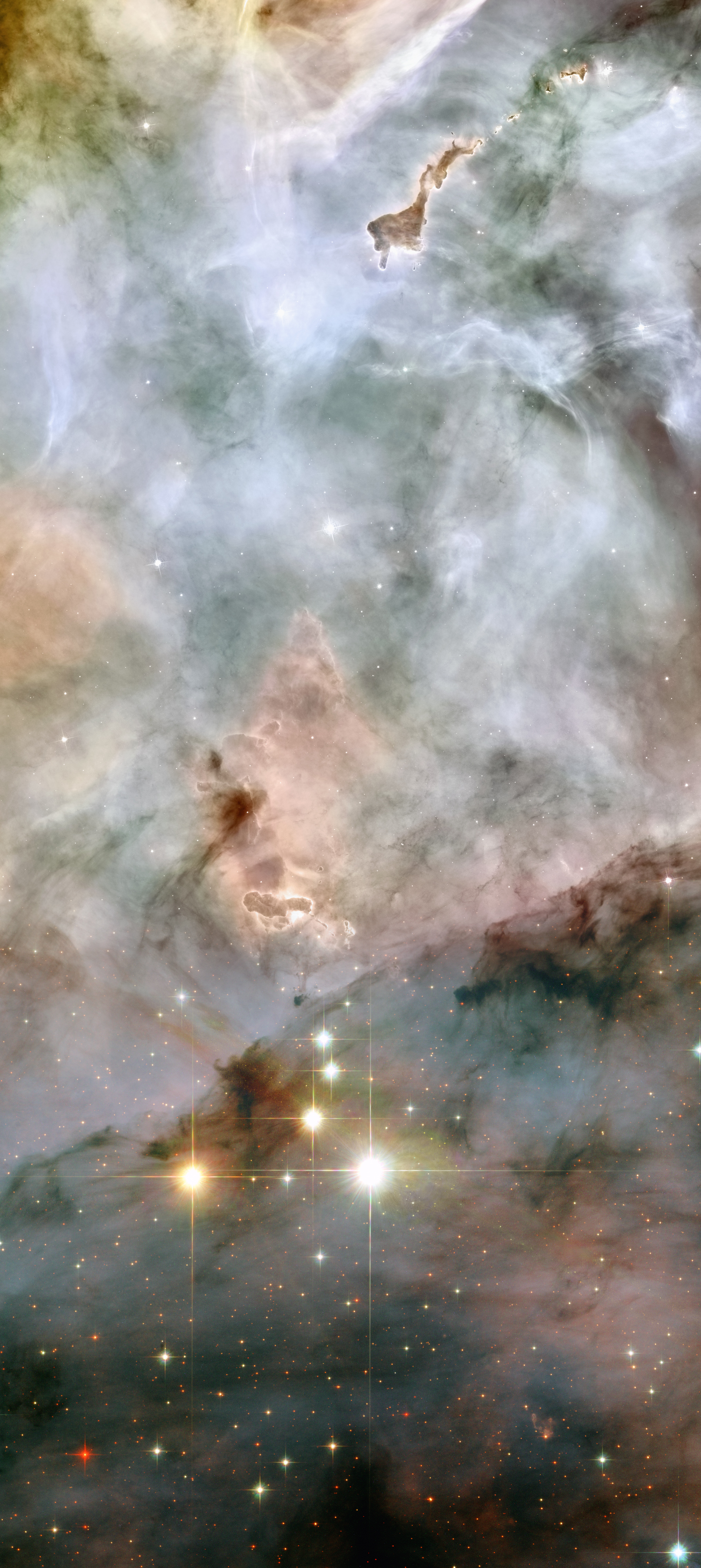
How massive can stars be? Big, hefty stars live short violent lives that can profoundly affect their environments. Isolating a massive star can be problematic, however, since what seems to be a single bright star might actually turn out to be several stars close together. Such was the case for two of the brightest objects visible in the open star cluster Trumpler 16, located in the southern Carina Nebula. Upon close inspection by the Hubble Space Telescope, WR 25, the brightest object in the above image, was confirmed to consist of at least two separate stars. Additionally, Tr16 -244, just to the upper right of WR 25, was resolved for the first time to be at least three individual stars. Even so, the brightest star in WR 25 appears to be about 50 times the mass of our Sun, making it one of the more massive stars known. Winds from these stars are likely significant contributers to the large bubble that the star cluster sits in. The Carina Nebula, home to unusually shaped dust clouds and the famous variable star Eta Carina, lies about 7,500 light years away toward the constellation of Ship's Keel (Carina).
¿Cuán masivas pueden ser las estrellas? Las estrellas grandes y pesadas viven vidas cortas y violentas que pueden afectar profundamente sus entornos. Sin embargo, aislar una estrella masiva puede ser problemático, ya que lo que parece ser una única estrella brillante podría resultar ser varias estrellas muy cercanas entre sí. Este fue el caso de dos de los objetos más brillantes visibles en el cúmulo abierto Trumpler 16, ubicado en la Nebulosa de Carina meridional. Tras una inspección minuciosa del Telescopio Espacial Hubble, WR 25, el objeto más brillante en la imagen anterior, fue confirmado que consiste en al menos dos estrellas separadas. Además, Tr16-244, justo en la esquina superior derecha de WR 25, fue resuelto por primera vez para ser al menos tres estrellas individuales. Aun así, la estrella más brillante en WR 25 parece tener una masa de aproximadamente 50 veces la de nuestro Sol, lo que la convierte en una de las estrellas más masivas conocidas. Los vientos de estas estrellas probablemente son contribuyentes significativos a la gran burbuja en la que se encuentra el cúmulo estelar. La Nebulosa de Carina, hogar de nubes de polvo de formas inusuales y la famosa estrella variable Eta Carina, se encuentra a aproximadamente 7.500 años luz de distancia hacia la constelación de la Quilla (Carina).