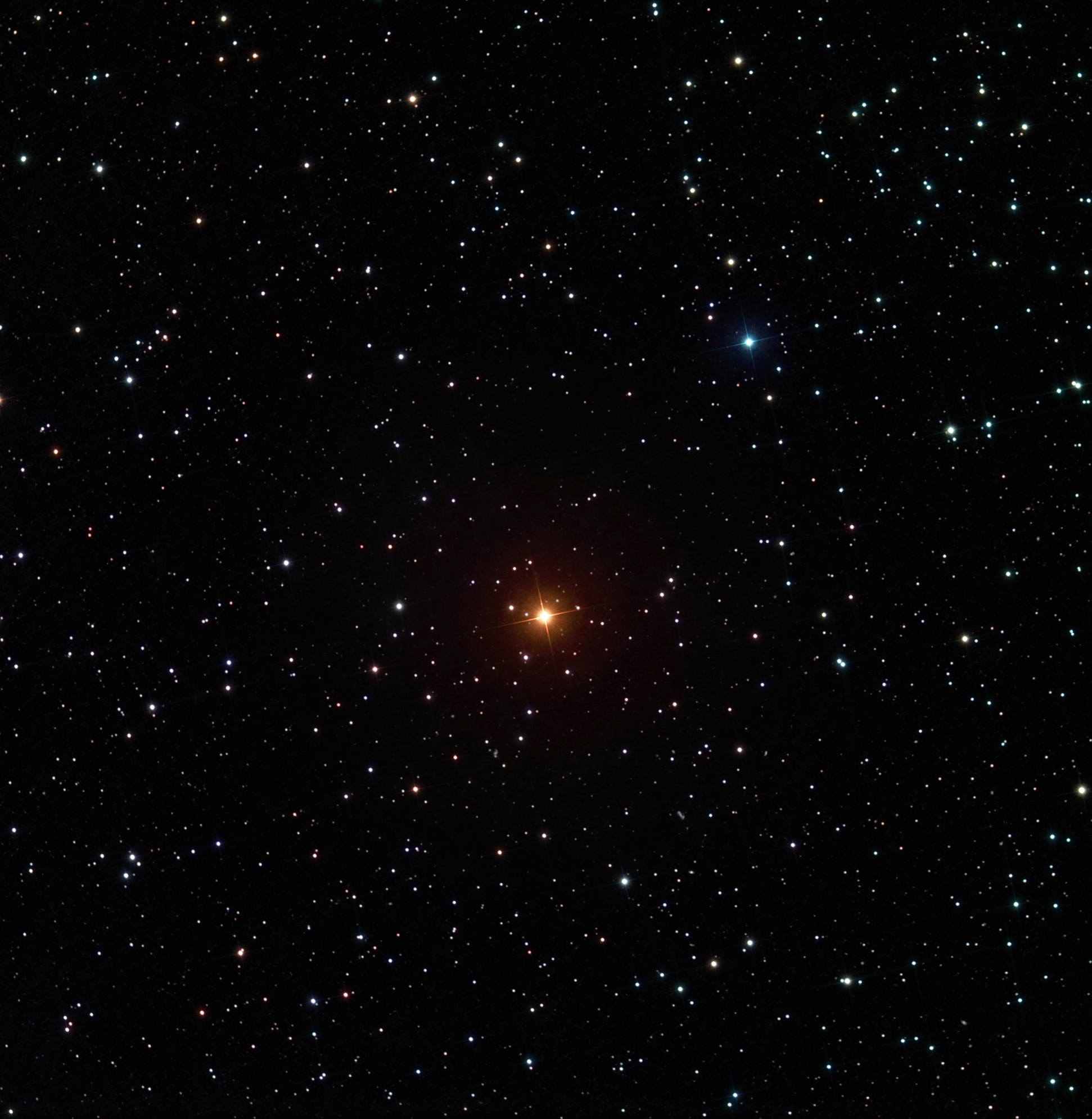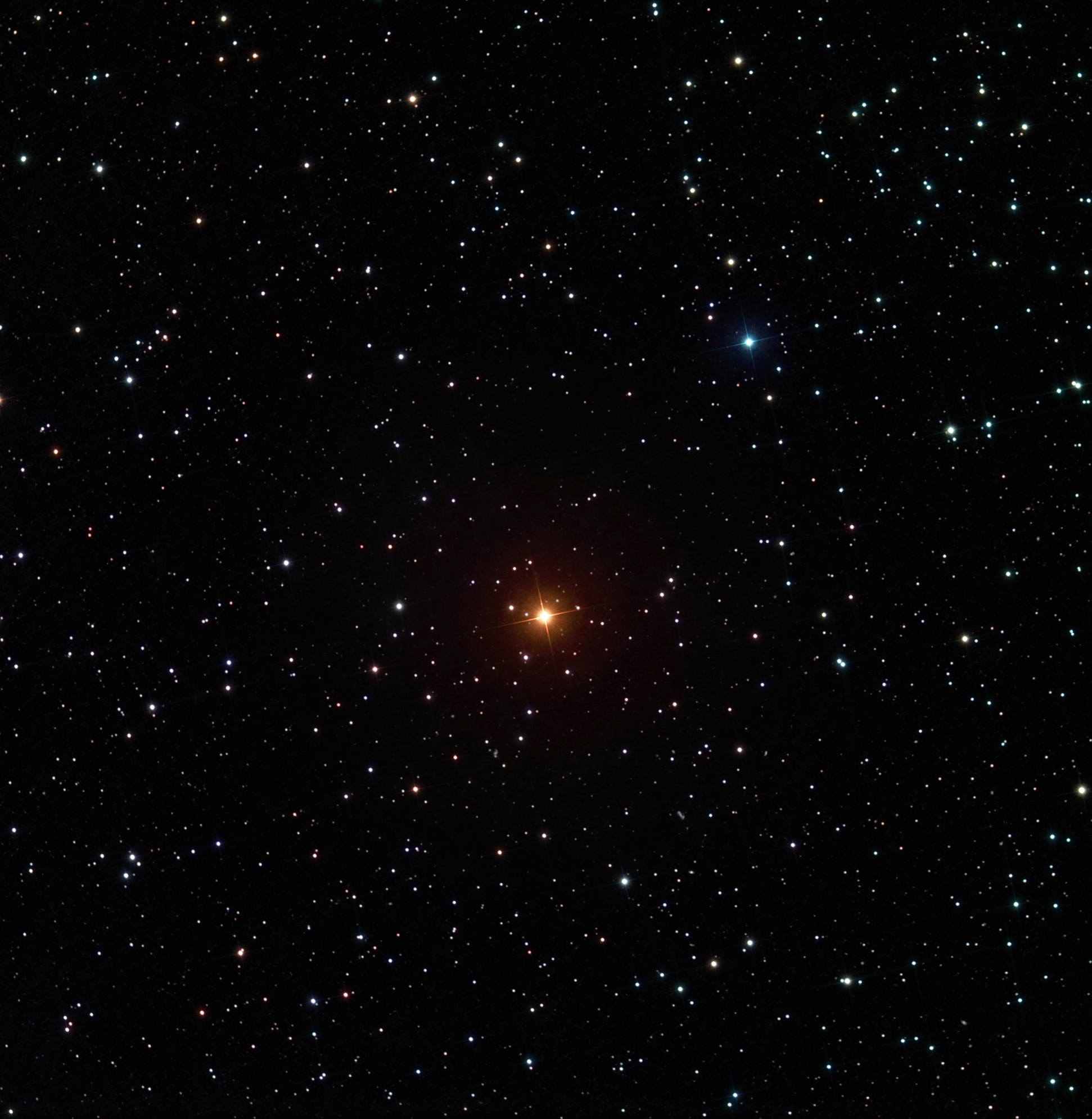
Y Canum Venaticorum (Y CVn) is a very rare star in planet Earth's night sky. It's also very red, exhibiting such a remarkable spectrum of light, 19th century astronomer Angelo Secchi dubbed it La Superba. Located 710 light-years away in northern constellation Canes Venatici (the Hunting Dogs), the star varies in brightness over a period of about half a year. Near maximum, it becomes just bright enough to see with the unaided eye, but the star's beautiful red hue is easy to see in binoculars or a small telescope. In fact, La Superba is among the brightest of the carbon stars - cool, highly evolved red giant stars with exceptional abundances of carbon. The carbon is created by helium fusion near the stellar core and dredged up into the stars' outer layers. The resulting overabundance of simple carbon molecules (like CO, CN, C2) in the atmospheres of carbon stars strongly absorbs bands of bluer light and gives these stars a deep red color. La Superba is losing its carbon-rich atmosphere into the surrounding interstellar material through a strong stellar wind, and could be near the beginning of a transition to a planetary nebula phase.
Y Canum Venaticorum (Y CVn) es una estrella muy rara en el cielo nocturno de la Tierra. También es muy roja y exhibe un espectro de luz tan notable que el astrónomo del siglo XIX Angelo Secchi la bautizó como La Superba. Ubicada a 710 años luz de distancia en la constelación boreal de Canes Venatici (los Perros de Caza), la estrella varía en brillo durante un período de aproximadamente medio año. Cerca de su brillo máximo, se vuelve lo suficientemente brillante para verse a simple vista, pero el hermoso matiz rojo de la estrella es fácil de observar con binoculares o un pequeño telescopio. De hecho, La Superba se encuentra entre las más brillantes de las estrellas de carbono: estrellas gigantes rojas frías, altamente evolucionadas, con abundancias excepcionales de carbono. El carbono se crea por la fusión del helio cerca del núcleo estelar y es arrastrado hacia las capas exteriores de las estrellas. El sobreabundancia resultante de moléculas de carbono simples (como CO, CN, C2) en las atmósferas de las estrellas de carbono absorbe fuertemente las bandas de luz azul y confiere a estas estrellas un color rojo profundo. La Superba está perdiendo su atmósfera rica en carbono hacia el material interestelar circundante a través de un fuerte viento estelar y podría estar cerca del comienzo de una transición hacia una fase de nebulosa planetaria.