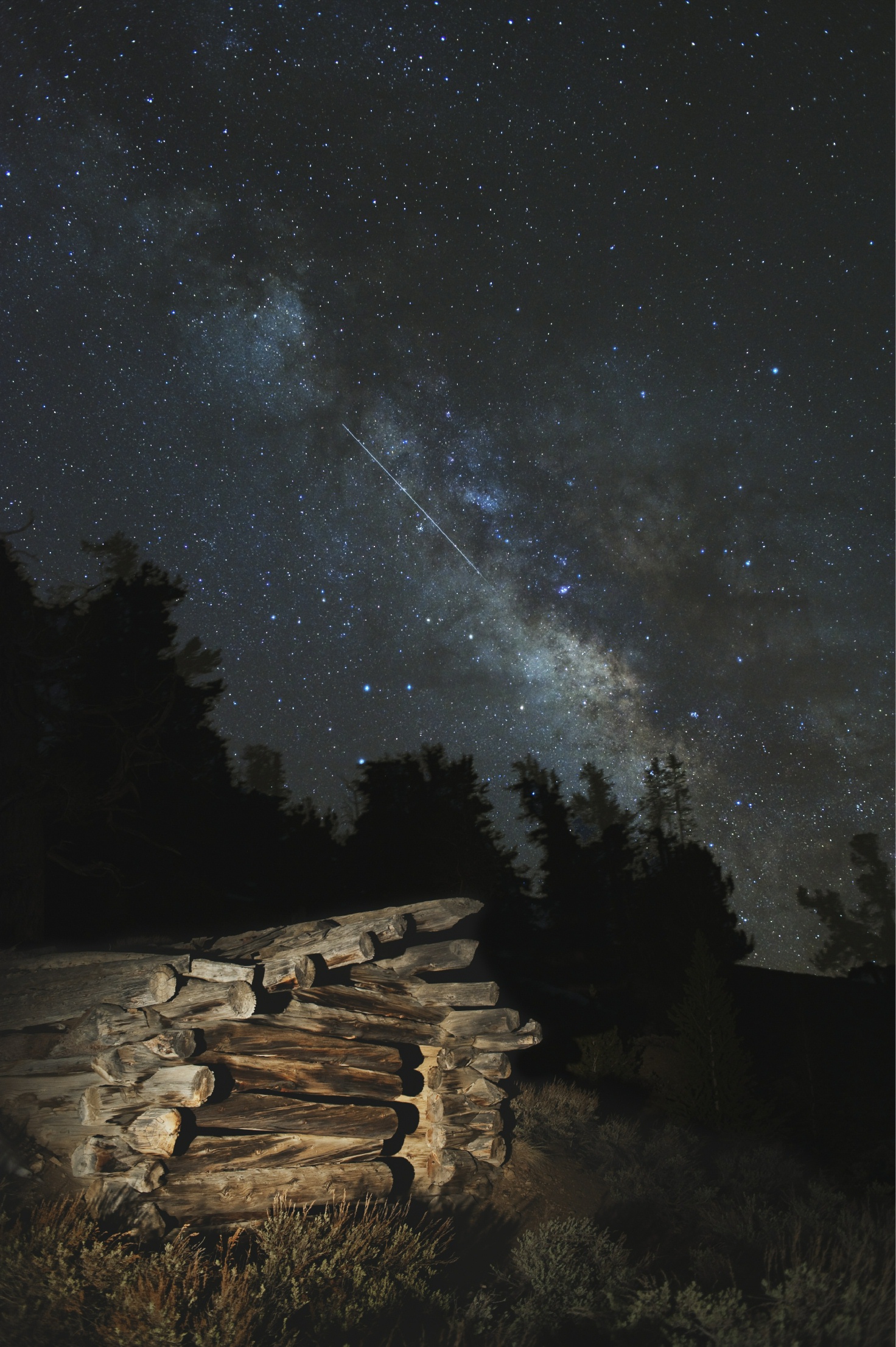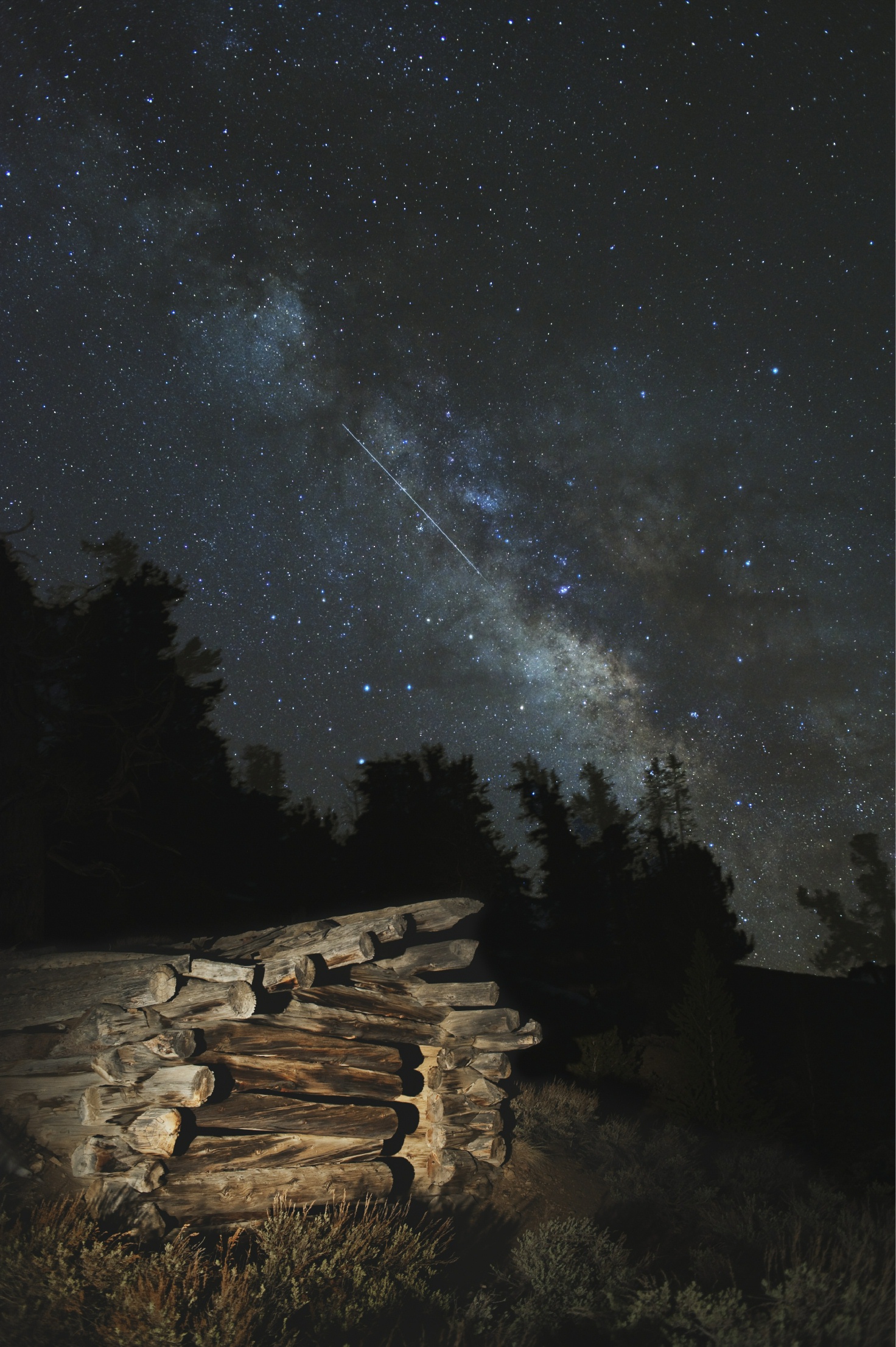
On April 22nd, the Lyrid Meteor Shower visited planet Earth's sky, an annual shower produced as the Earth plows through dust from the tail of comet Thatcher. Usually Lyrid meteor watchers see only a drizzle. Just a few meteors per hour stream away from the shower's radiant point near bright star Vega in the constellation Lyra. But photographer Tony Rowell still managed to catch one bright Lyrid meteor. Recorded in early morning hours, his well-composed image looks toward the south from White Mountains of eastern California, USA. During the time exposure, he briefly illuminated an old mining cabin in the region's Ancient Bristlecone Pine Forest in the foreground. The rich starfields and dust clouds of our own Milky Way galaxy stretch across the background, along the meteor's glowing trail.
El 22 de abril, la lluvia de meteoros Lyrid visitó el cielo de la Tierra, una lluvia anual producida cuando la Tierra atraviesa el polvo de la cola del cometa Thatcher. Los observadores de los meteoros Lyrid normalmente ven solo una ligera lluvia. Solo unos pocos meteoros por hora se alejan del punto radiante de la lluvia, cerca de la brillante estrella Vega en la constelación de Lyra. Sin embargo, el fotógrafo Tony Rowell logró capturar un meteorito Lyrid brillante. Registrada en horas de la madrugada, su bien compuesta imagen mira hacia el sur desde las White Mountains del este de California, EE. UU. Durante la exposición prolongada, iluminó brevemente una antigua cabaña minera en la región de la Ancient Bristlecone Pine Forest en primer plano. Los ricos campos estelares y las nubes de polvo de nuestra propia galaxia, la Vía Láctea, se extienden a lo largo del fondo, a lo largo de la brillante trayectoria del meteorito.