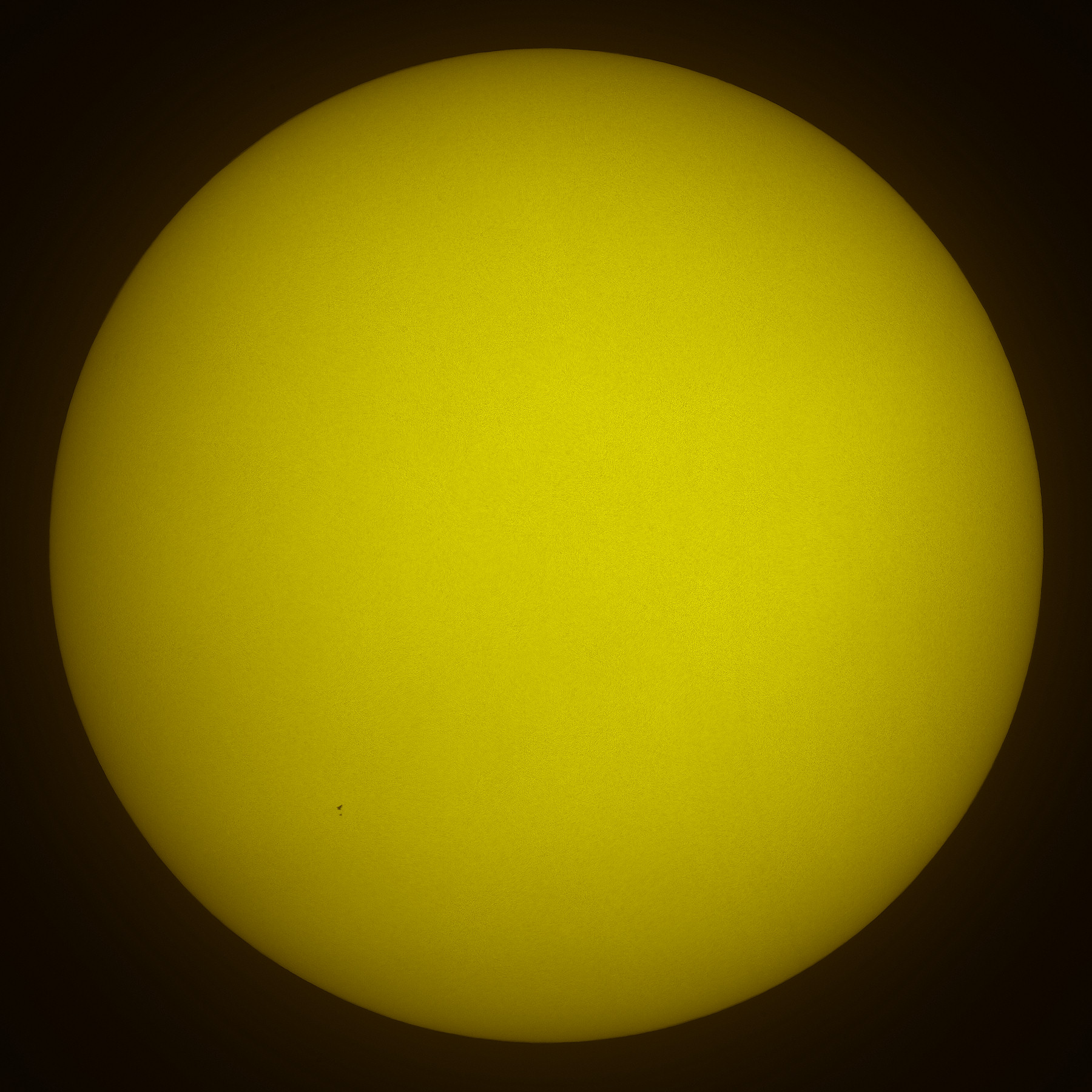
On Wednesday, May 13, two, tiny, fast moving spots crossed an otherwise featureless solar disk. Not sunspots though, the dark blemishes were silhouettes of the shuttle orbiter Atlantis and the Hubble Space Telescope side by side. To record this sharp picture of the orbiting pair against the face of the Sun, astronomer Thierry Legault carefully set up his camera and telescope near the center of a 5 kilometer wide path of visibility about 100 kilometers south of Kennedy Space Center in Florida. He opened the shutter for 1/8,000 second at 12:17 EDT, catching Atlantis and Hubble at a range of 600 kilometers while they were moving at 7 kilometers/second. The total duration of the transit (Sun crossing) was 0.8 seconds. Enlarged in the inset view, Atlantis (top) is approaching Hubble prior to capturing the space telescope. Thursday, astronauts began a series of spacewalks to perform the maintenance as part of the final mission to Hubble.
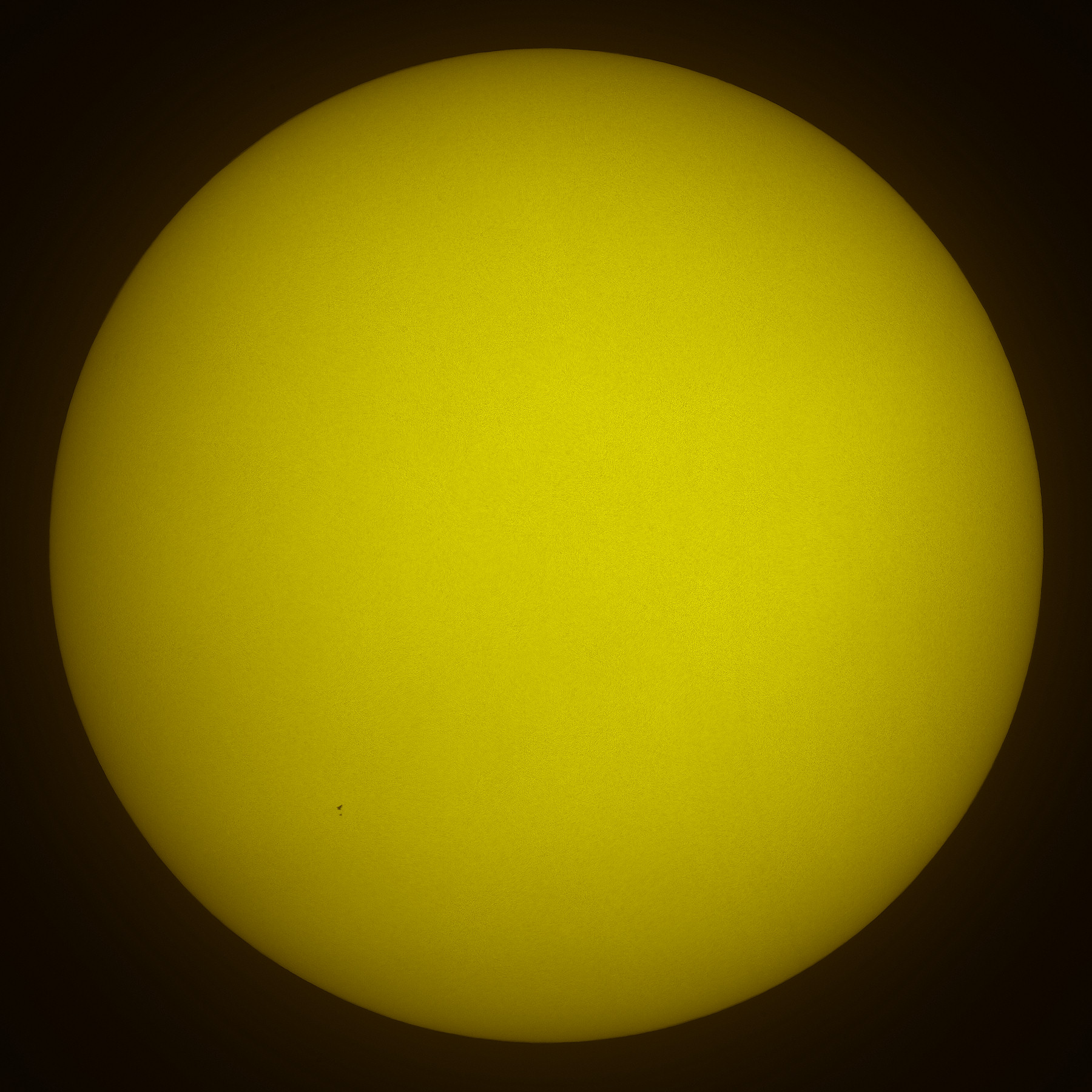
Crédito: Thierry Legault El 13 de mayo, dos pequeños puntos en movimiento rápido cruzaron un disco solar aparentemente sin características. No eran manchas solares, sino que las manchas oscuras eran siluetas de la nave Atlantis y del Telescopio Espacial Hubble, uno al lado del otro. Para registrar esta imagen nítida del par en órbita contra la cara del Sol, el astrónomo Thierry Legault configuró cuidadosamente su cámara y telescopio cerca del centro de un camino de visibilidad de 5 kilómetros de ancho, aproximadamente 100 kilómetros al sur del Centro Espacial Kennedy en Florida. Abrió el obturador durante 1/8000 de segundo a las 12:17 hora del este, capturando a Atlantis y Hubble a una distancia de 600 kilómetros mientras se movían a 7 kilómetros por segundo. La duración total del tránsito (cruce solar) fue de 0.8 segundos. En la vista ampliada del recuadro, Atlantis (arriba) se acerca a Hubble antes de capturar el telescopio espacial. El jueves, los astronautas comenzaron una serie de paseos espaciales para realizar el mantenimiento como parte de la misión final a Hubble.