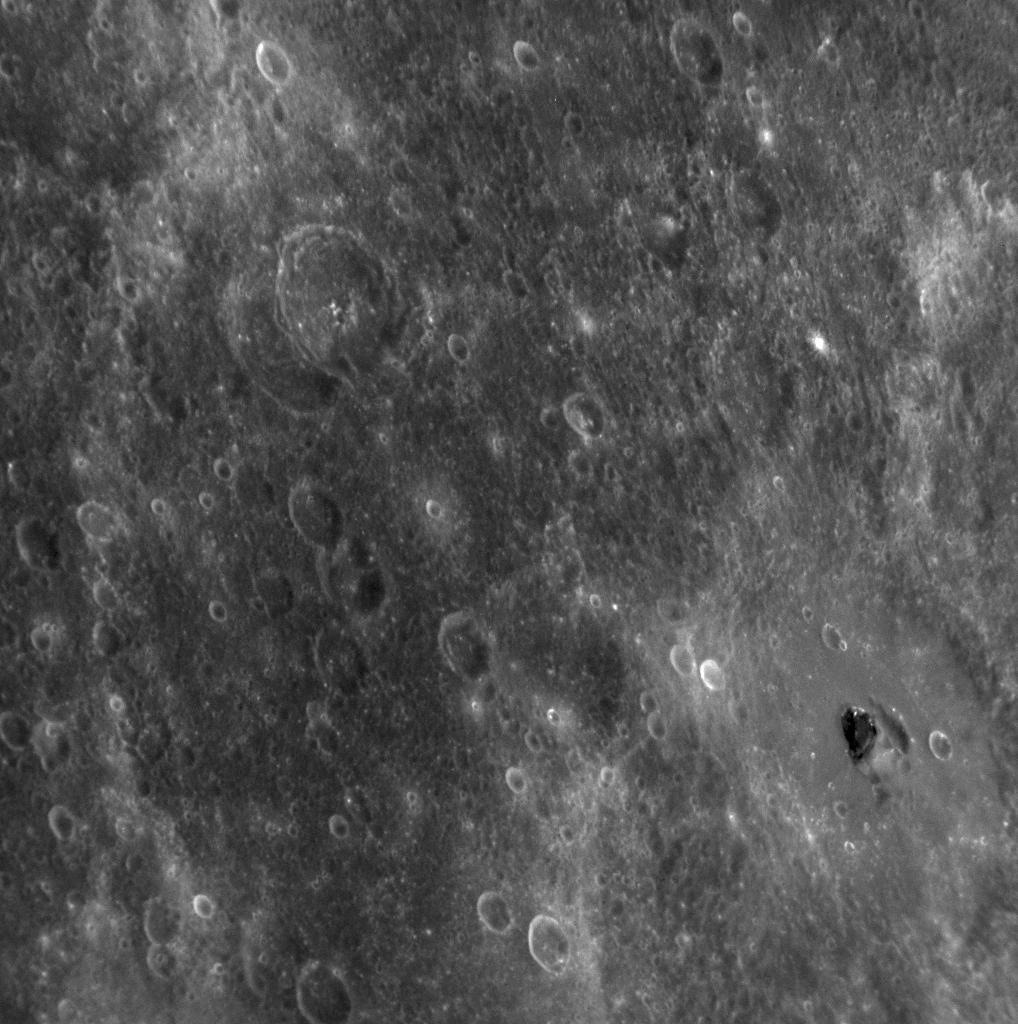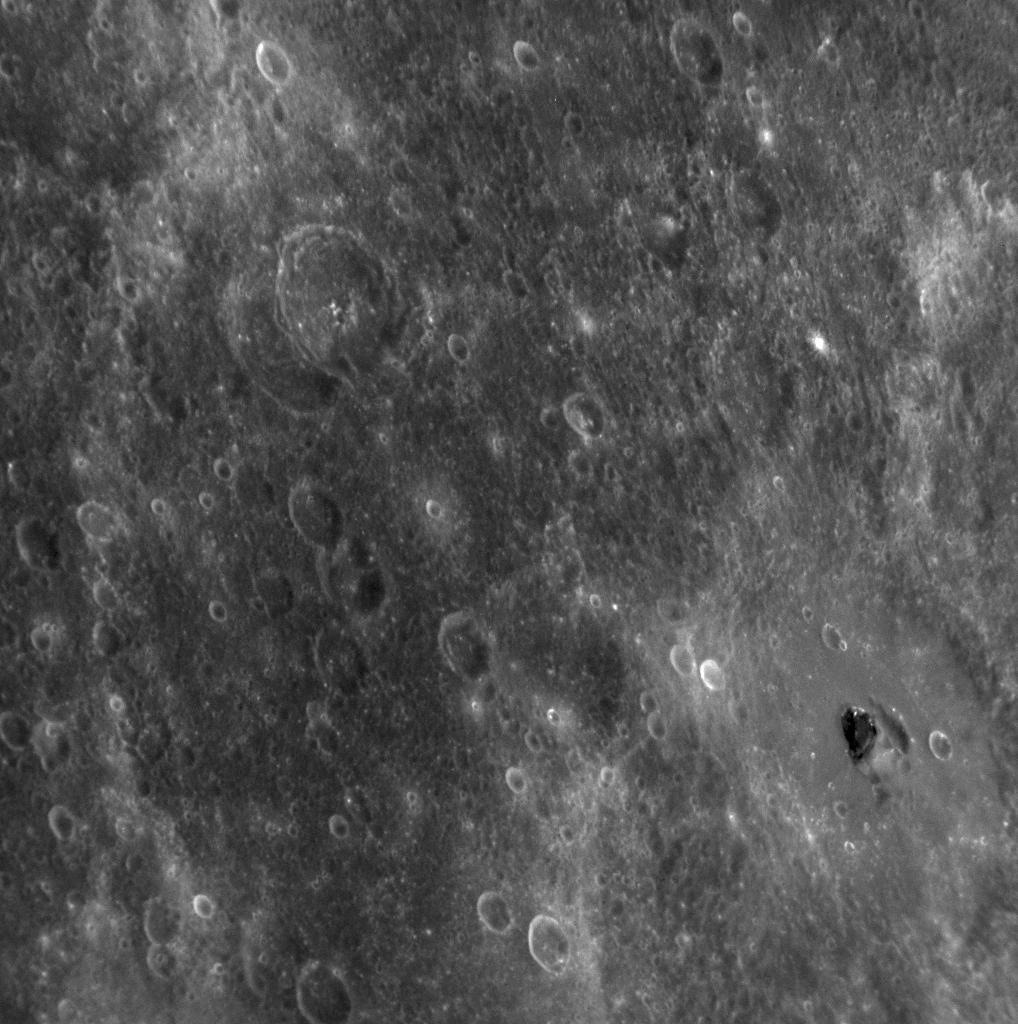
What is that strange material on Mercury? When flying by Mercury last October, the robotic MESSENGER spacecraft imaged much of the solar system's innermost planet in unprecedented detail. As common in science, new data bring new mysteries. Pictured above on the lower right, a large crater -- about 100 kilometers across -- has unusual dark material of unknown composition near its center. The material's darkness does not appear to be caused by shadows, as the Sun was near zenith when the image was taken. One origin hypothesis is that the dark material was uncovered from beneath Mercury's surface during the impact that created the surrounding crater. If so, the composition of the dark mound might be similar to the composition of some mysterious dark rings also recently discovered on Mercury. Alternatively, the dark material could be related to an unusual composition of the impacting rock. MESSENGER will buzz past Mercury again later this year before entering orbit in 2011.
¿Qué es ese material extraño en Mercurio? Cuando la nave espacial robótica MESSENGER pasó por Mercurio el mes pasado de octubre, tomó imágenes de gran parte del planeta más interno del sistema solar con un detalle sin precedentes. Como es común en la ciencia, nuevos datos traen nuevos misterios. En la imagen, a la derecha inferior, se muestra un gran cráter, de aproximadamente 100 kilómetros de diámetro, que tiene un material oscuro de composición desconocida cerca de su centro. La oscuridad del material no parece deberse a sombras, ya que el Sol estaba cerca del cenit cuando se tomó la imagen. Una hipótesis sobre su origen es que el material oscuro fue expuesto desde debajo de la superficie de Mercurio durante el impacto que creó el cráter circundante. Si es así, la composición del montículo oscuro podría ser similar a la de algunos anillos oscuros misteriosos también recientemente descubiertos en Mercurio. Como alternativa, el material oscuro podría estar relacionado con una composición inusual de la roca que impactó. MESSENGER pasará nuevamente por Mercurio a finales de este año antes de entrar en órbita en 2011.