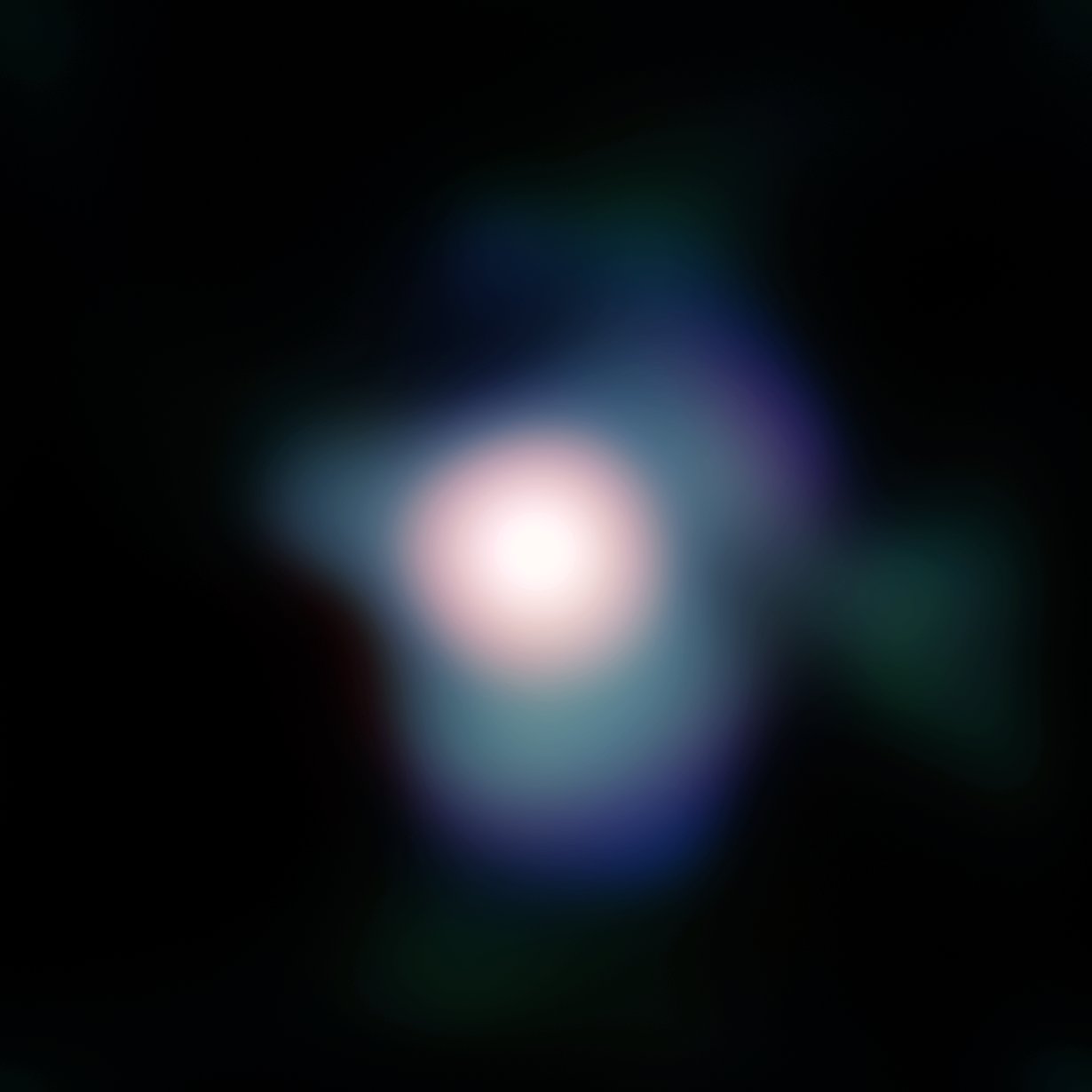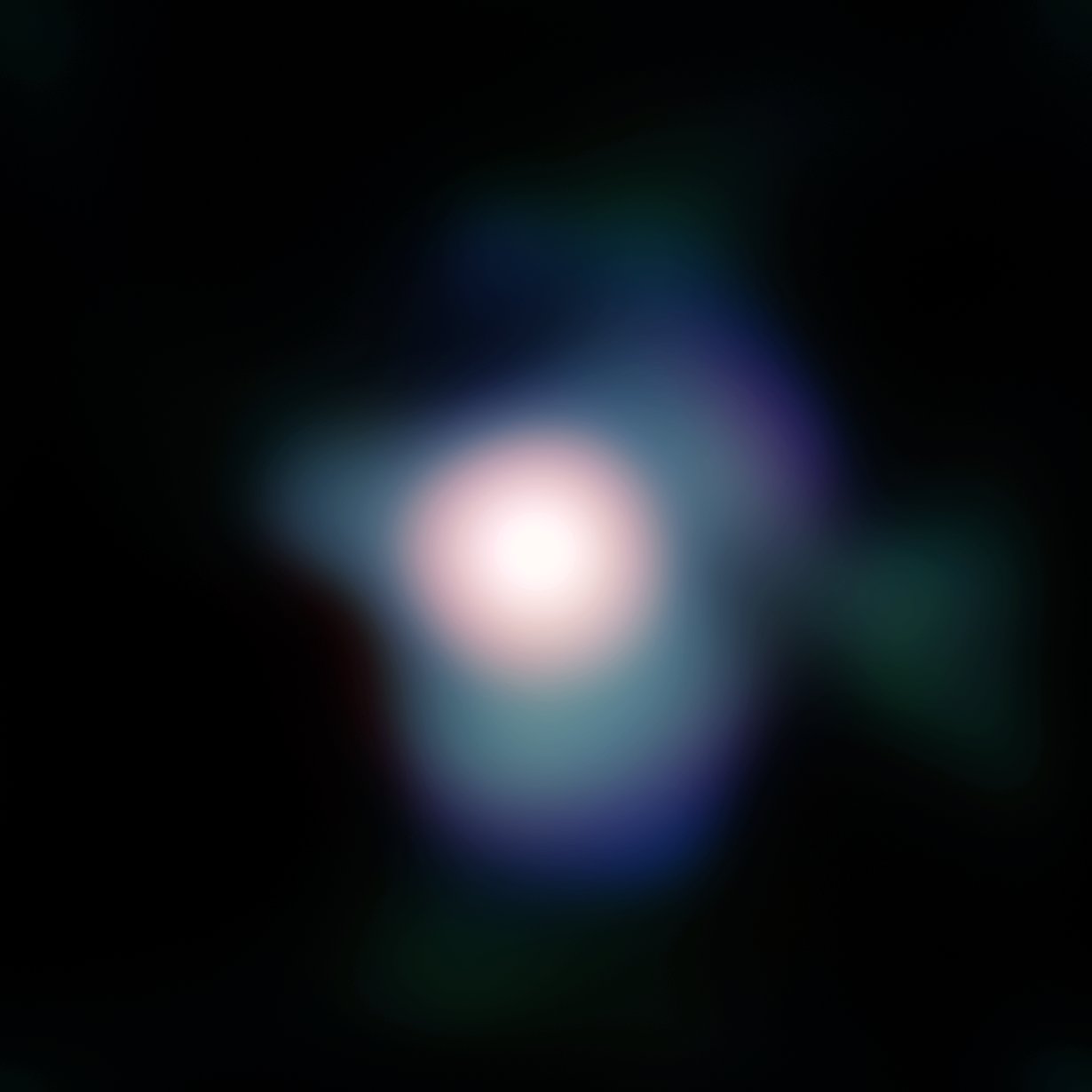
The sharpest image ever of Betelgeuse shows a mammoth star that is slowly evaporating. Betelgeuse (sounds a lot like "beetle juice"), also known as Alpha Orionis, is one of the largest and brightest stars known. The star is a familiar orange fixture easily visible to the unaided eye toward the constellation of Orion. This recent image from the Very Large Telescope in Chile resolves not only the face of Betelgeuse, but a large and previously unknown plume of surrounding gas. This plume gives fresh indications of how the massive star is shedding mass as it nears the end of its life. Conversely, a series of previous observations indicate that the surface of Betelgeuse has noticeably shrunk, on the average, over the past decade. If Betelgeuse, a red supergiant star about 640 light years distant, were placed at the center of our Solar System, the plume would extend past the orbit of Jupiter. Since Betelgeuse is known to change its brightness irregularly, future observations may determine if changes its appearance irregularly as well. Betelgeuse is a candidate to undergo a spectacular supernova explosion almost anytime in the next few thousand years.
La imagen más nítida jamás obtenida de Betelgeuse muestra una estrella gigantesca que se está evaporando lentamente. Betelgeuse (que suena mucho como 'beetle juice'), también conocida como Alpha Orionis, es una de las estrellas más grandes y brillantes conocidas. La estrella es un elemento naranja familiar fácilmente visible a simple vista hacia la constelación de Orión. Esta imagen reciente obtenida con el Very Large Telescope en Chile resuelve no solo la cara de Betelgeuse, sino también una gran y previamente desconocida pluma de gas que la rodea. Esta pluma proporciona nuevas indicaciones sobre cómo la estrella masiva está perdiendo masa a medida que se acerca al final de su vida. Por el contrario, una serie de observaciones anteriores indican que la superficie de Betelgeuse ha disminuido notablemente, en promedio, durante la última década. Si Betelgeuse, una estrella supergigante roja situada a unos 640 años luz de distancia, se colocara en el centro de nuestro Sistema Solar, la pluma se extendería más allá de la órbita de Júpiter. Dado que se sabe que Betelgeuse cambia su brillo de manera irregular, observaciones futuras podrían determinar si también cambia su apariencia de forma irregular. Betelgeuse es un candidato para sufrir una explosión de supernova espectacular en cualquier momento de los próximos miles de años.