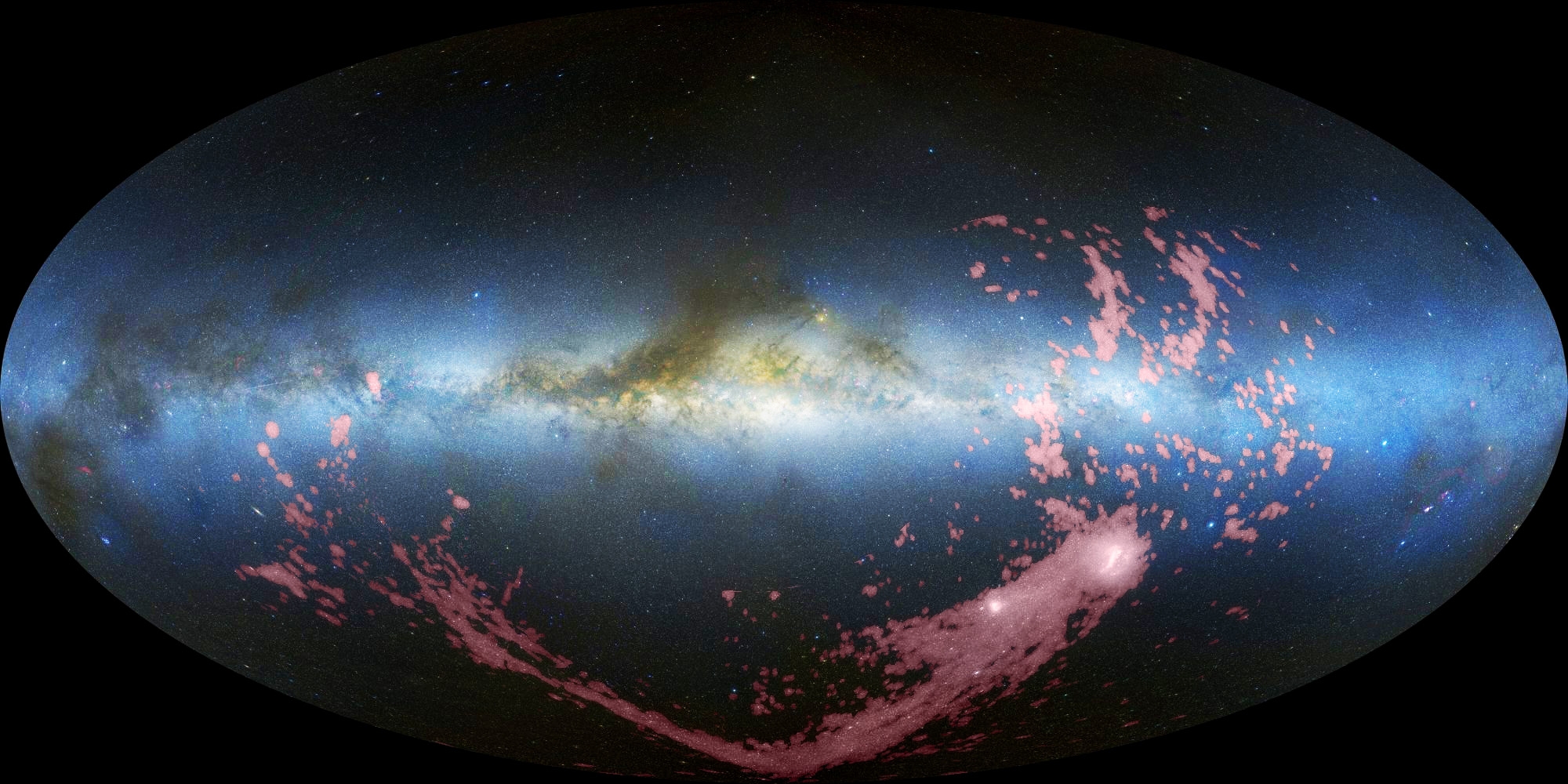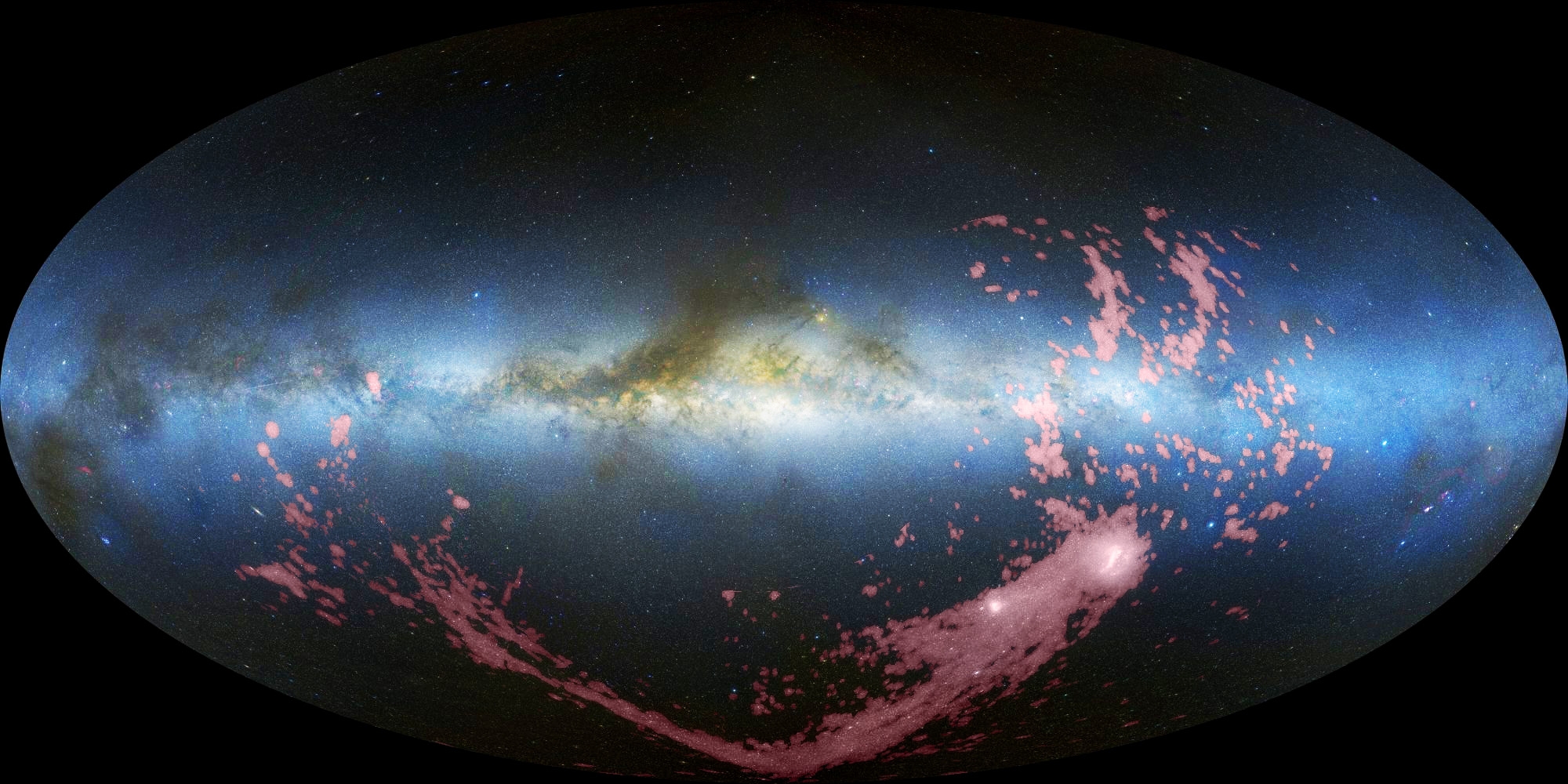
Spanning the sky toward the majestic Clouds of Magellan is an unusual stream of gas: the Magellanic Stream. The origin of this gas remains unknown but likely holds a clue to the origin and fate of our Milky Way's most famous satellite galaxies: the LMC and the SMC. Until recently, two leading genesis hypotheses have been considered: that the stream was created by gas stripped off these galaxies as they passed through the halo of our Milky Way, or that the stream was created by the differential gravitational tug of the Milky Way. Recently, however, wide angle radio images -- including those from the Byrd Green Bank Telescope -- have shown that the Magellanic Stream is longer and older than previously thought, perhaps as old as 2.5 billion years. These observations bolster a third possible origin for the stream -- that the Large and Small Magellanic Cloud galaxies once passed so close to each other that gravitational tides triggered a burst of star formation that left the stream. Pictured above digitally superposed on a recently-completed all-sky image in visible light, the radio emission of Magellanic stream is shown in false color pink extending across the sky and ending at the two Magellanic galaxies on the lower right. New Mirror: APOD now available in Hebrew from Israel
Extendiéndose por el cielo hacia las majestuosas Nubes de Magallanes se encuentra un flujo inusual de gas: el flujo magallánico. El origen de este gas sigue siendo desconocido, pero probablemente contiene una pista sobre el origen y el destino de las galaxias satélites más famosas de nuestra Vía Láctea: la Gran Nube de Magallanes y la Pequeña Nube de Magallanes. Hasta hace poco, dos hipótesis principales sobre su origen habían sido consideradas: que el flujo fue creado por gas arrancado de estas galaxias mientras pasaban a través del halo de nuestra Vía Láctea, o que el flujo fue creado por la fuerza gravitacional diferencial de la Vía Láctea. Sin embargo, recientemente, imágenes de radio de gran ángulo, incluyendo las obtenidas por el telescopio Byrd Green Bank, han mostrado que el flujo magallánico es más largo y antiguo de lo que se creía anteriormente, quizás tan antiguo como 2.500 millones de años. Estas observaciones respaldan una tercera posible explicación para el origen del flujo: que la Gran y la Pequeña Nube de Magallanes pasaron una vez muy cerca entre sí, lo que provocó una explosión de formación estelar que dejó el flujo. En la imagen mostrada a continuación, el flujo magallánico se superpone digitalmente sobre una imagen recientemente completada del cielo completo en luz visible, mostrando la emisión de radio del flujo magallánico en color falso rosa extendiéndose por el cielo y terminando en las dos galaxias magallánicas en la parte inferior derecha.