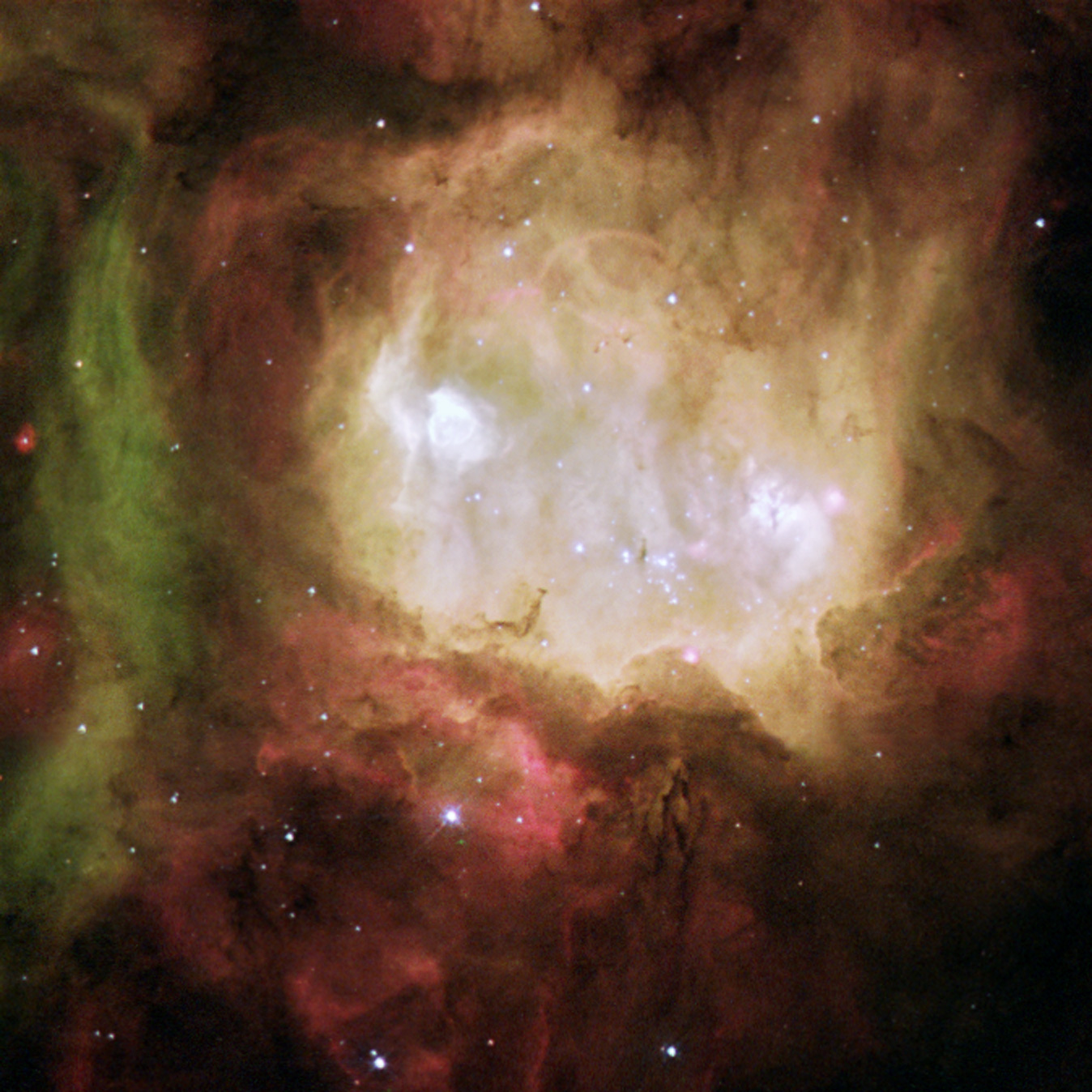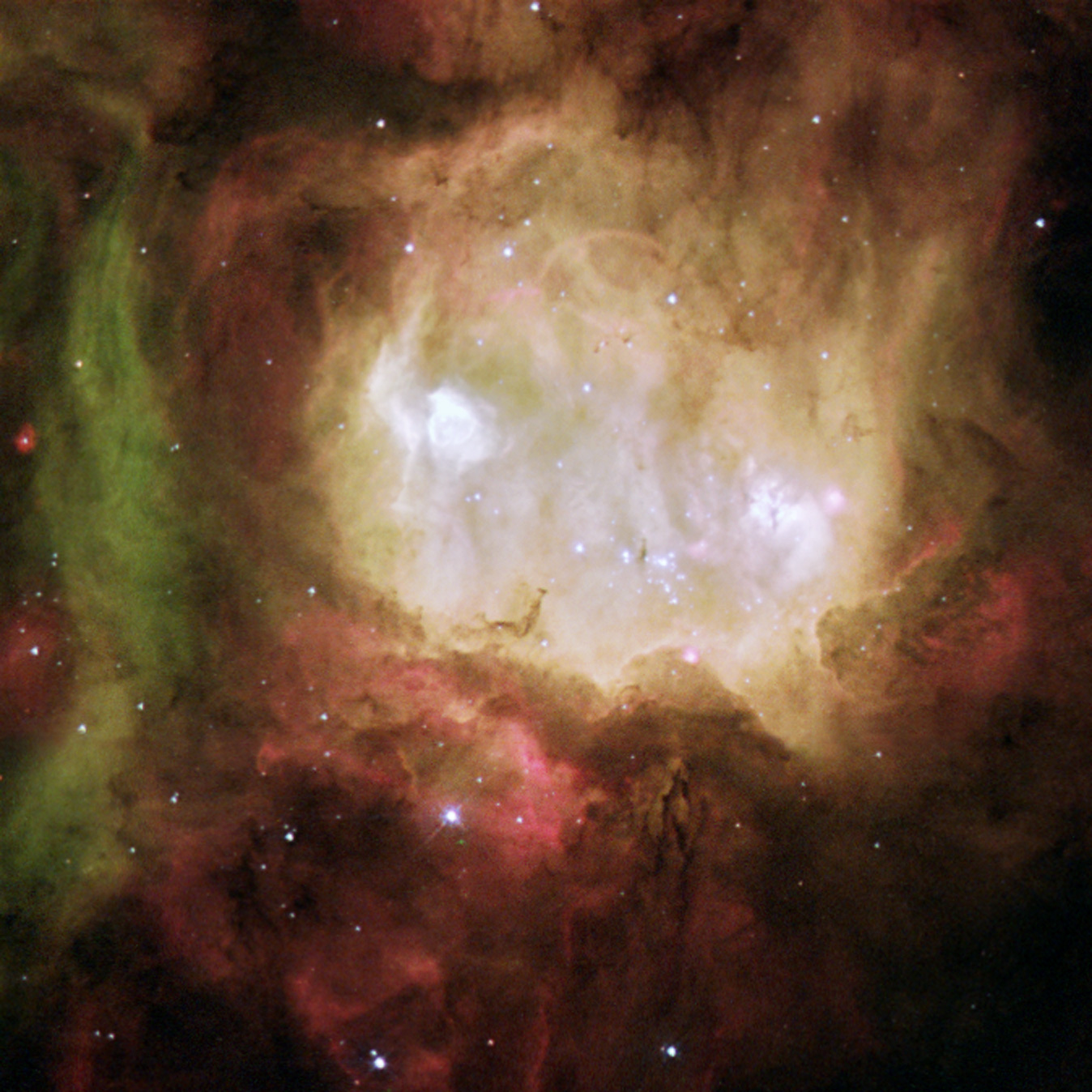
Halloween's origin is ancient and astronomical. Since the fifth century BC, Halloween has been celebrated as a cross-quarter day, a day halfway between an equinox (equal day / equal night) and a solstice (minimum day / maximum night in the northern hemisphere). With a modern calendar, however, the real cross-quarter day will occur next week. Another cross-quarter day is Groundhog's Day. Halloween's modern celebration retains historic roots in dressing to scare away the spirits of the dead. Perhaps a fitting tribute to this ancient holiday is this view of the Ghost Head Nebula taken with the Hubble Space Telescope. Similar to the icon of a fictional ghost, NGC 2080 is actually a star forming region in the Large Magellanic Cloud, a satellite galaxy of our own Milky Way Galaxy. The Ghost Head Nebula spans about 50 light-years and is shown in representative colors.
El origen de Halloween es antiguo y astronómico. Desde el quinto siglo a.C., Halloween se ha celebrado como un día intermedio, un día situado a medio camino entre un equinoccio (día igual / noche igual) y un solsticio (mínimo día / máximo día en el hemisferio norte). Sin embargo, con el calendario moderno, el verdadero día intermedio ocurrirá la próxima semana. Otro día intermedio es el Día del Oso de Tierra. La celebración moderna de Halloween conserva raíces históricas en la vestimenta para asustar a los espíritus de los muertos. Quizás un homenaje adecuado a esta antigua celebración sea esta imagen de la Nebulosa Cabeza de Fantasma tomada con el Telescopio Espacial Hubble. Similar al icono de un fantasma ficticio, NGC 2080 es en realidad una región de formación estelar en la Nube de Magallanes Grande, una galaxia satélite de nuestra propia Vía Láctea. La Nebulosa Cabeza de Fantasma abarca aproximadamente 50 años luz y se muestra en colores representativos.