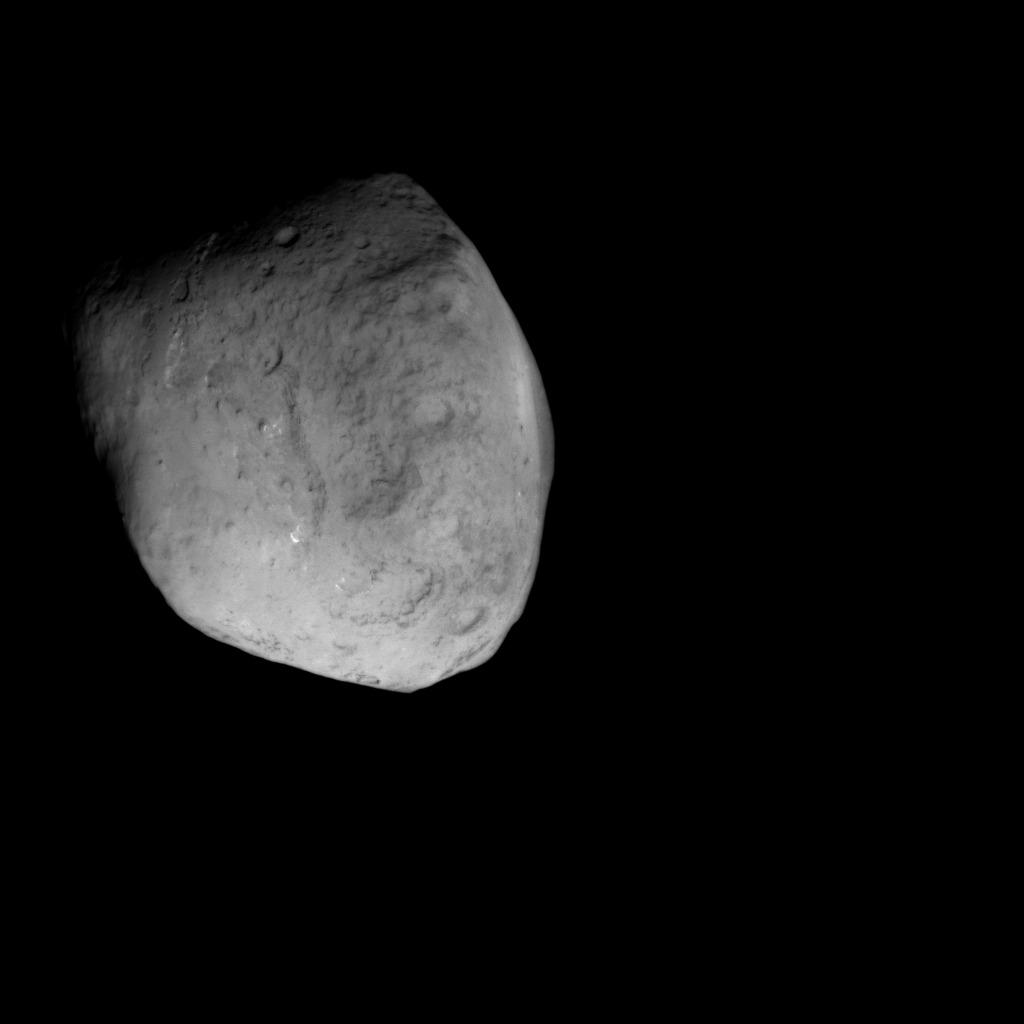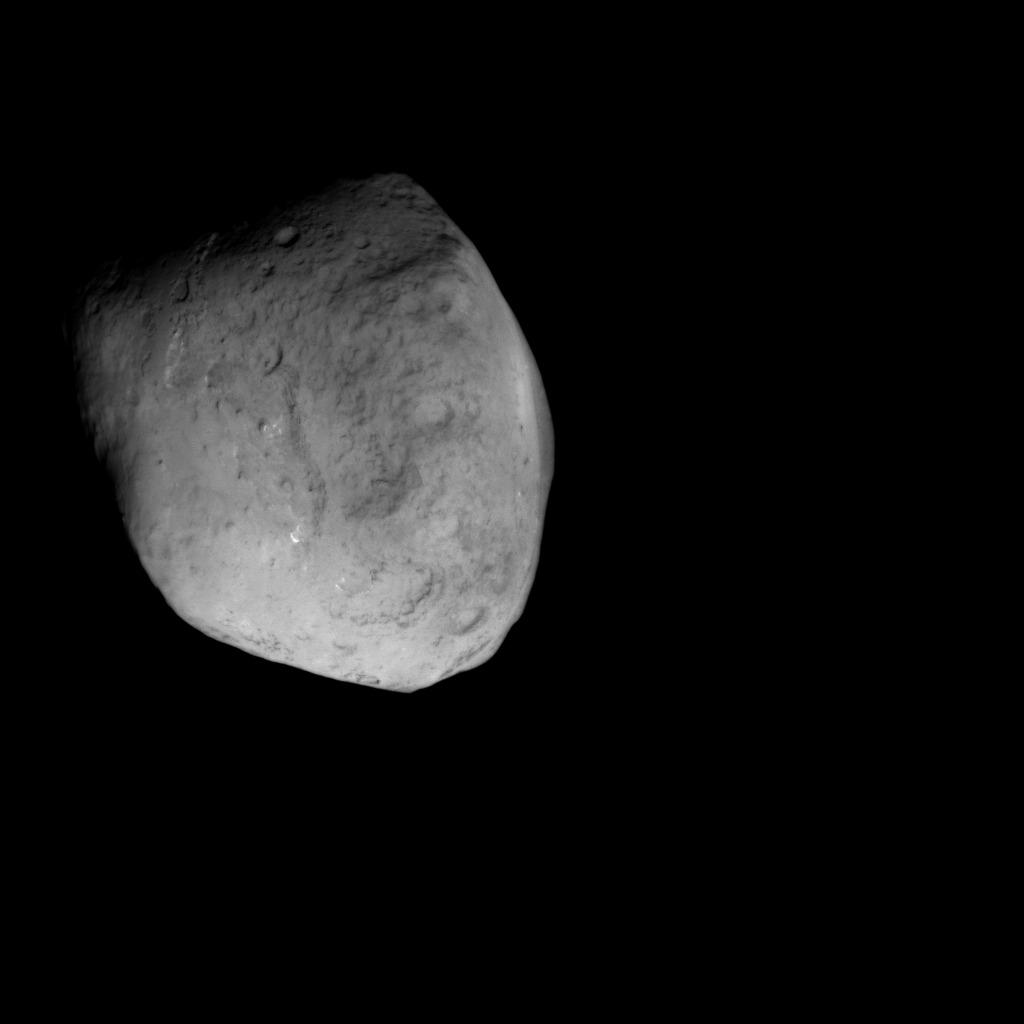
No comet has ever been visited twice before. Therefore, the unprecedented pass of the Stardust-NeXT spacecraft near Comet Tempel 1 earlier this week gave humanity a unique opportunity to see how the nucleus of a comet changes over time. Changes in the nucleus of Comet Tempel 1 were of particular interest because the comet was hit with an impactor from the passing Deep Impact spacecraft in 2005. Pictured above is one digitally sharpened image of Comet Tempel 1 near the closest approach of Stardust-NeXT. Visible are many features imaged in 2005, including craters, ridges, and seemingly smoother areas. Few firm conclusions are yet available, but over the next few years astronomers who specialize in comets and the understanding the early Solar System will be poring over these images looking for new clues as to how Comet Tempel 1 is composed, how the 2005 impact site now appears, and how general features of the comet have evolved.
Ningún cometa había sido visitado dos veces anteriormente. Por ello, el paso sin precedentes de la nave espacial Stardust-NeXT cerca del Cometa Tempel 1 a principios de esta semana brindó a la humanidad una oportunidad única para observar cómo evoluciona el núcleo de un cometa a lo largo del tiempo. Los cambios en el núcleo del Cometa Tempel 1 resultaban de particular interés porque el cometa fue impactado por un proyectil de la nave Deep Impact en 2005. La imagen superior es una fotografía digitalmente mejorada del Cometa Tempel 1 cerca del punto de máximo acercamiento de Stardust-NeXT. Son visibles numerosas características registradas en 2005, incluyendo cráteres, crestas y zonas aparentemente más lisas. Aún no se han alcanzado conclusiones definitivas, pero durante los próximos años los astrónomos especializados en cometas y en la comprensión del Sistema Solar primitivo estudiarán minuciosamente estas imágenes en busca de nuevas pistas sobre la composición del Cometa Tempel 1, el estado actual del sitio de impacto de 2005, y la evolución de las características generales del cometa.