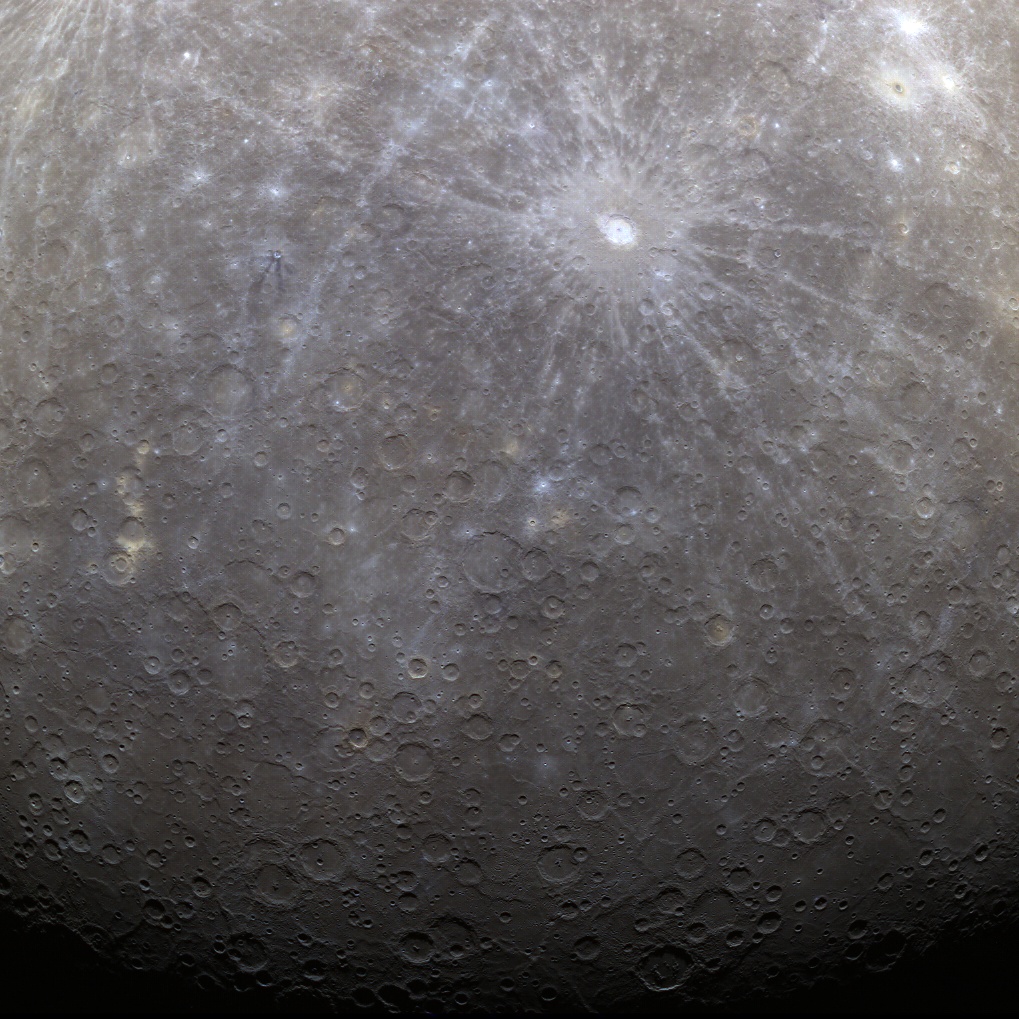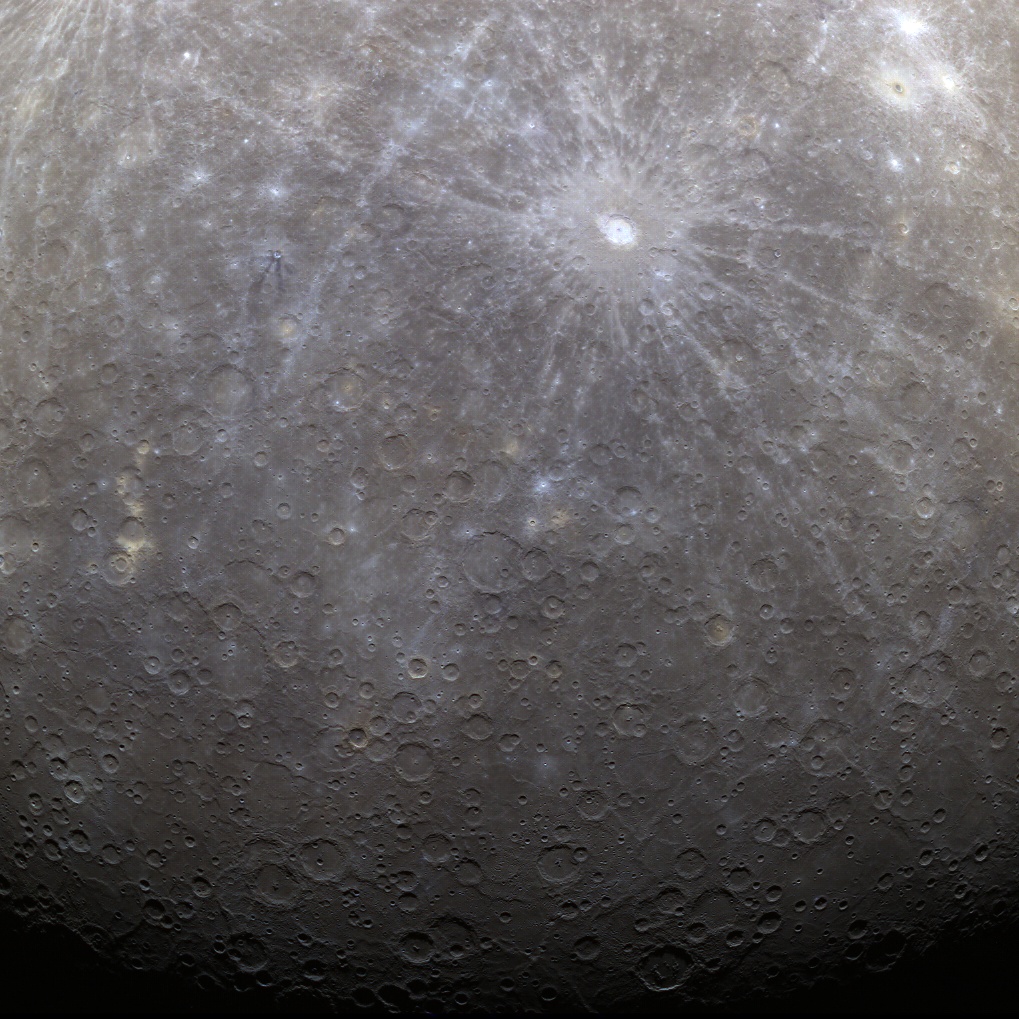
On March 17, the MESSENGER spacecraft became the first to orbit Mercury, the solar system's innermost planet. This is its first processed color image since entering Mercury orbit. Larger, denser, and with almost twice the surface gravity of Earth's moon, Mercury still looks moon-like at first glance. But in this view its terrain shows light blue and brown areas near craters and long bright rays of material streaking the surface. The prominent bright ray crater Debussy at the upper right is 80 kilometers (50 miles) in diameter. Terrain toward the bottom of the historic image extends to Mercury's south pole and includes a region not previously imaged from space.
El 17 de marzo, la sonda MESSENGER se convirtió en la primera en orbitar Mercurio, el planeta más interior del sistema solar. Esta es su primera imagen en color procesada desde que entró en órbita mercuriana. Más grande, más denso y con casi el doble de la gravedad superficial de la Luna de la Tierra, Mercurio tiene a primera vista un aspecto similar al de nuestro satélite. Sin embargo, en esta imagen su terreno muestra áreas de color azul claro y marrón cerca de los cráteres, así como largos rayos brillantes de material que surcan la superficie. El prominente cráter con rayos brillantes Debussy, situado en la parte superior derecha, tiene 80 kilómetros (50 millas) de diámetro. El terreno hacia la parte inferior de esta histórica imagen se extiende hasta el polo sur de Mercurio e incluye una región que nunca había sido fotografiada desde el espacio.