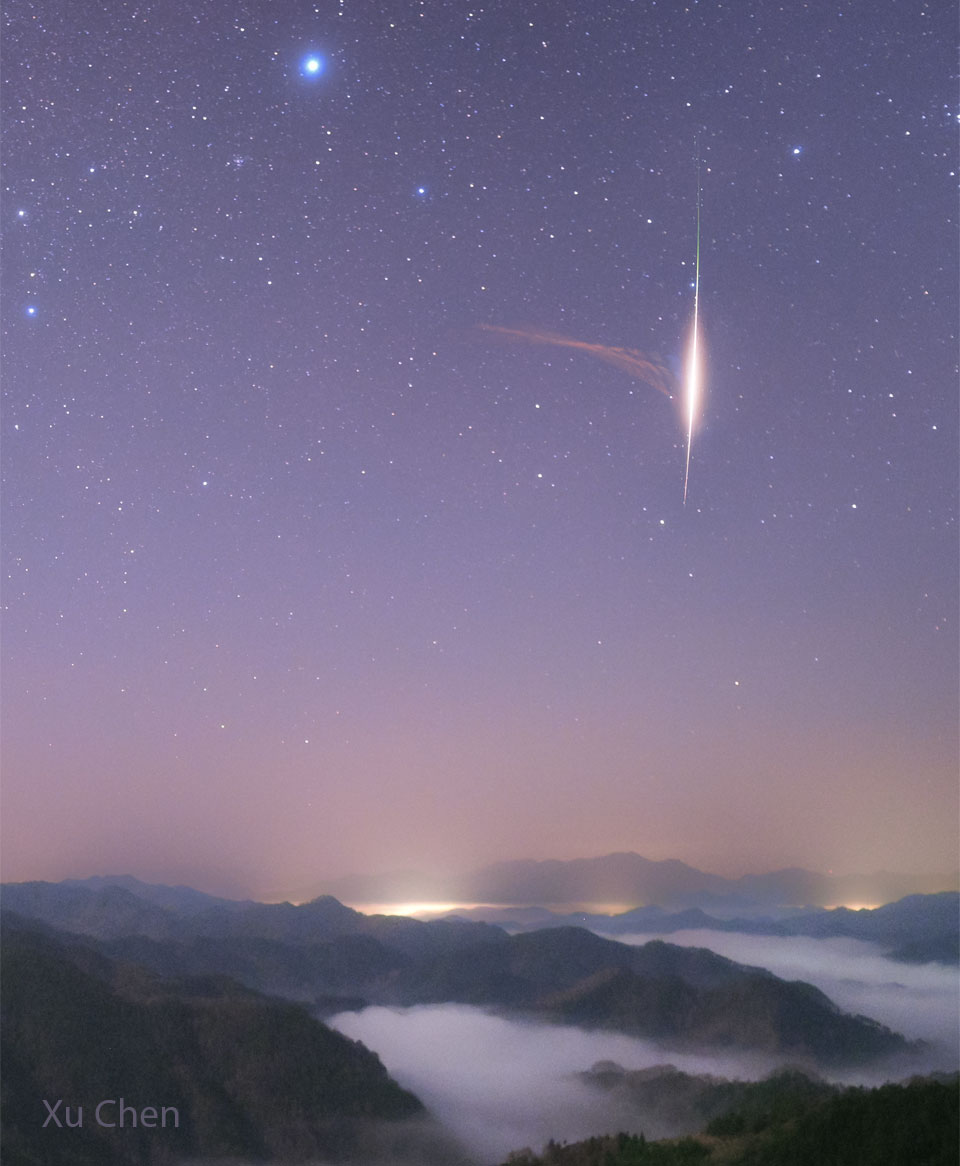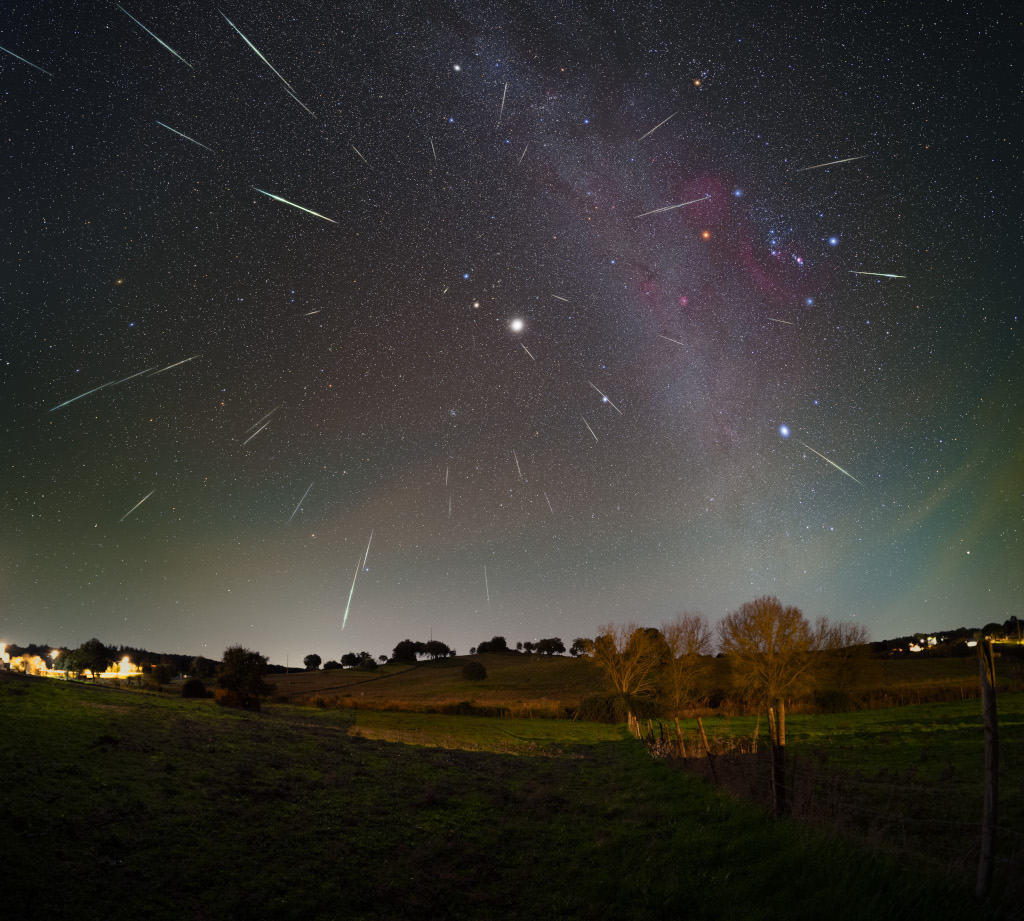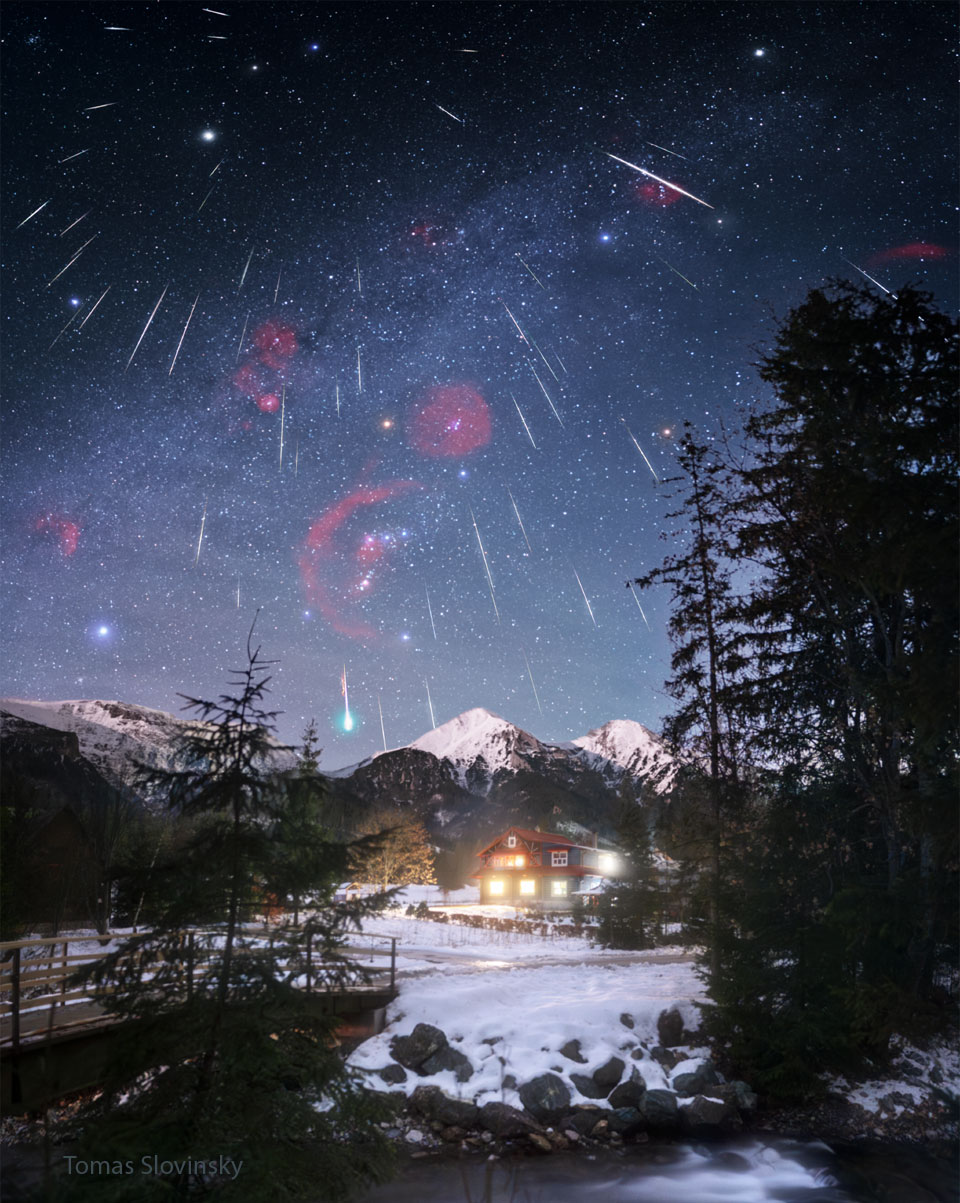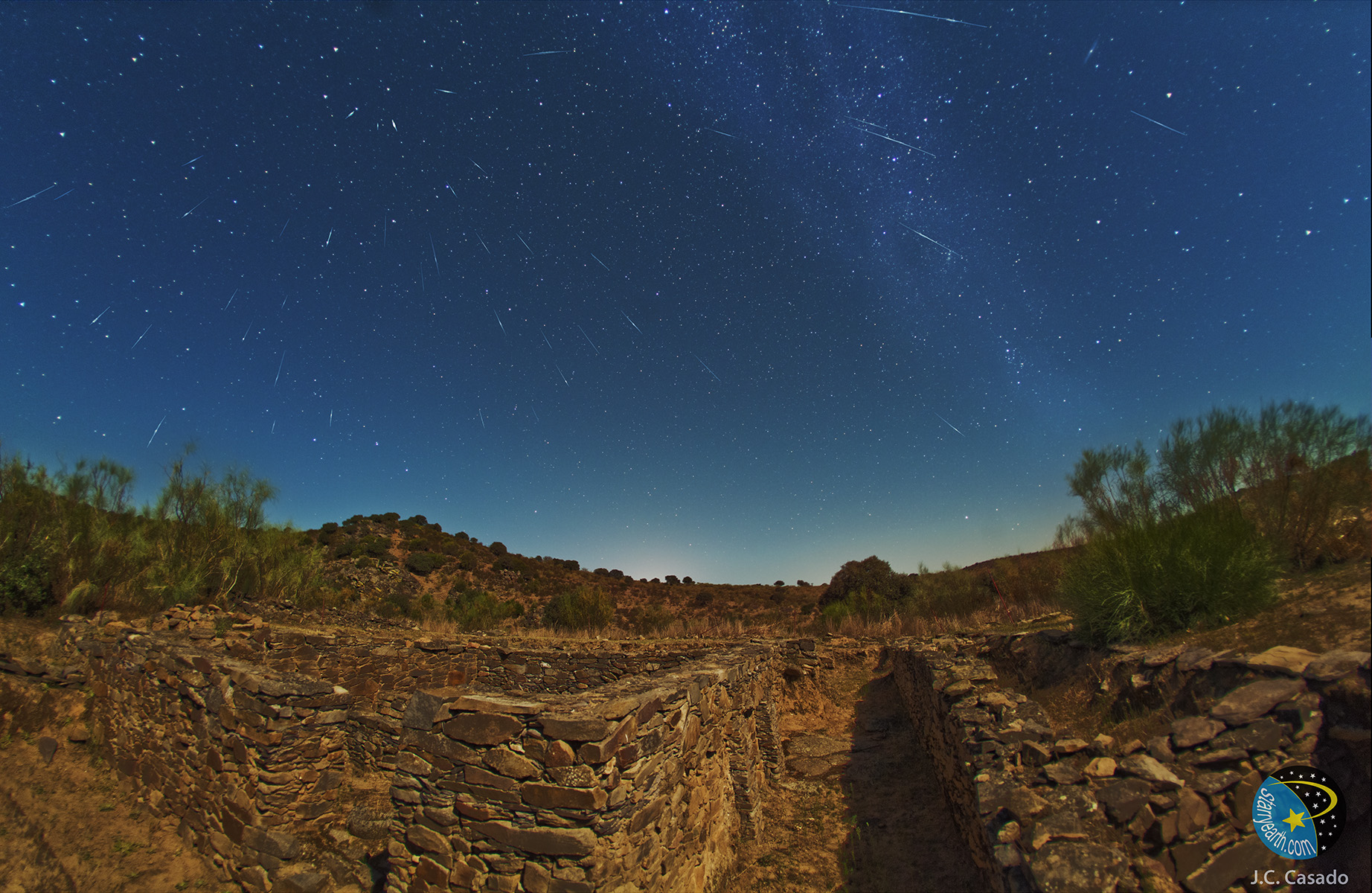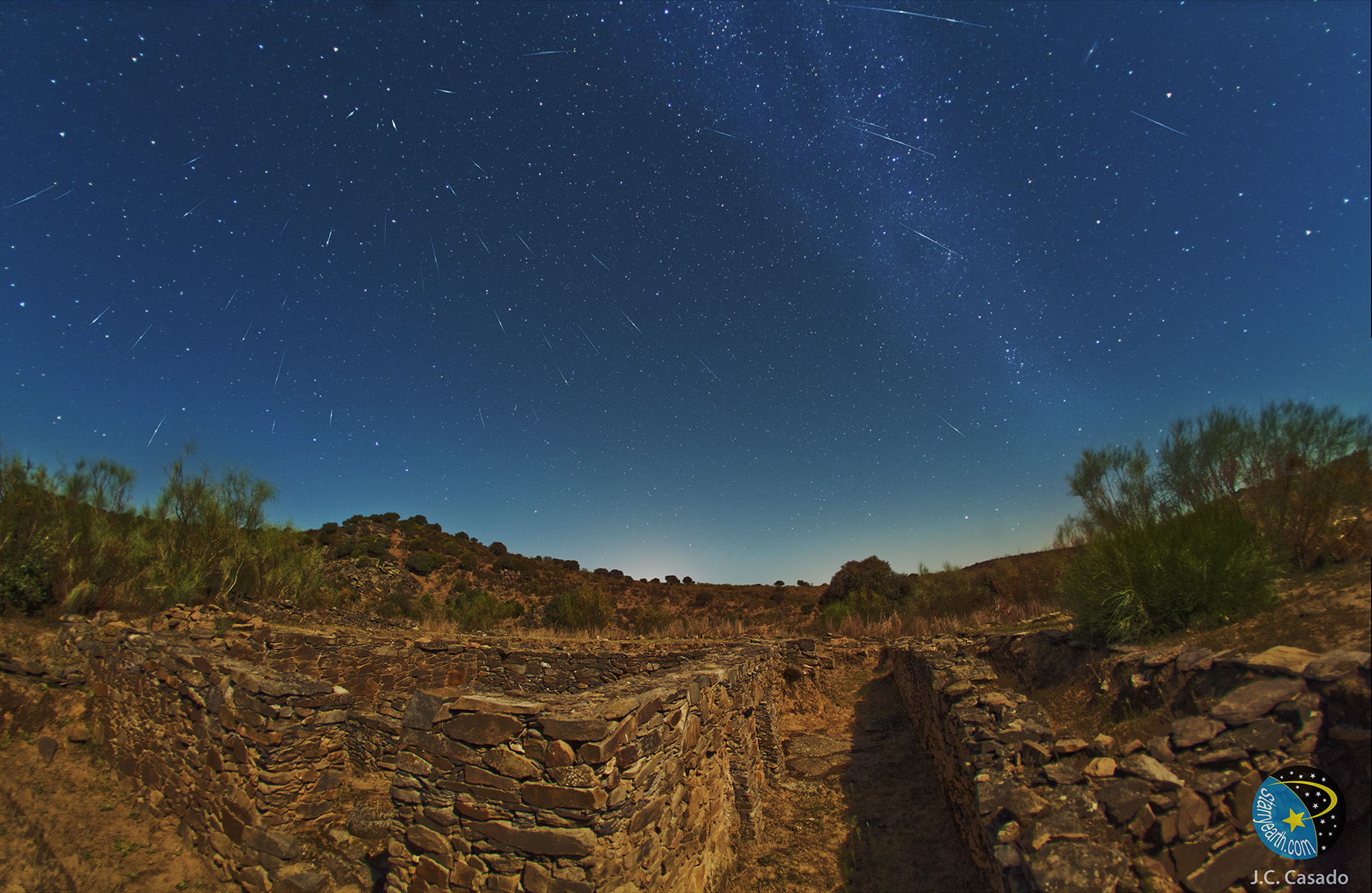
What are those streaks in the sky? They're meteors from the Draconids meteor shower that peaked earlier this month. The above composite image captured numerous meteor streaks over 90 minutes above the Celtic ruins of Capote in Badajoz province, Spain. The particles that caused these meteors were typically the size of a pebble and were expelled long ago from the nucleus of comet 21P/Giacobini-Zinner. Most of the above meteors can be traced back to a single radiant emanating from the constellation of the Dragon (Draco). Reports from this year's meteor shower indicate that the Draconids were unusually good this year with activity was concentrated around 8 pm UT on October 8. The most intense Draconid meteor showers in recent history occurred in 1933 and 1946 when thousands of meteors per hour were recorded as the Earth plowed through particularly dense streams of comet debris. Although the Draconids occur every October, it is usually difficult to know just how active each year's meteor shower will be. APOD Challenge: How many meteors can you find on the above image?
¿Qué son esas estelas en el cielo? Son meteoros de la lluvia de estrellas fugaces de las Dracónidas, que alcanzó su máximo a principios de este mes. La imagen compuesta superior capturó numerosas estelas de meteoros a lo largo de 90 minutos sobre las ruinas celtas de Capote, en la provincia de Badajoz, España. Las partículas que originaron estos meteoros tenían generalmente el tamaño de un guijarro y fueron expulsadas hace mucho tiempo del núcleo del cometa 21P/Giacobini-Zinner. La mayoría de los meteoros de la imagen pueden rastrearse hasta un único radiante que emana de la constelación del Dragón (Draco). Los informes de la lluvia de meteoros de este año indican que las Dracónidas fueron inusualmente activas, con actividad concentrada alrededor de las 20:00 UT del 8 de octubre. Las lluvias de meteoros Dracónidas más intensas de la historia reciente ocurrieron en 1933 y 1946, cuando se registraron miles de meteoros por hora mientras la Tierra atravesaba corrientes especialmente densas de residuos cometarios. Aunque las Dracónidas se producen cada mes de octubre, generalmente resulta difícil predecir cuán activa será la lluvia de meteoros de cada año.