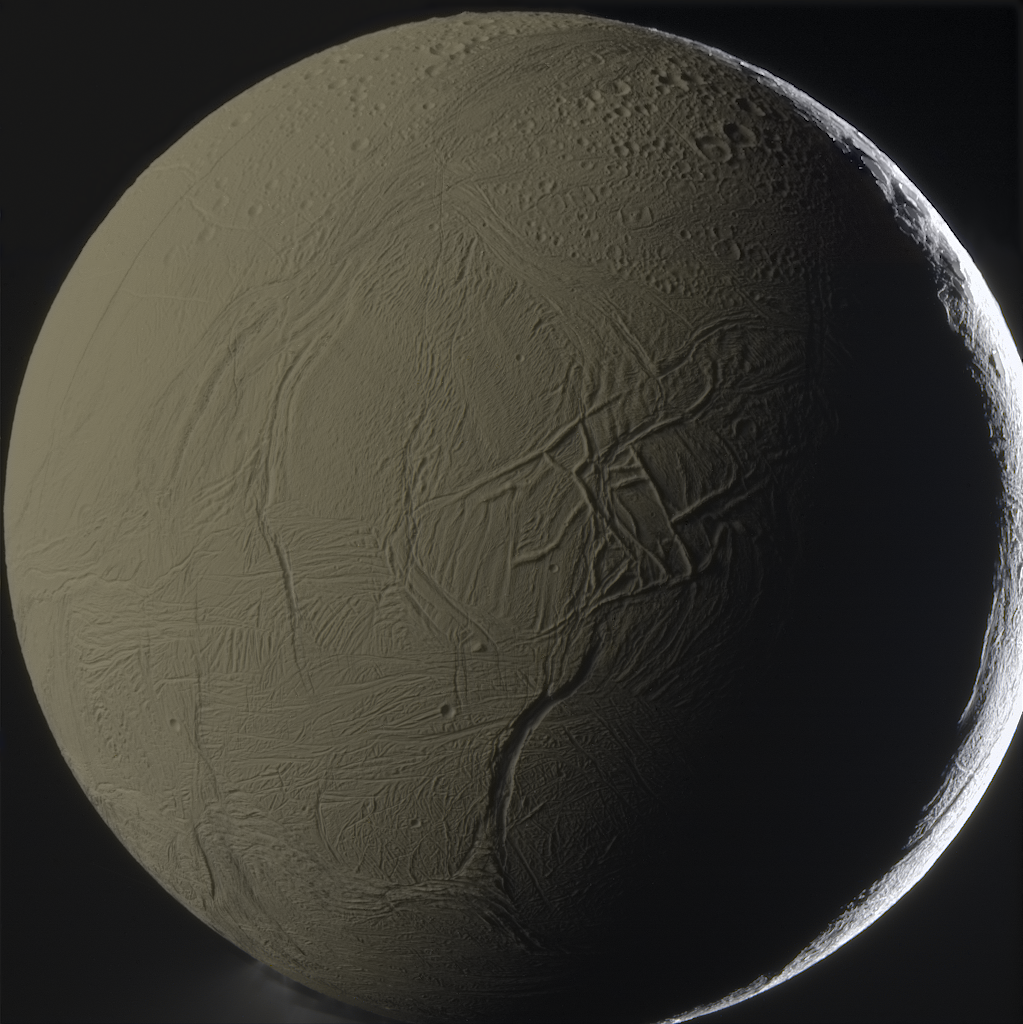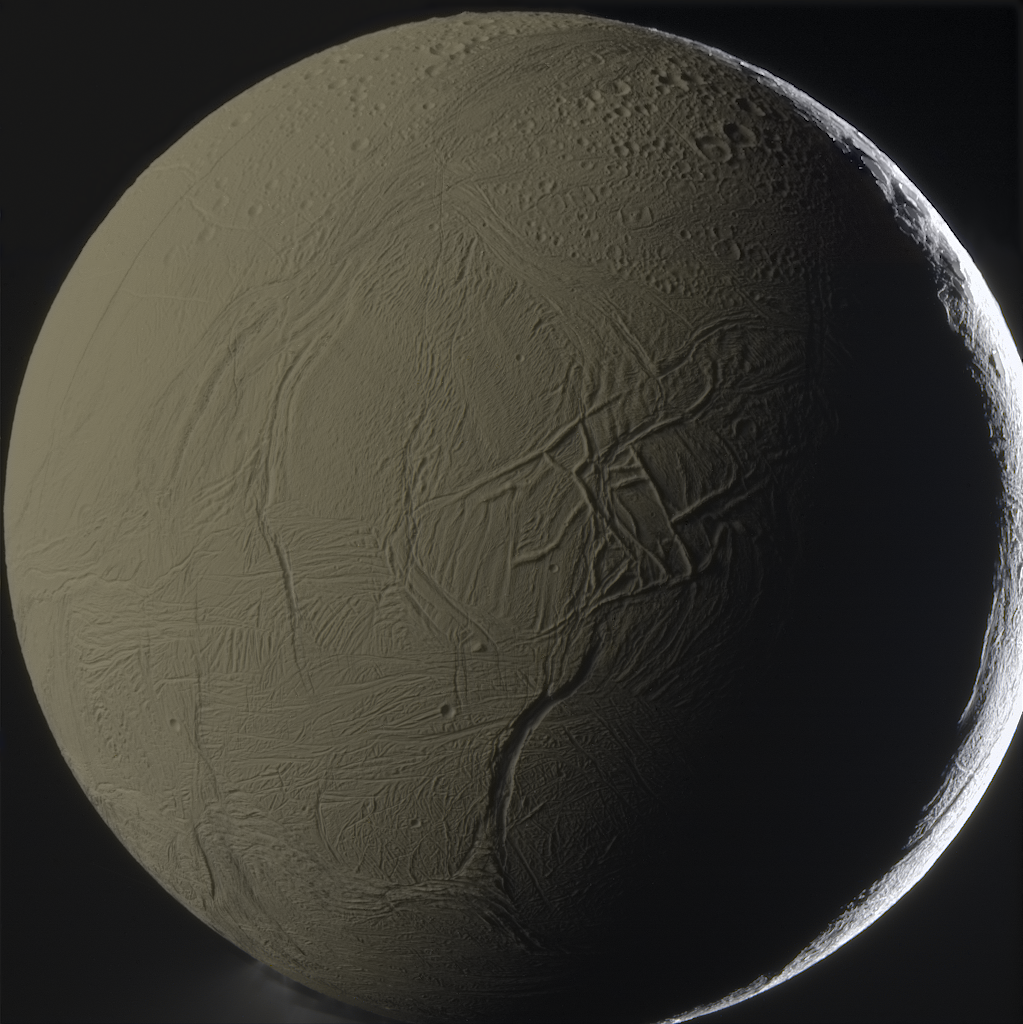
This moon is shining by the light of its planet. Specifically, a large portion of Enceladus pictured above is illuminated primarily by sunlight first reflected from the planet Saturn. The result is that the normally snow-white moon appears in the gold color of Saturn's cloud tops. As most of the illumination comes from the image left, a labyrinth of ridges throws notable shadows just to the right of the image center, while the kilometer-deep canyon Labtayt Sulci is visible just below. The bright thin crescent on the far right is the only part of Enceladus directly lit by the Sun. The above image was taken last year by the robotic Cassini spacecraft during a close pass by by the enigmatic moon. Inspection of the lower part of this digitally sharpened image reveals plumes of ice crystals thought to originate in a below-surface sea. APOD in India: APOD editor to speak in Delhi on Feb. 12 (registration required)
Este satélite brilla con la luz de su planeta. En concreto, gran parte de Encélado, visible en la imagen, está iluminado principalmente por la luz solar reflejada primero en el planeta Saturno. El resultado es que la luna, normalmente de color blanco nieve, aparece con el tono dorado de las capas superiores de las nubes de Saturno. Como la mayor parte de la iluminación proviene de la izquierda de la imagen, un laberinto de crestas proyecta sombras notables justo a la derecha del centro, mientras que el cañón Labtayt Sulci, de un kilómetro de profundidad, es visible justo debajo. El delgado y brillante creciente en el extremo derecho es la única parte de Encélado iluminada directamente por el Sol. La imagen fue tomada el año pasado por la sonda robótica Cassini durante un paso cercano a esta enigmática luna. La inspección de la parte inferior de esta imagen, procesada digitalmente para mejorar su nitidez, revela penachos de cristales de hielo que se cree tienen su origen en un mar subterráneo.