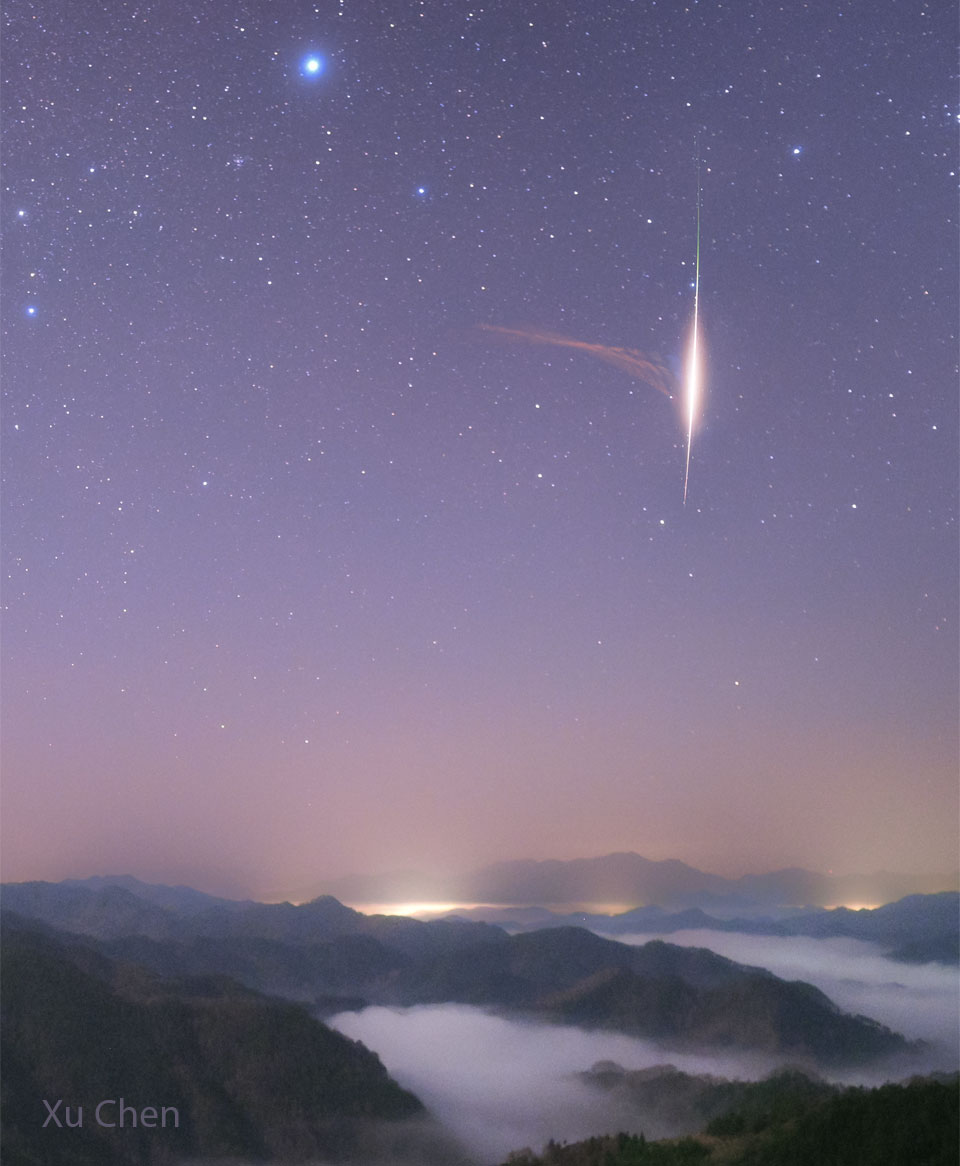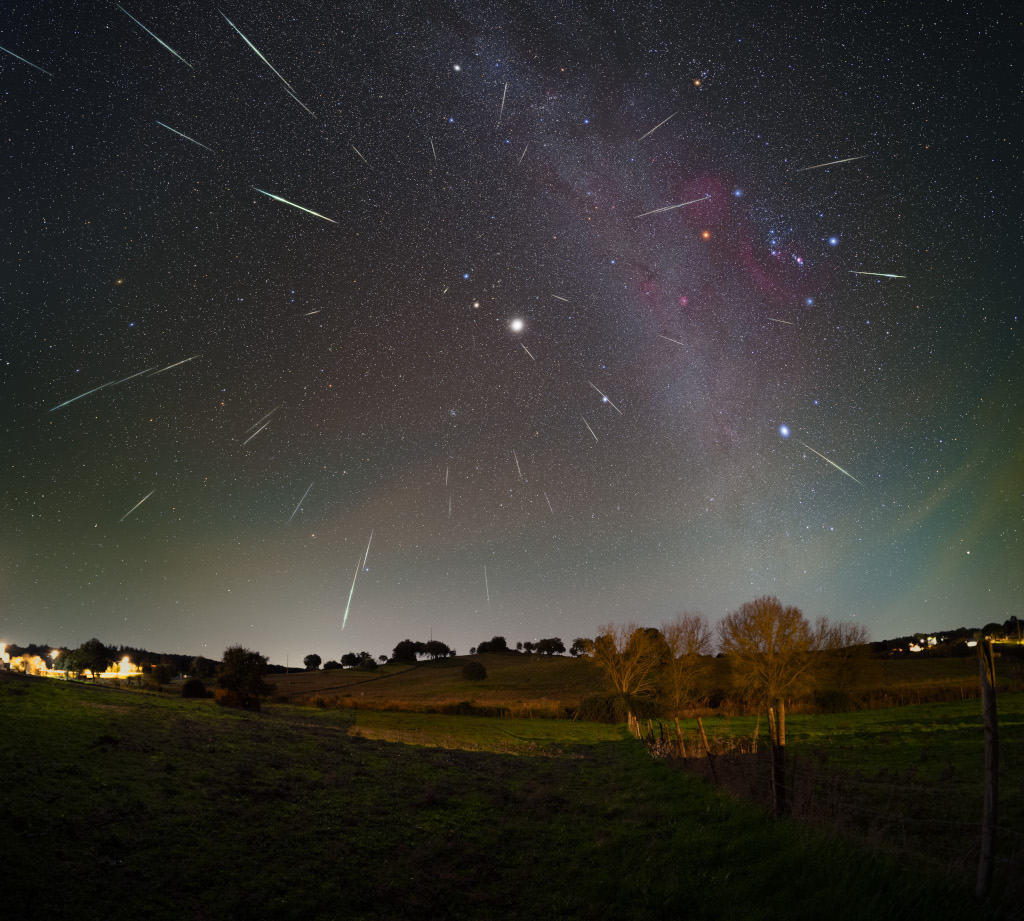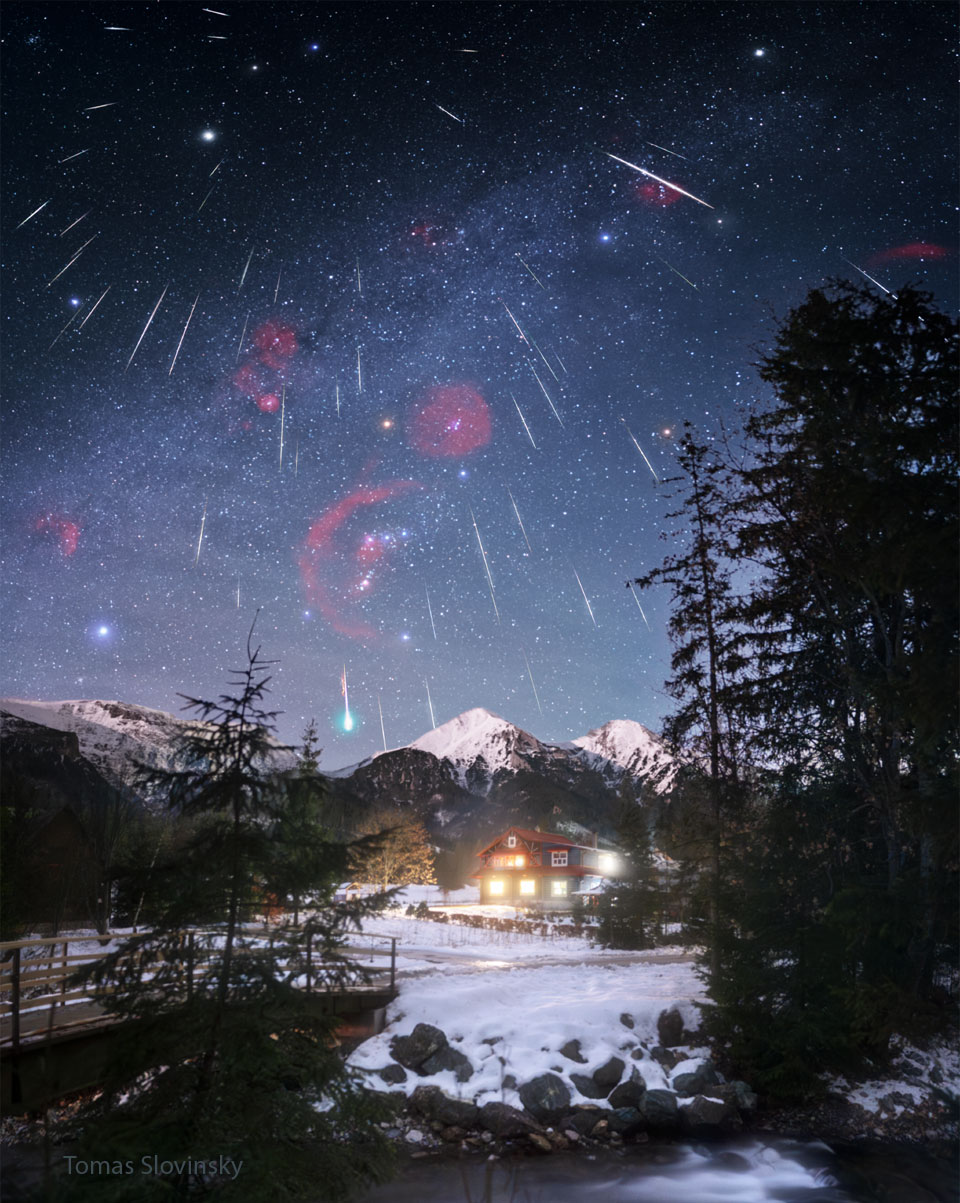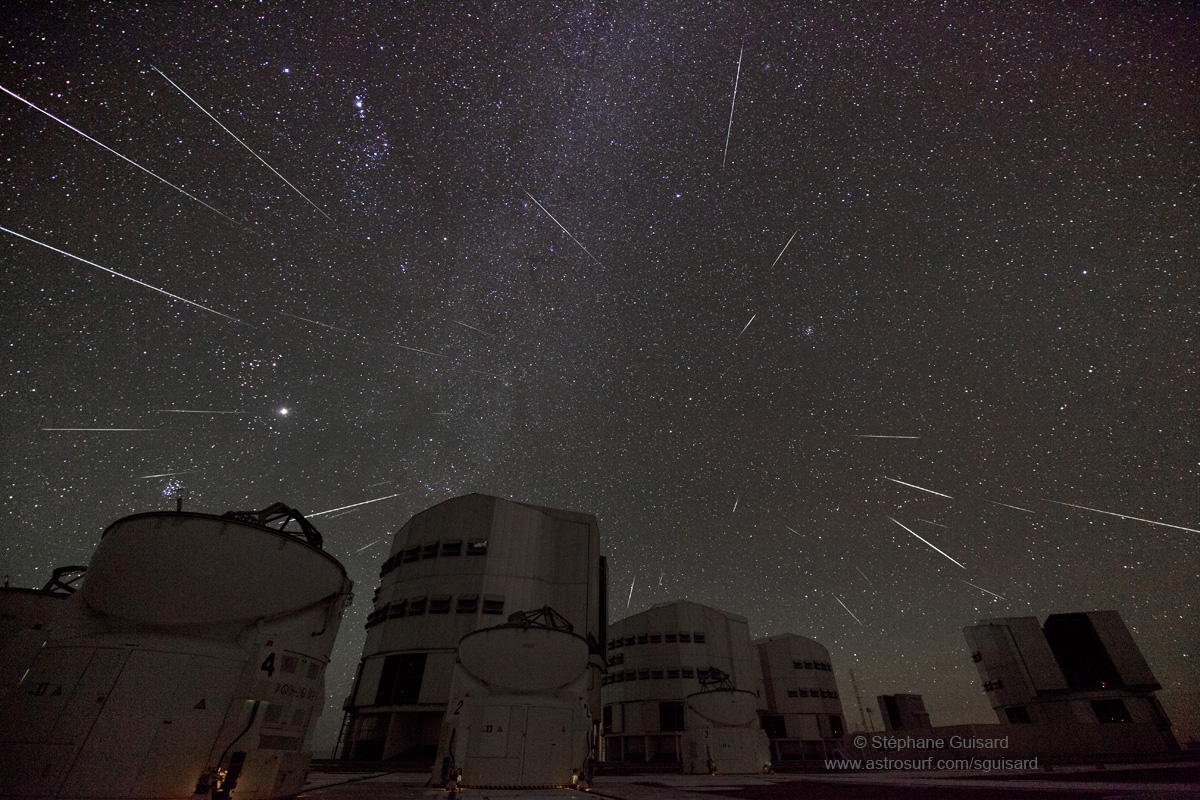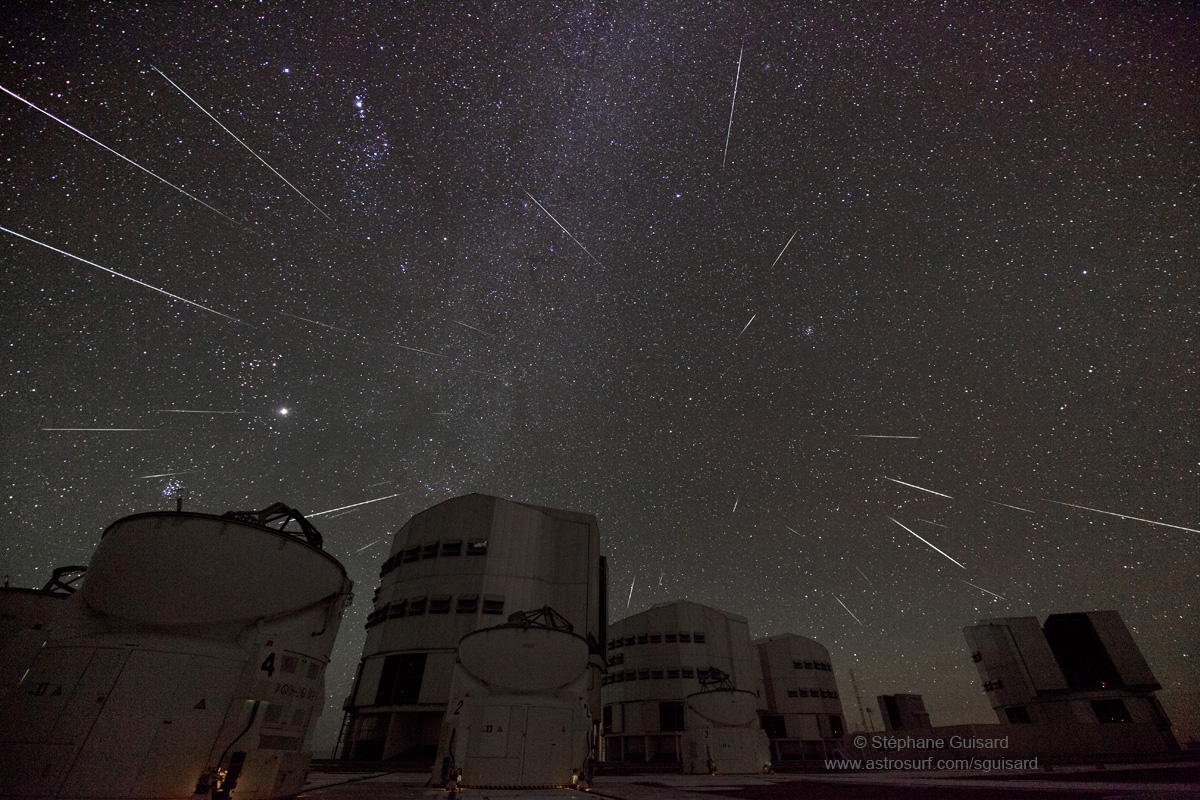
From a radiant point in the constellation of the Twins, the annual Geminid meteor shower rained down on planet Earth this week. Recorded near the shower's peak in the early hours of December 14, this skyscape captures Gemini's lovely shooting stars in a careful composite of 30 exposures, each 20 seconds long, from the dark of the Chilean Atacama Desert over ESO's Paranal Observatory. In the foreground Paranal's four Very Large Telescopes, four Auxillary Telescopes, and the VLT Survey telescope are all open and observing. The skies above are shared with bright Jupiter (left), Orion, (top left), and the faint light of the Milky Way. Dust swept up from the orbit of active asteroid 3200 Phaethon, Gemini's meteors enter the atmosphere traveling at about 22 kilometers per second.
Desde un punto radiante en la constelación de los Gemelos, la lluvia anual de meteoros de Géminis cayó sobre la Tierra esta semana. Este paisaje celestial fue registrado cerca del pico de la lluvia, en las primeras horas del 14 de diciembre, capturando las hermosas estrellas fugaces de Géminis en una composición cuidadosa de 30 exposiciones, cada una de 20 segundos, desde la oscuridad del desierto chileno de Atacama sobre el Observatorio de Paranal del ESO. En primer plano, los cuatro Telescopios Muy Grandes de Paranal, los cuatro Telescopios Auxiliares y el telescopio de Sondeo del VLT están todos abiertos y en funcionamiento. Los cielos superiores comparten espacio con el brillante Júpiter (a la izquierda), Orión (arriba a la izquierda) y la tenue luz de la Vía Láctea. El polvo recogido de la órbita del asteroide activo 3200 Fáeton es el responsable de que los meteoros de Géminis entren a la atmósfera viajando a unos 22 kilómetros por segundo.