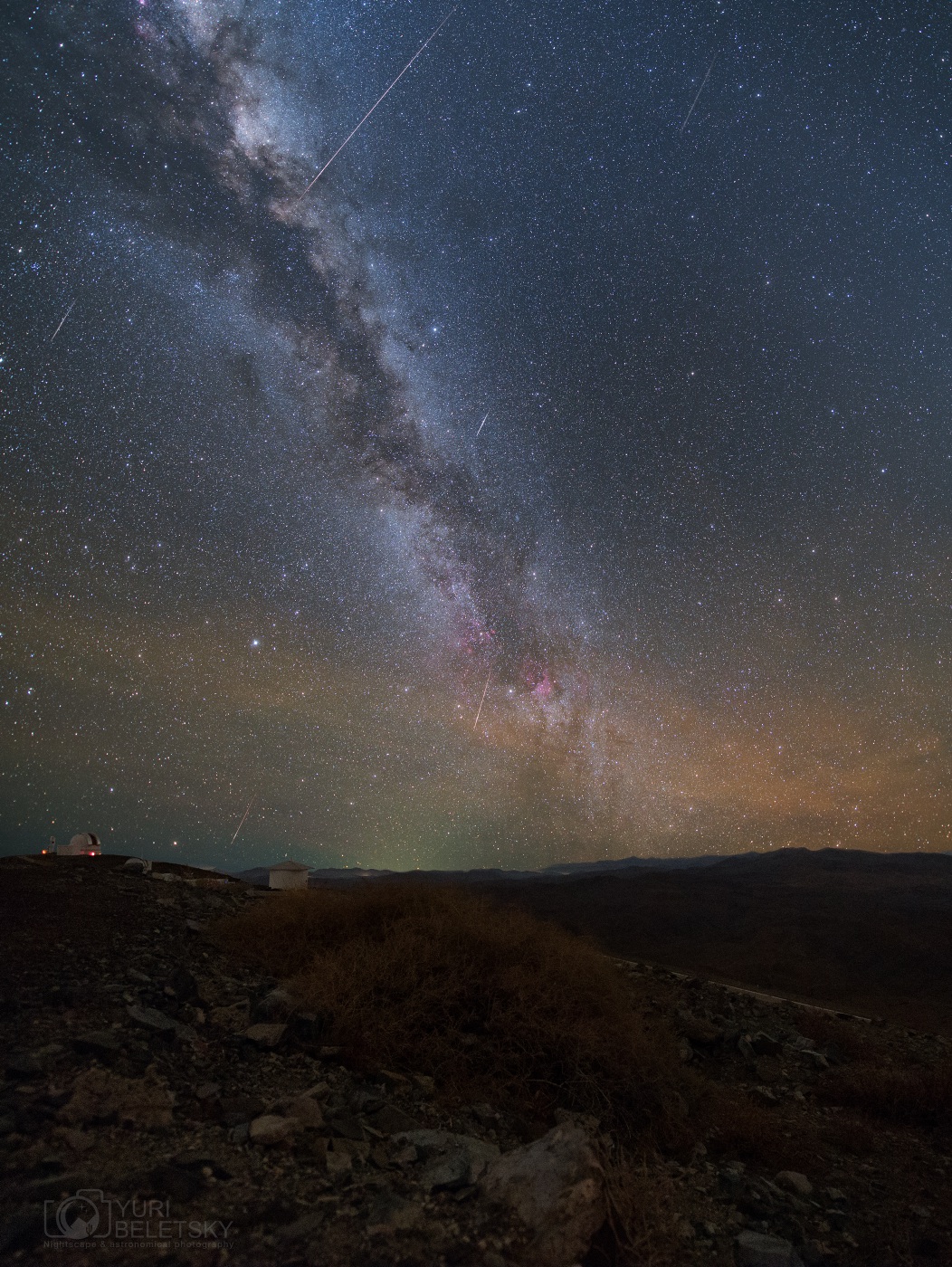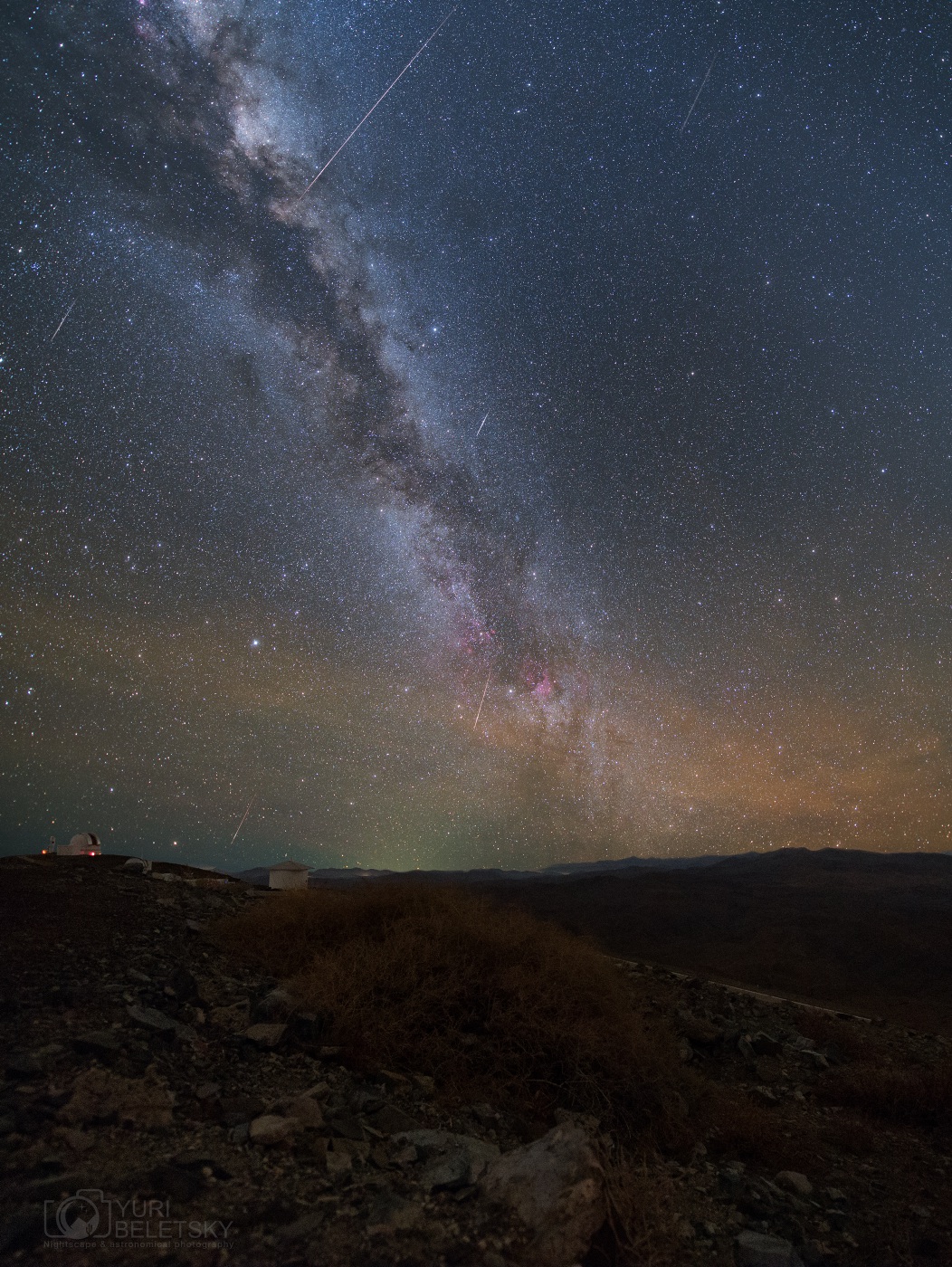
Over a five hour period last Tuesday morning, exposures captured this tantalizing view of meteor streaks and the Milky Way in dark skies above Las Campanas Observatory in Chile. During that time, astronomers had hoped to see an outburst from the gamma Delphinid meteor shower as Earth swept through the dust trail left by an unknown comet. Named for the shower's radiant point in the constellation Delphinus, a brief but strong outburst was reported in bright, moonlit skies on June 10, 1930. While no strong Delphinid meteor activity was reported since, an outburst was tentatively predicted to occur again in 2013. But even though Tuesday's skies were dark, the overall rate of meteors in this field is low, and only the three lower meteor streaks seem to point back to the shower's estimated radiant.
Durante un período de cinco horas el martes por la mañana, las exposiciones captaron esta tentadora vista de rastros de meteoros y la Vía Láctea en cielos oscuros sobre el Observatorio Las Campanas en Chile. Durante ese tiempo, los astrónomos esperaban ver una erupción de la lluvia de meteoros gamma delphinidos, mientras la Tierra atravesaba la trayectoria de polvo dejada por un cometa desconocido. Nombrada por el punto radiante de la lluvia en la constelación de Delphinus, se reportó una breve pero intensa erupción en cielos iluminados por la Luna el 10 de junio de 1930. Sin embargo, desde entonces no se ha reportado actividad delphinida significativa, y se predijo tentativamente otra erupción en 2013. Pero aunque los cielos del martes estaban oscuros, la tasa general de meteoros en este campo es baja, y solo tres de los rastros de meteoros inferiores parecen apuntar hacia el radiante estimado de la lluvia.