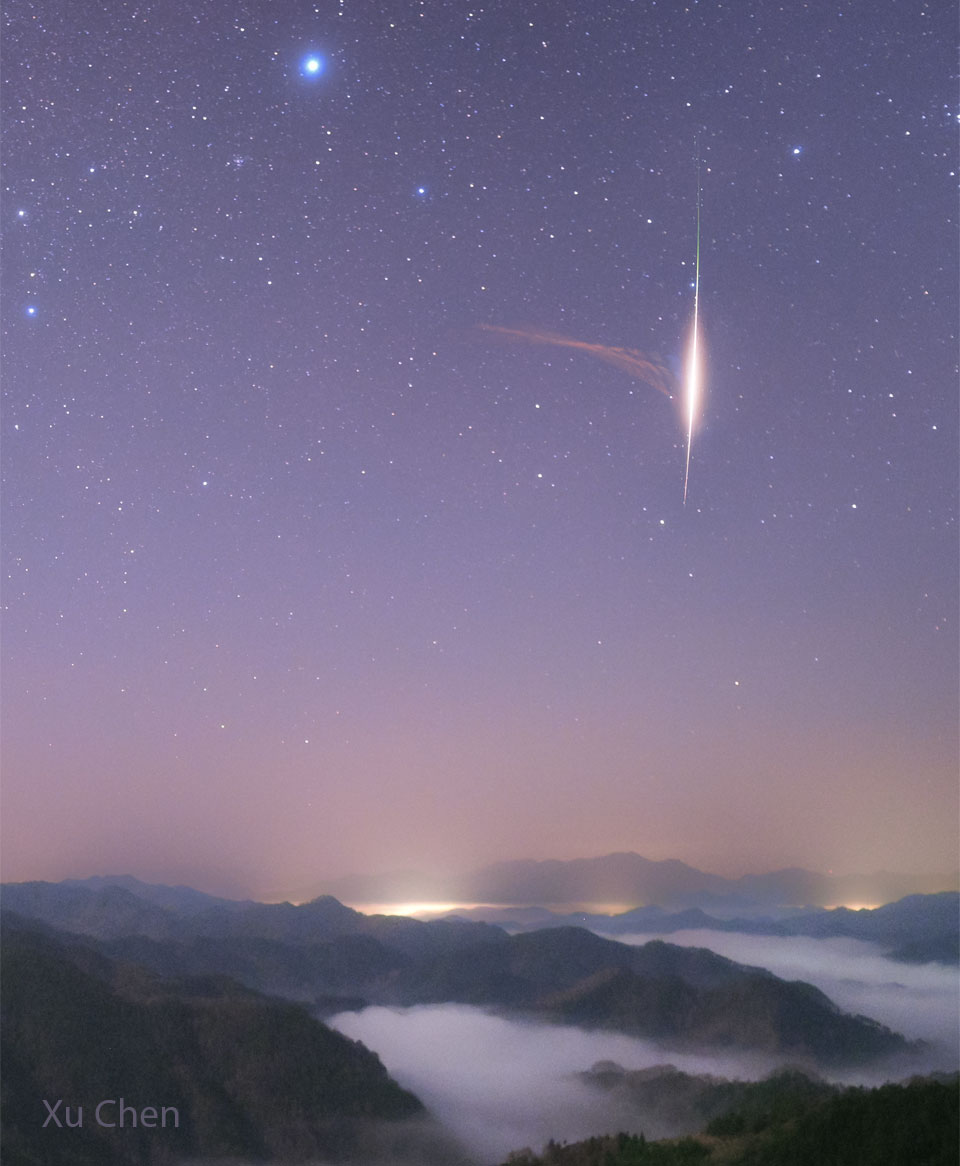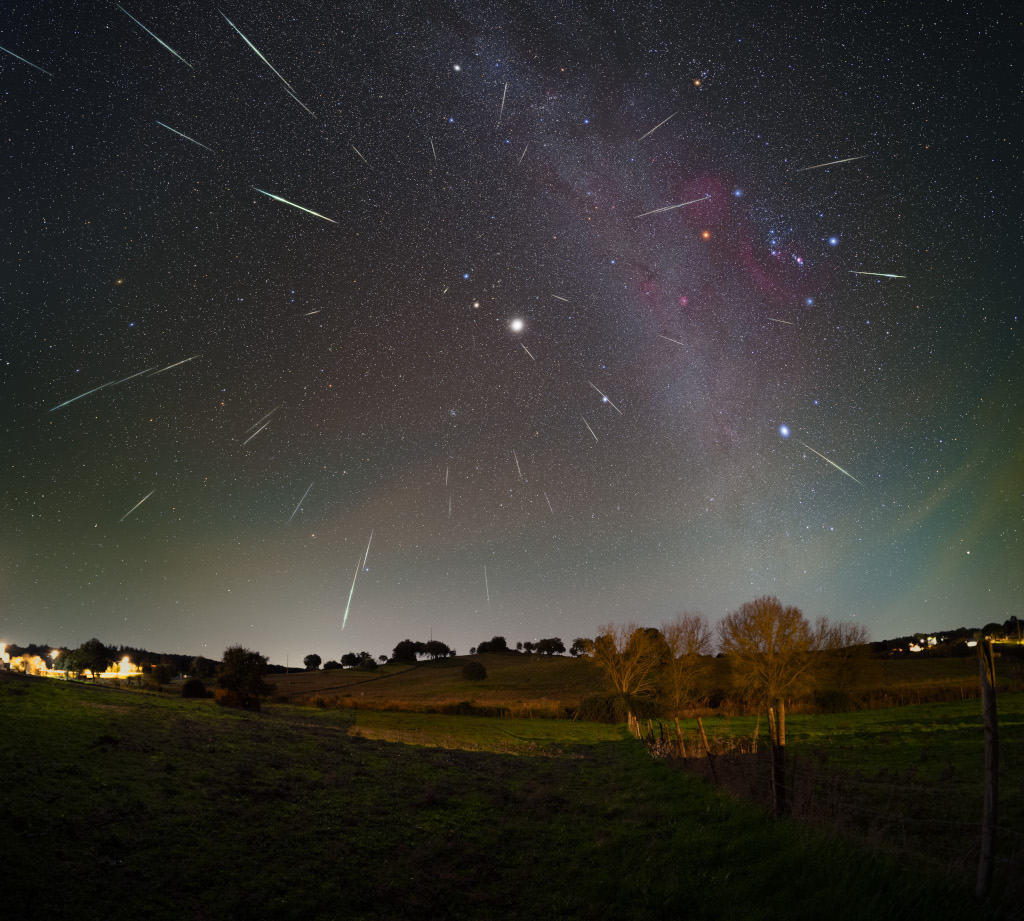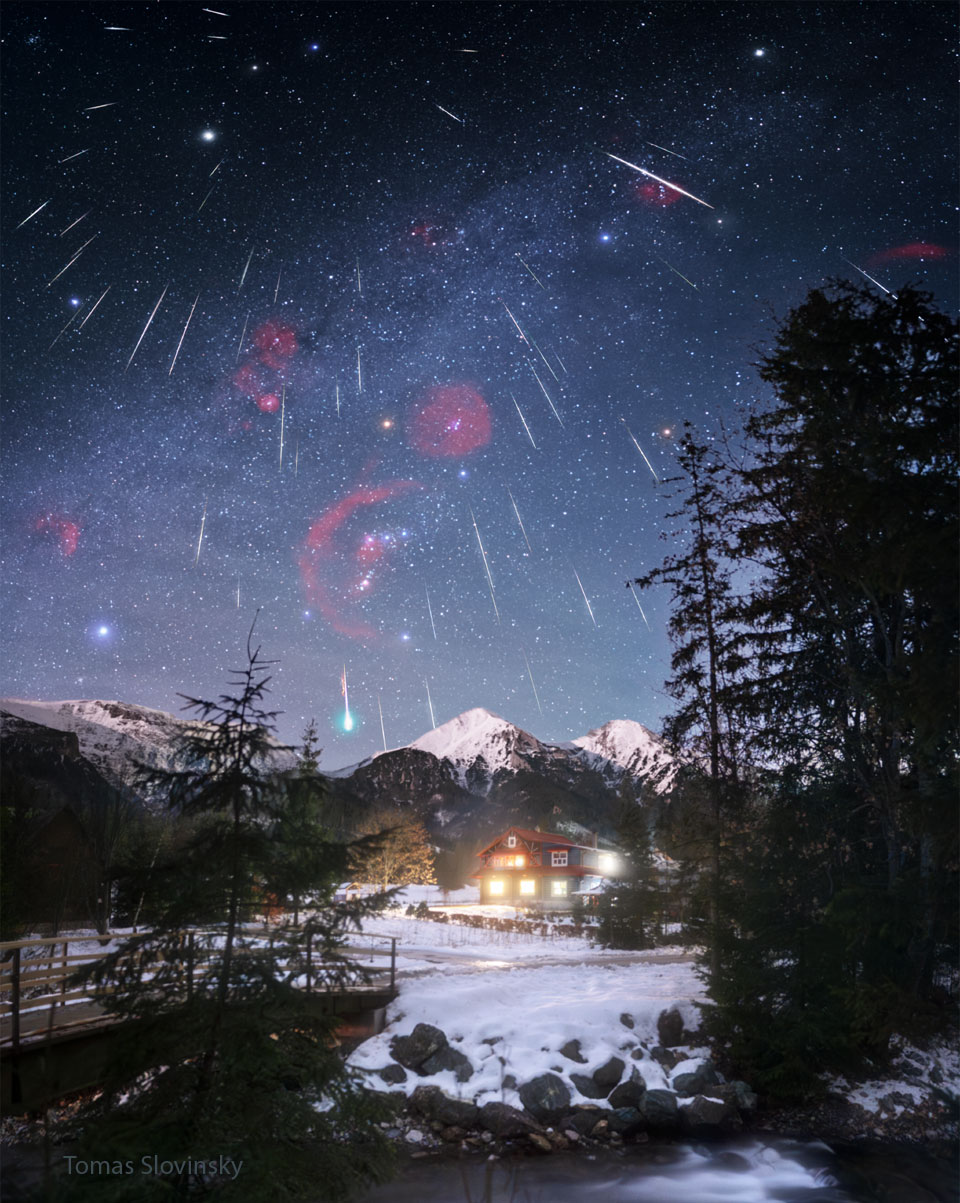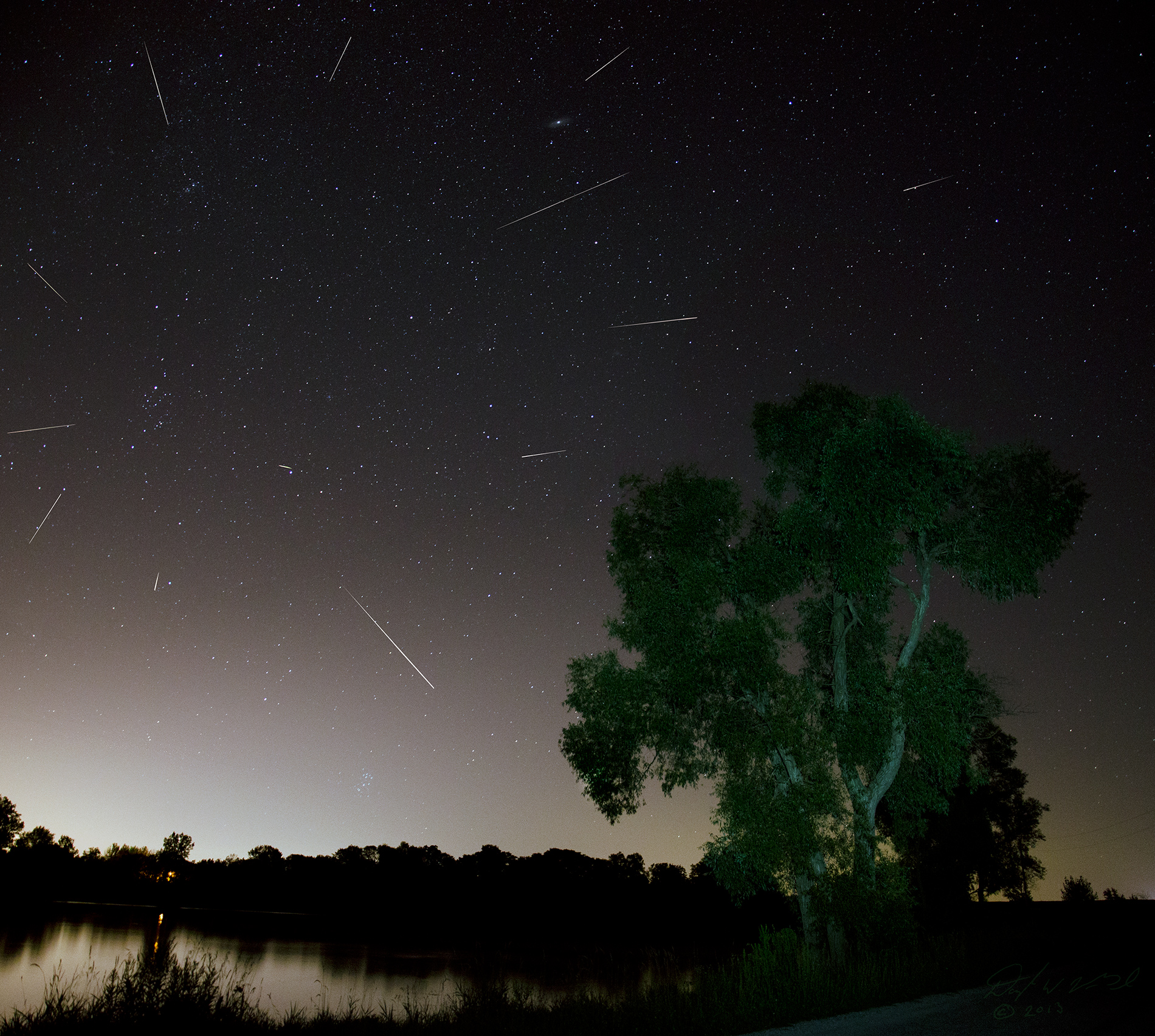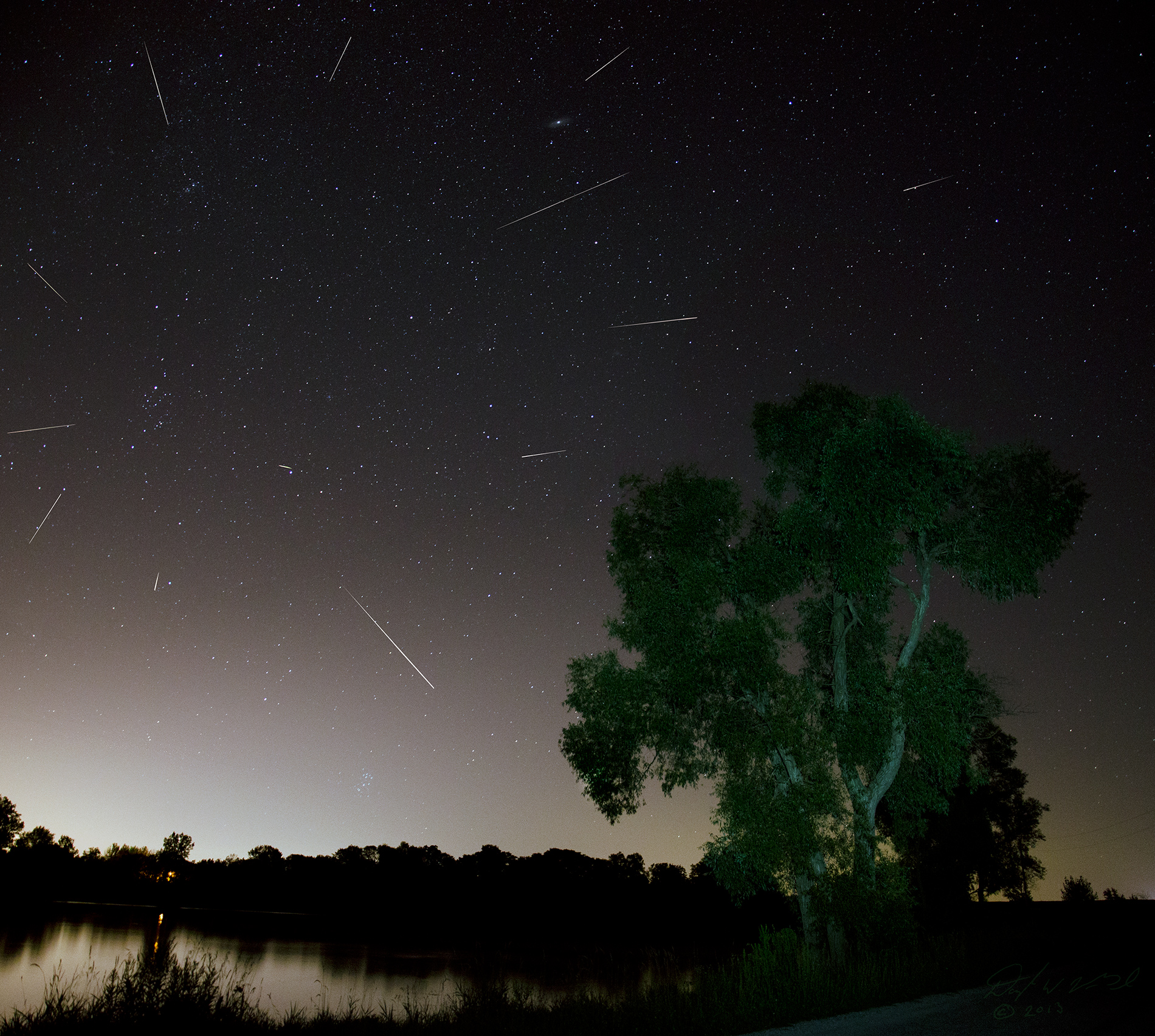
Where are all of these meteors coming from? In terms of direction on the sky, the pointed answer is the constellation of Perseus. That is why the meteor shower that peaked over the past few days is known as the Perseids -- the meteors all appear to come from a radiant toward Perseus. Three dimensionally, however, sand-sized debris expelled from Comet Swift-Tuttle follows a well-defined orbit about our Sun, and the part of the orbit that approaches Earth is superposed in front of the Perseus. Therefore, when Earth crosses this orbit, the radiant point of falling debris appears in Perseus. Pictured above, a composite of 13 early images from this year's Pereids meteor shower shows many bright meteors that streaked through the sky the night of August 11 near Oakland, Ontario, Canada. Gallery: Highlights of the 2013 Perseids Meteor Shower
¿De dónde provienen todos estos meteoros? En términos de dirección en el cielo, la respuesta precisa es la constelación de Perseo. Por eso, la lluvia de meteoros que alcanzó su máximo en los días pasados se conoce como Perseidas — los meteoros parecen provenir de un punto radiante hacia Perseo. En tres dimensiones, sin embargo, el material de tamaño de arena expulsado por el cometa Swift-Tuttle sigue una órbita bien definida alrededor de nuestro Sol, y la parte de la órbita que se acerca a la Tierra se superpone frente a Perseo. Por lo tanto, cuando la Tierra cruza esta órbita, el punto radiante de los fragmentos que caen aparece en Perseo. En la imagen mostrada, una composición de 13 imágenes tempranas de esta lluvia de meteoros Perseidas muestra muchos meteoros brillantes que cruzaron el cielo la noche del 11 de agosto cerca de Oakland, Ontario, Canadá.