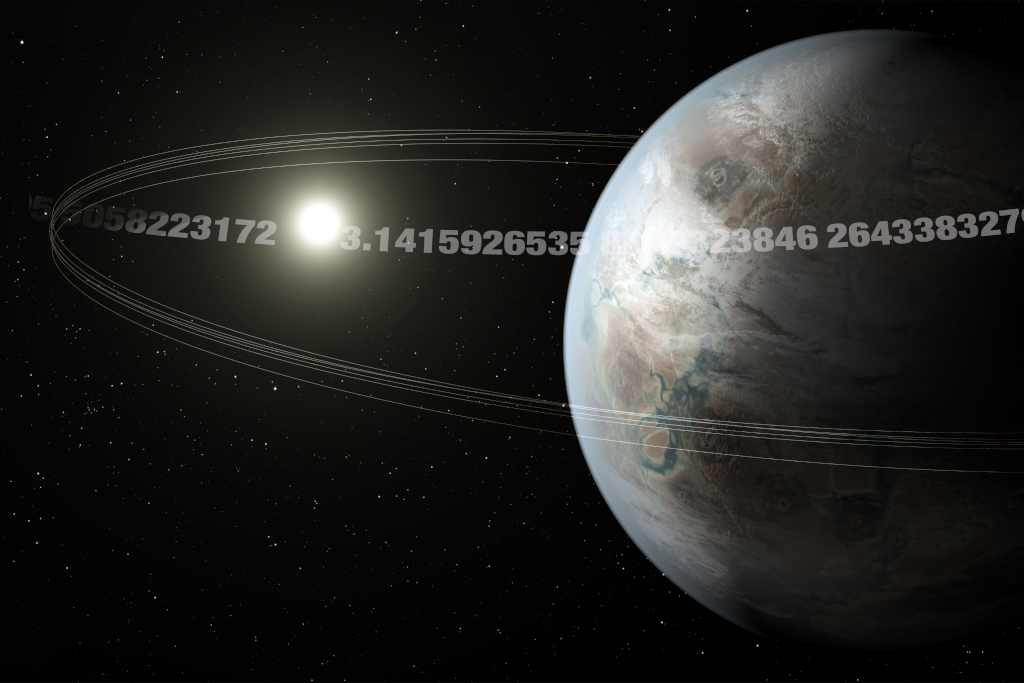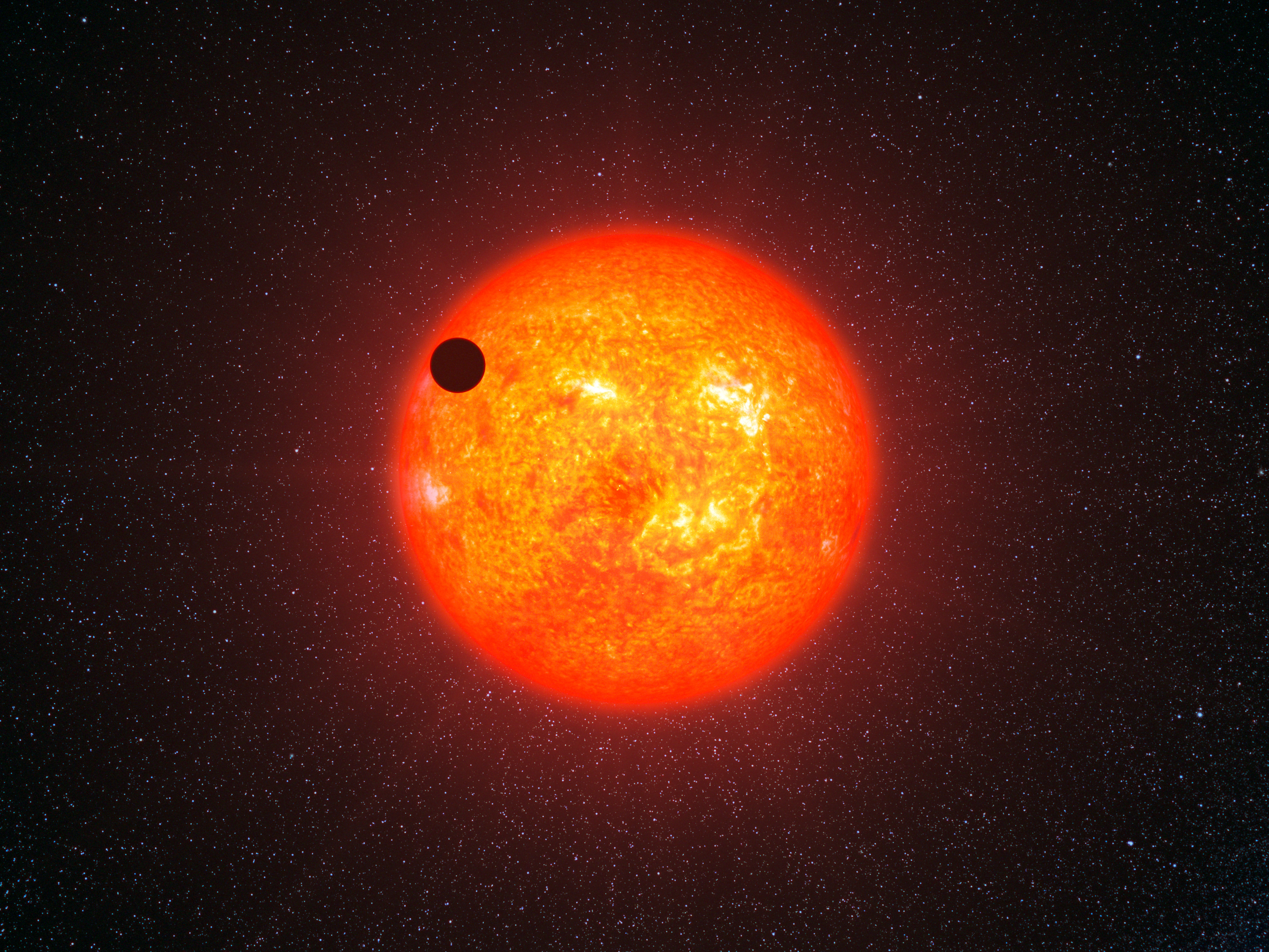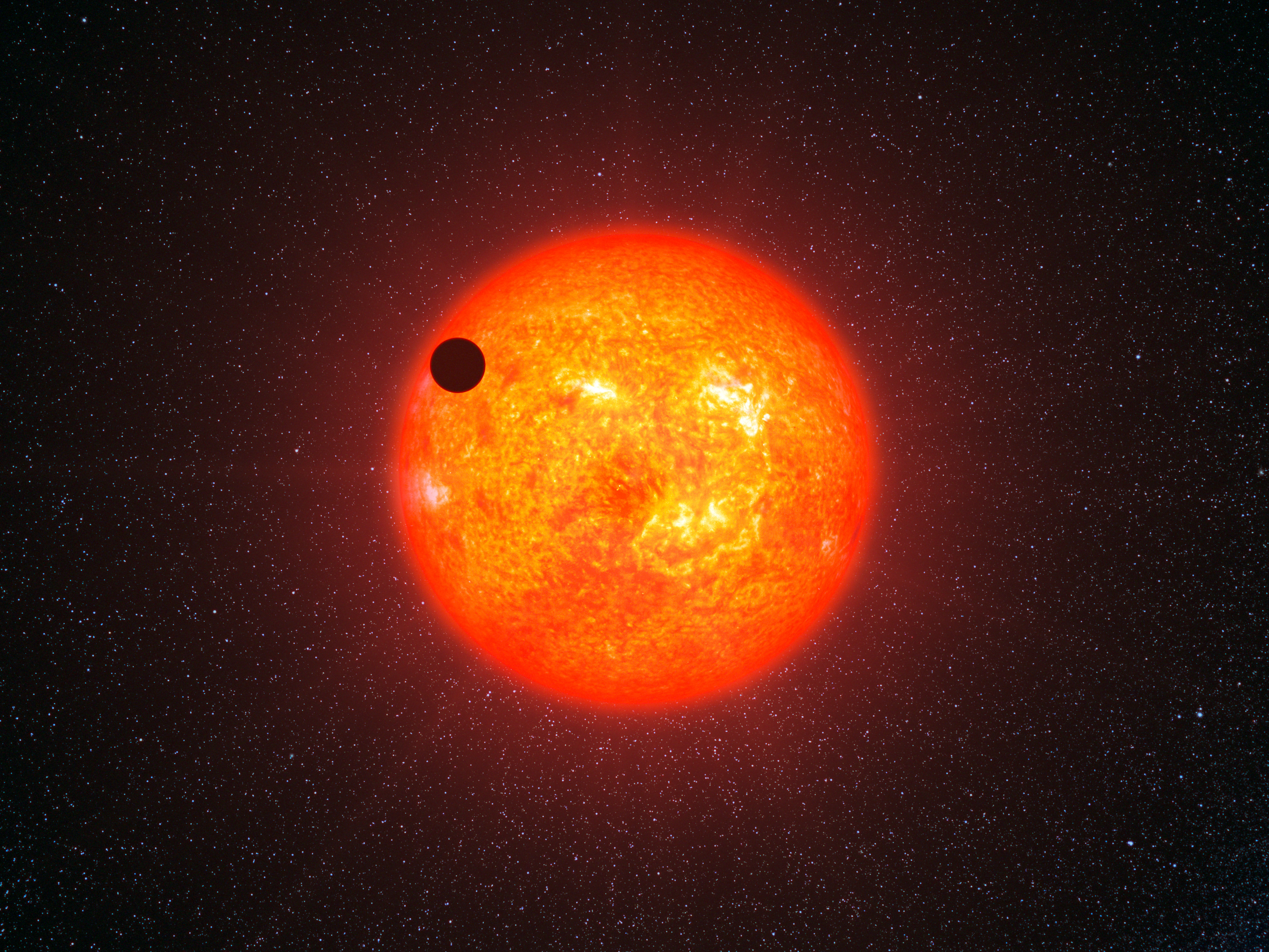
Might this distant planet hold water? Actually, given how close Gliese 1214b is to its parent star, any water, if it exists, would surely be in the form of steam. In the above artist's illustration, the super-Earth Gliese 1214b is imagined passing in front of its parent star, creating a mini-eclipse that alerted humanity to its presence. Gliese 1214b, also designated GJ 1214b, has been designated a super-Earth because it is larger than the Earth but smaller a planet like Neptune. The entire Gliese 1214 planetary system is of the closest known systems to our Sun, located only 42 light years away. The parent star, Gliese 1214 is a slightly smaller and cooler version of our Sun. Recent observations from the Subaru telescope in Hawaii found very little scattering of blue light from the parent star by the planet. This appears most consistent with a planet that has a watery atmosphere -- although it is still possible that the super-Earth has clouds so thick that little of any color of light was scattered. Detecting water on exoplanets is important partly because most lifeforms on Earth need water to survive. Follow APOD on: Facebook (Daily) (Sky) (Spanish) or Google Plus (Daily) (River)
¿Podría este planeta distante albergar agua? De hecho, dado lo cerca que Gliese 1214b está de su estrella anfitriona, cualquier agua, si existe, seguramente estaría en forma de vapor. En la ilustración artística de arriba, el super-Tierra Gliese 1214b se imagina pasando frente a su estrella anfitriona, creando un mini-eclipse que alertó a la humanidad sobre su presencia. Gliese 1214b, también designado GJ 1214b, se ha designado como un super-Tierra porque es más grande que la Tierra pero más pequeño que un planeta como Neptuno. Todo el sistema planetario Gliese 1214 es uno de los sistemas más cercanos conocidos al Sol, ubicado a solo 42 años luz de distancia. La estrella anfitriona, Gliese 1214, es una versión ligeramente más pequeña y más fría de nuestro Sol. Recientes observaciones del telescopio Subaru en Hawái encontraron muy poca dispersión de luz azul de la estrella anfitriona por el planeta. Esto parece ser más coherente con un planeta que tiene una atmósfera acuosa — aunque aún es posible que el super-Tierra tenga nubes tan gruesas que poca luz de cualquier color haya sido dispersada. Detectar agua en exoplanetas es importante, en parte porque la mayoría de los organismos en la Tierra necesitan agua para sobrevivir.