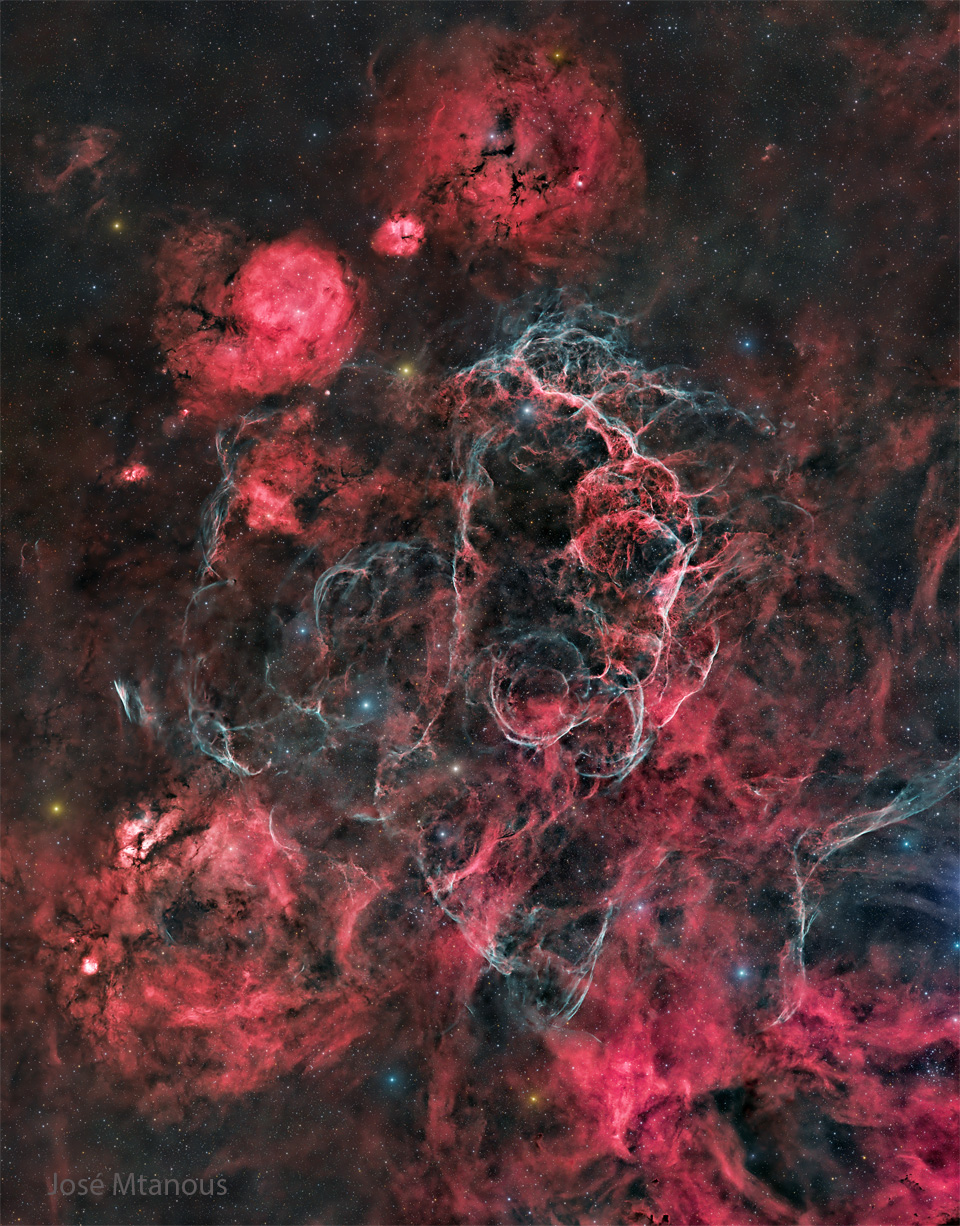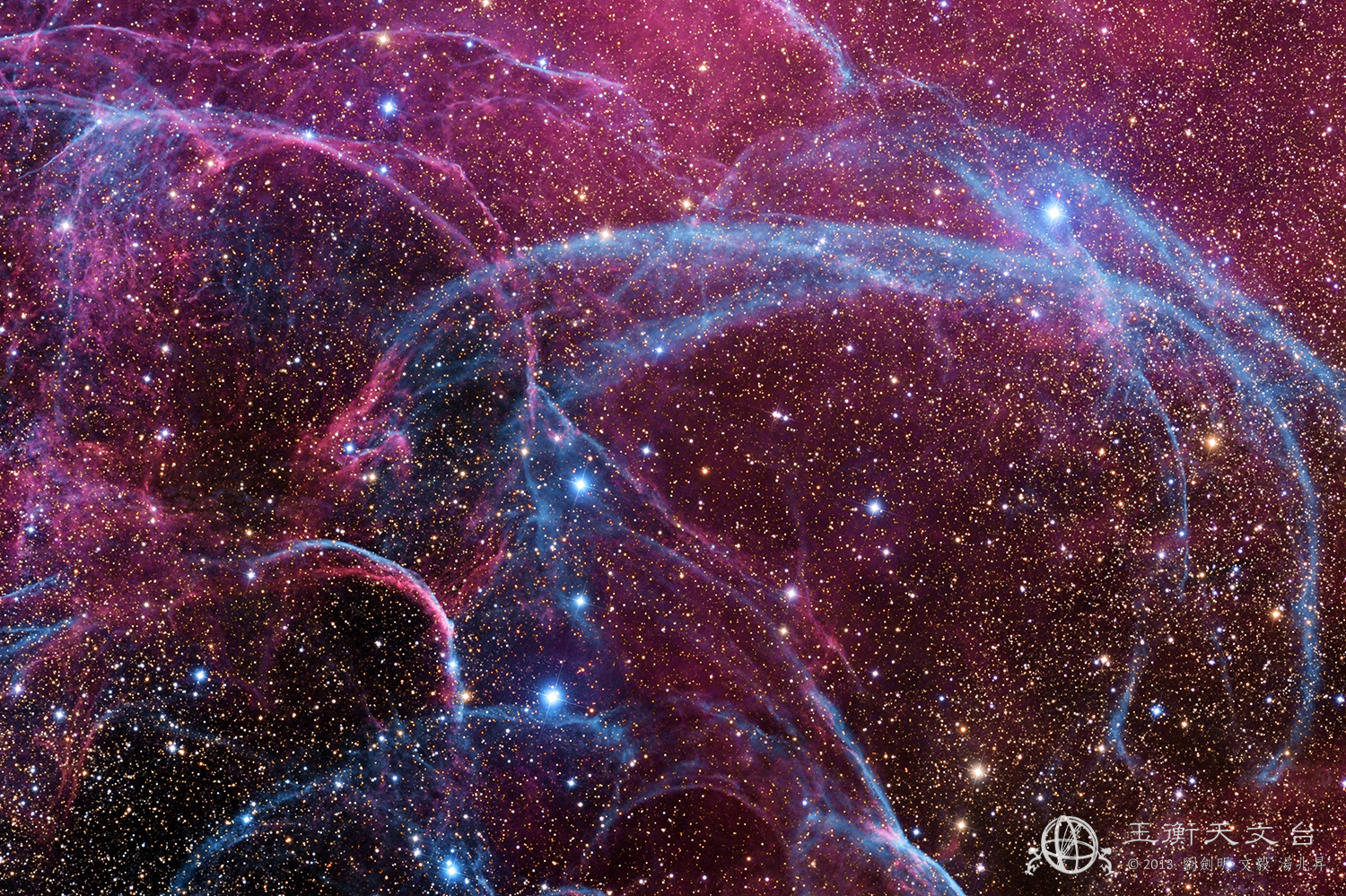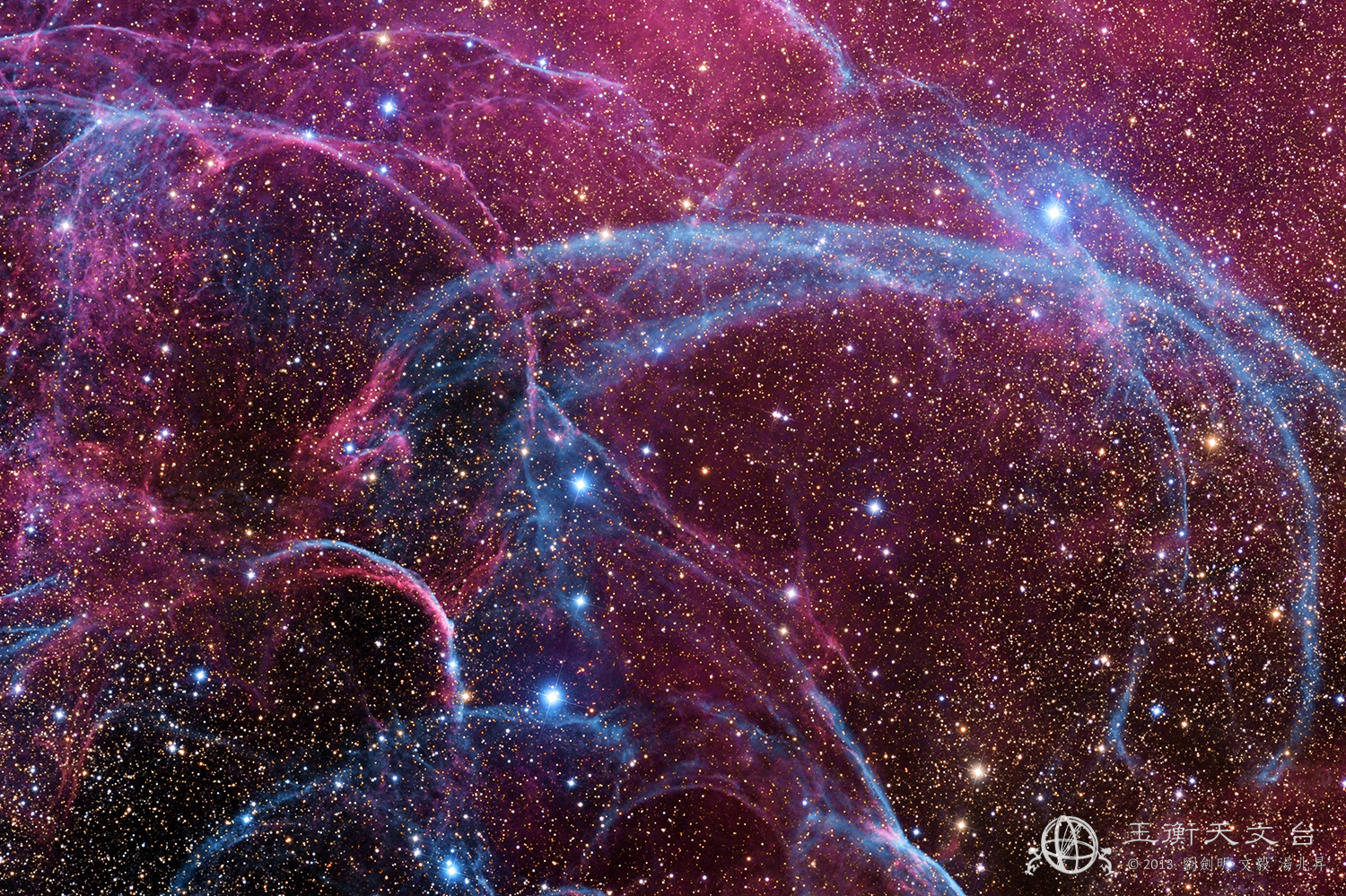
The explosion is over but the consequences continue. About eleven thousand years ago a star in the constellation of Vela could be seen to explode, creating a strange point of light briefly visible to humans living near the beginning of recorded history. The outer layers of the star crashed into the interstellar medium, driving a shock wave that is still visible today. A roughly spherical, expanding shock wave is visible in X-rays. The above image captures some of that filamentary and gigantic shock in visible light. As gas flies away from the detonated star, it decays and reacts with the interstellar medium, producing light in many different colors and energy bands. Remaining at the center of the Vela Supernova Remnant is a pulsar, a star as dense as nuclear matter that rotates completely around more than ten times in a single second. Note: How to follow APOD if the US government shuts down
La explosión ha terminado, pero sus consecuencias continúan. Hace aproximadamente once mil años, una estrella en la constelación de Vela pudo verse explotar, creando un punto de luz extraño que estuvo brevemente visible para los humanos que vivían al comienzo de la historia registrada. Las capas externas de la estrella se estrellaron contra el medio interestelar, generando una onda de choque que aún es visible hoy en día. Una onda de choque esférica y en expansión es visible en rayos X. La imagen anterior captura parte de ese choque filamentoso y gigantesco en luz visible. Mientras el gas se aleja de la estrella detonada, se degrada y reacciona con el medio interestelar, produciendo luz en muchos colores y bandas de energía diferentes. En el centro del Remanente de Supernova de Vela permanece un púlsar, una estrella tan densa como la materia nuclear que gira completamente alrededor más de diez veces en un solo segundo.