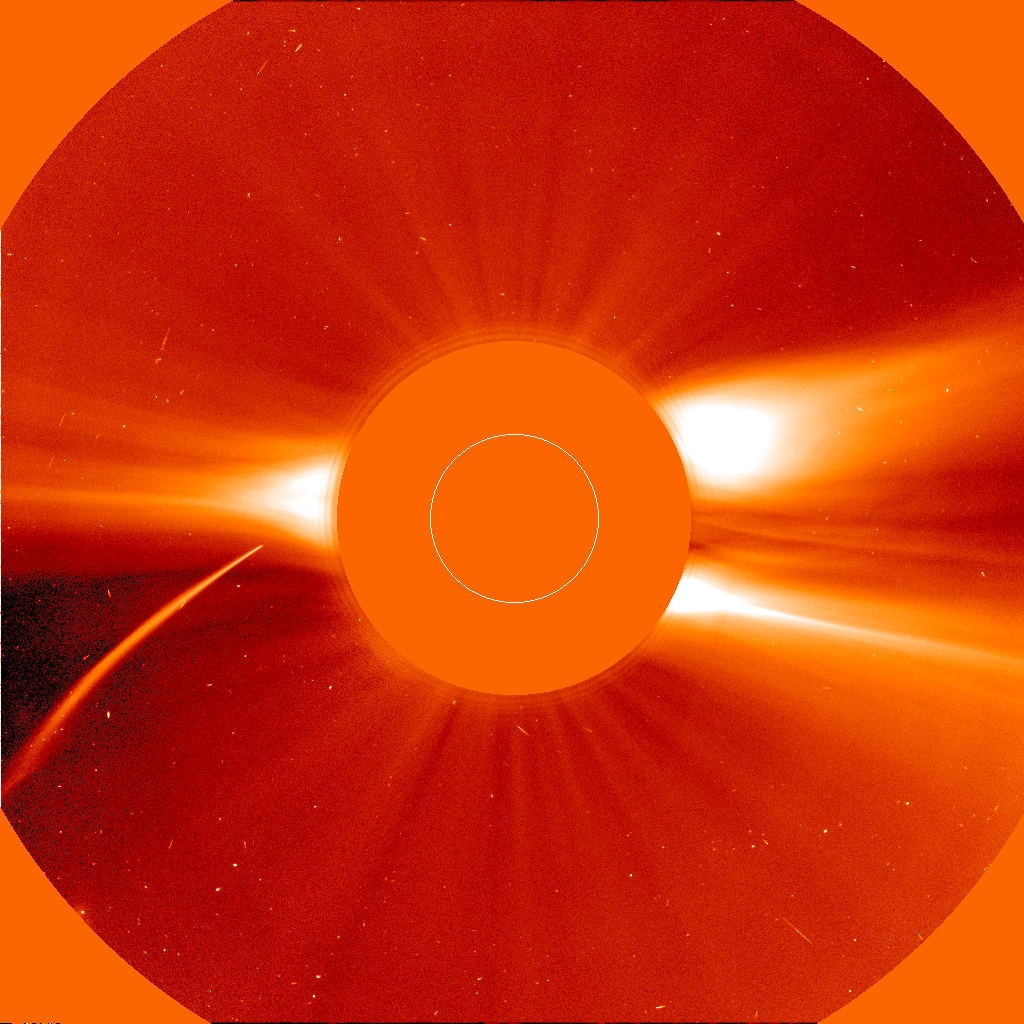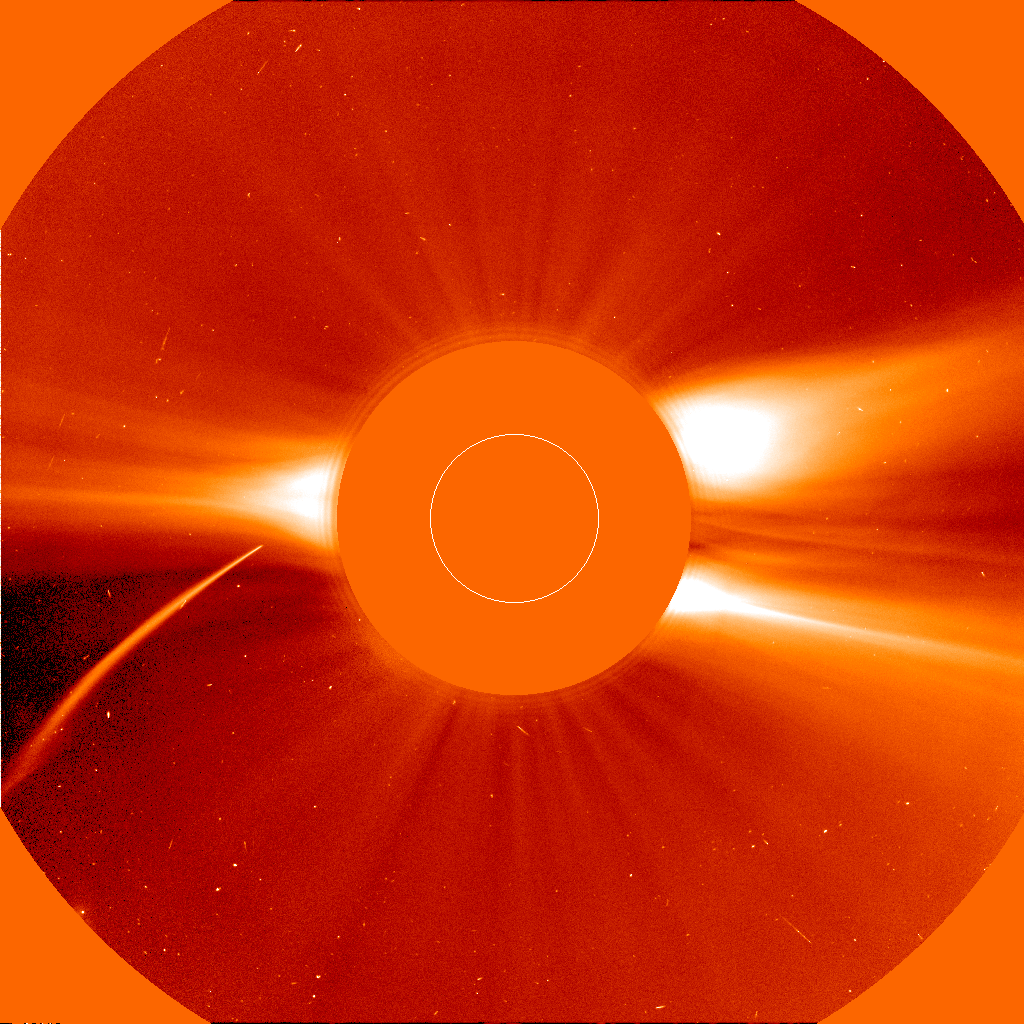
Arcing toward a fiery fate, this Sungrazer comet was recorded by the SOHO spacecraft's Large Angle Spectrometric COronagraph(LASCO) on December 23, 1996. LASCO uses an occulting disk, partially visible at the lower right, to block out the otherwise overwhelming solar disk allowing it to image the inner 8 million kilometers of the relatively faint corona. The comet is seen as its coma enters the bright equatorial solar wind region (oriented vertically). Positioned in space to continuously observe the Sun, SOHO has now been used to discover over 1,500 comets, including numerous sungrazers. Based on their orbits, the vast majority of sungrazers are believed to belong to the Kreutz family of sungrazing comets created by successive break ups from a single large parent comet that passed very near the Sun in the twelfth century. The Great Comet of 1965, Ikeya-Seki, was also a member of the Kreutz family, coming within about 650,000 kilometers of the Sun's surface. Passing so close to the Sun, Sungrazers are subjected to destructive tidal forces along with intense solar heat. This small comet, known as the Christmas Comet SOHO 6, did not survive. Later this year, Comet ISON, potentially the brightest sungrazer in recorded history but not a Kreutz sungrazer, is expected to survive.
Dirigiéndose hacia su trágico destino, este cometa Sungrazer fue capturado por el instrumento LASCO (Large Angle Spectrometric COronagraph) del satélite SOHO el 23 de diciembre de 1996. LASCO utiliza un disco de ocultación, parcialmente visible en la parte inferior derecha, para bloquear el disco solar, que de otro modo sería demasiado brillante, permitiendo así la imagen de los 8 millones de kilómetros de la corona, relativamente tenue. El cometa se ve cuando su coma entra en la región equatorial solar brillante (orientada verticalmente). Ubicado en el espacio para observar continuamente al Sol, SOHO ha sido utilizado para descubrir más de 1.500 cometas, incluyendo numerosos cometas Sungrazer. Basándose en sus órbitas, la gran mayoría de los cometas Sungrazer se cree que pertenecen a la familia Kreutz de cometas que se acercan al Sol, creada por sucesivas rupturas de un gran cometa progenitor que pasó muy cerca del Sol en el siglo XII. El gran cometa de 1965, Ikeya-Seki, también fue miembro de la familia Kreutz, acercándose aproximadamente a 650.000 kilómetros a la superficie del Sol. Al acercarse tanto al Sol, los cometas Sungrazer están sometidos a fuerzas destructivas de marea junto con un intenso calor solar. Este pequeño cometa, conocido como el Cometa de Navidad SOHO 6, no sobrevivió. A finales de este año, el cometa ISON, potencialmente el cometa Sungrazer más brillante en la historia registrada, pero no miembro de la familia Kreutz, se espera que sobreviva.