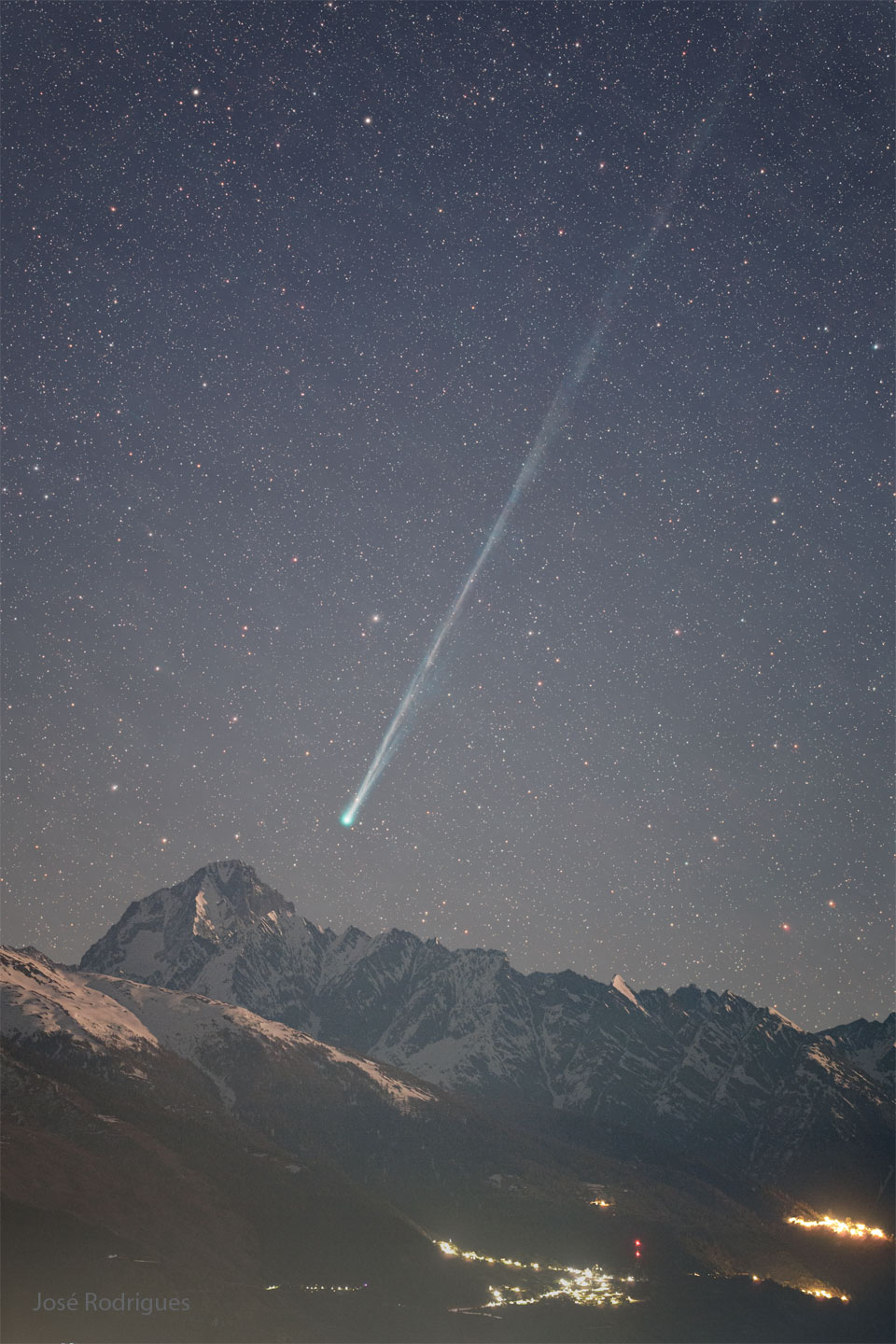
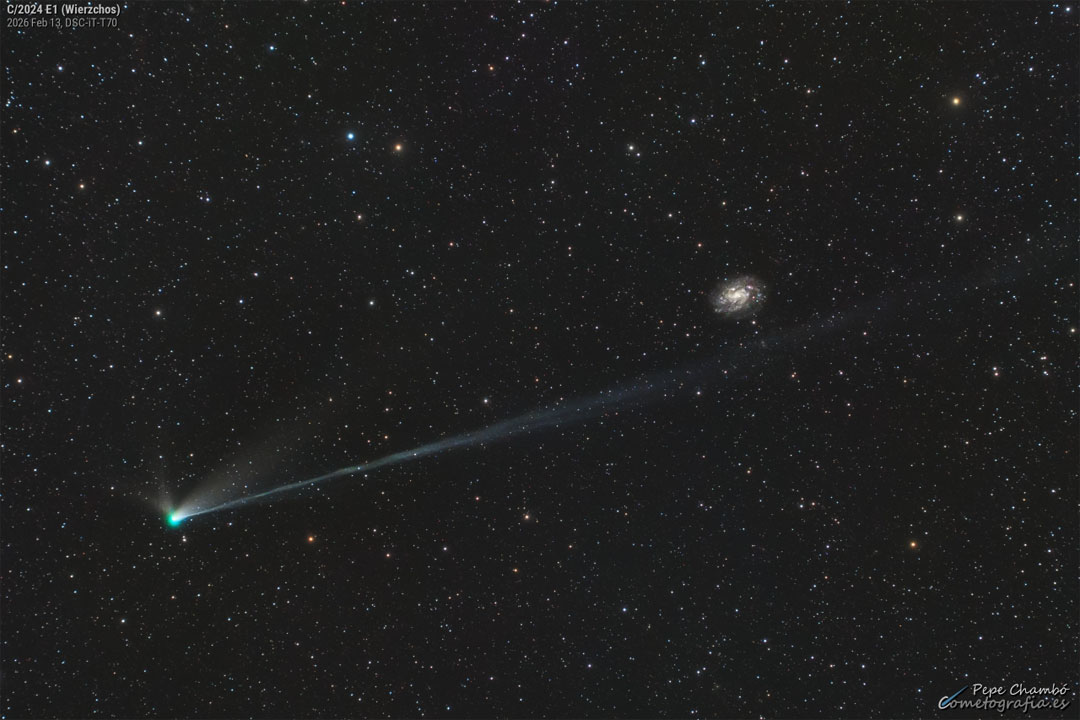
Will Comet ISON survive tomorrow's close encounter with the Sun? Approaching to within a solar diameter of the Sun's surface, the fate of one of the most unusual comets of modern times will finally be determined. The comet could shed a great amount of ice and dust into a developing tail -- or break apart completely. Unfortunately, the closer Comet ISON gets to the Sun, the harder it has been for conventional telescopes to see the brightening comet in the glare of the morning Sun. Pictured in the above short time lapse video, Comet ISON was captured rising over the Canary Islands just above the morning Sun a few days ago. If the comet's nucleus survives, the coma and the tails it sheds might well be visible rising ahead of the Sun in the next few days or weeks. Alternatively, satellites watching the Sun might document one of the larger comet disintegrations yet recorded. Stay tuned! Watch: Comet ISON appoach an active Sun (Direct SOHO link)
¿Sobrevivirá el cometa ISON al acercamiento cercano que tendrá mañana con el Sol? Al acercarse a menos de un diámetro solar a la superficie del Sol, el destino de uno de los cometas más inusuales de la era moderna finalmente se determinará. El cometa podría liberar una gran cantidad de hielo y polvo, formando una cola en desarrollo — o podría desintegrarse completamente. Desafortunadamente, cuanto más cerca se acerca el cometa ISON al Sol, más difícil ha sido para los telescopios convencionales observar el cometa brillante en el resplandor del Sol matutino. En la imagen de arriba, capturada en un video de tiempo acelerado, el cometa ISON fue fotografiado al ascender sobre las Islas Canarias, apenas por encima del Sol matutino, hace unos días. Si el núcleo del cometa sobrevive, la coma y las colas que libera podrían muy bien ser visibles al ascender por delante del Sol en los próximos días o semanas. Por otro lado, los satélites que observan al Sol podrían documentar una de las desintegraciones de cometa más grandes registradas hasta ahora. ¡Manténganse atentos!