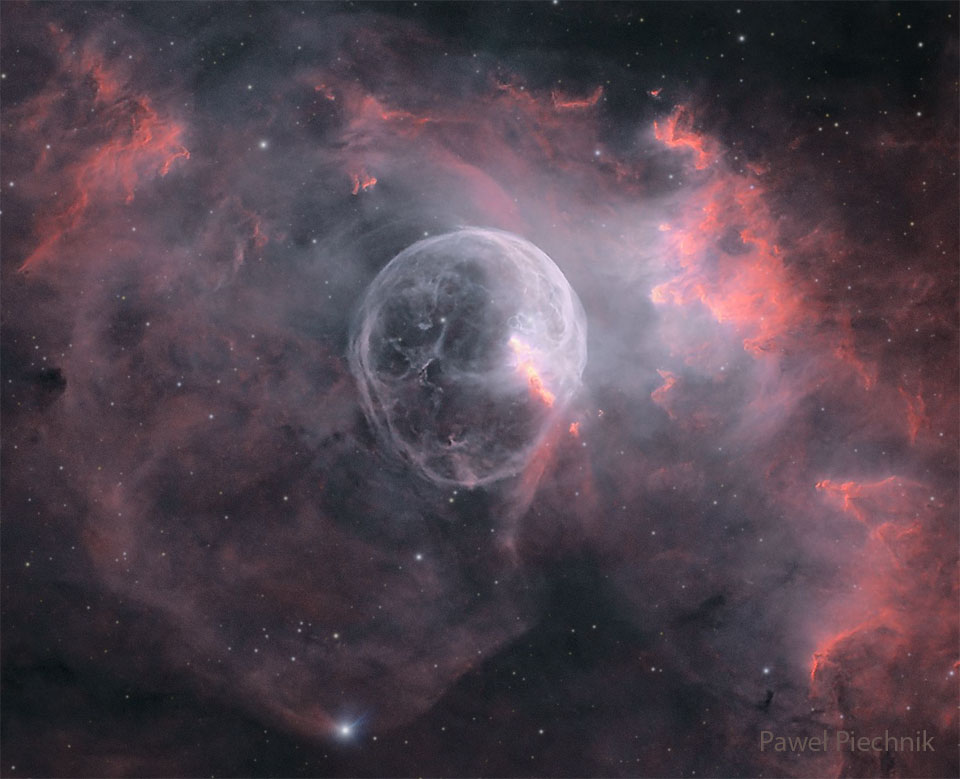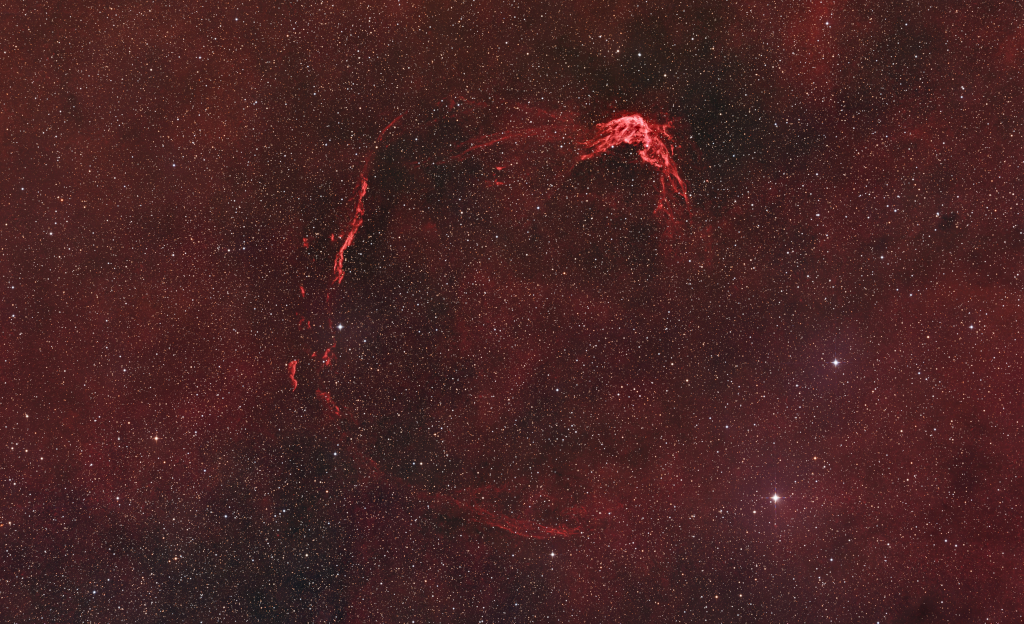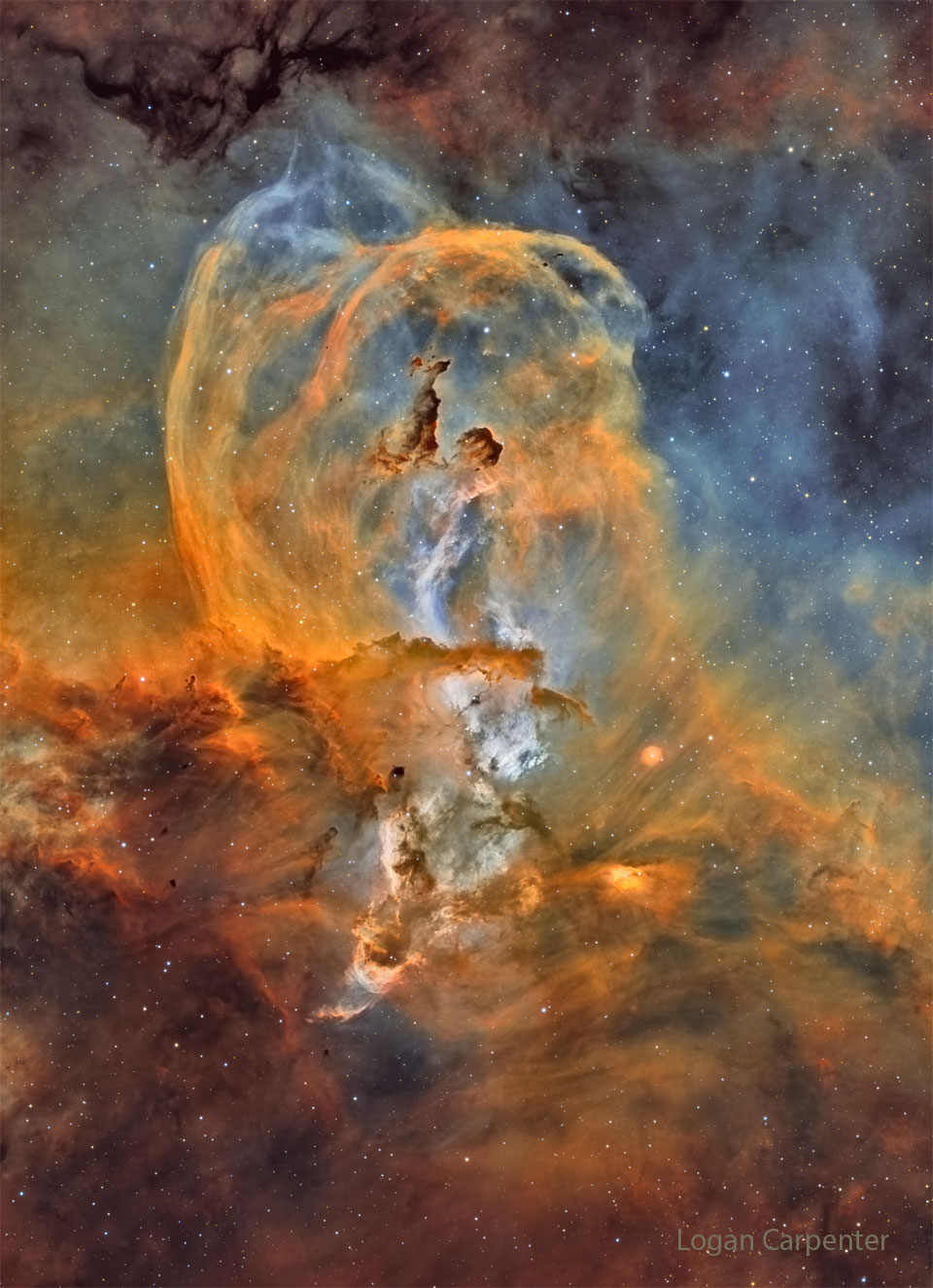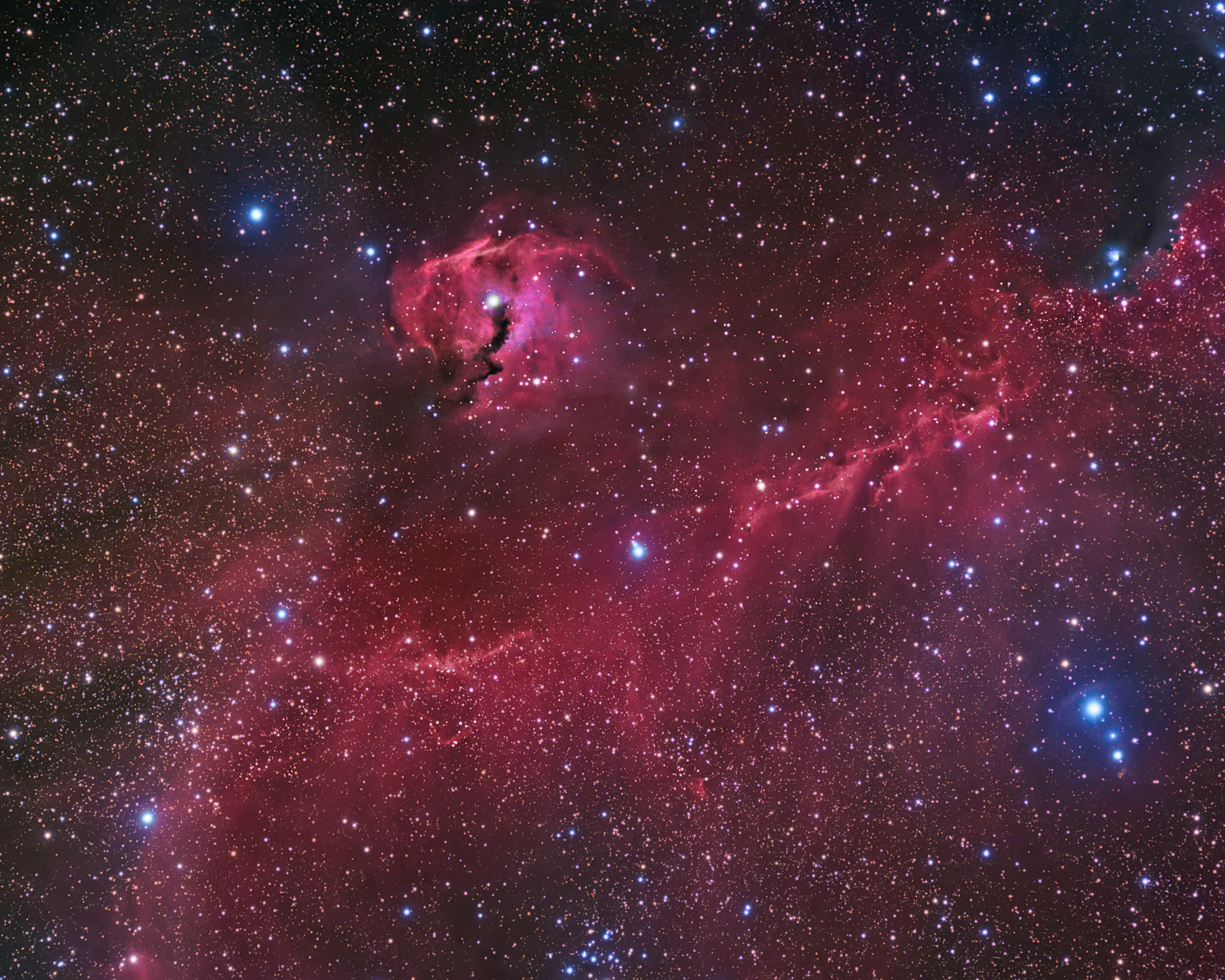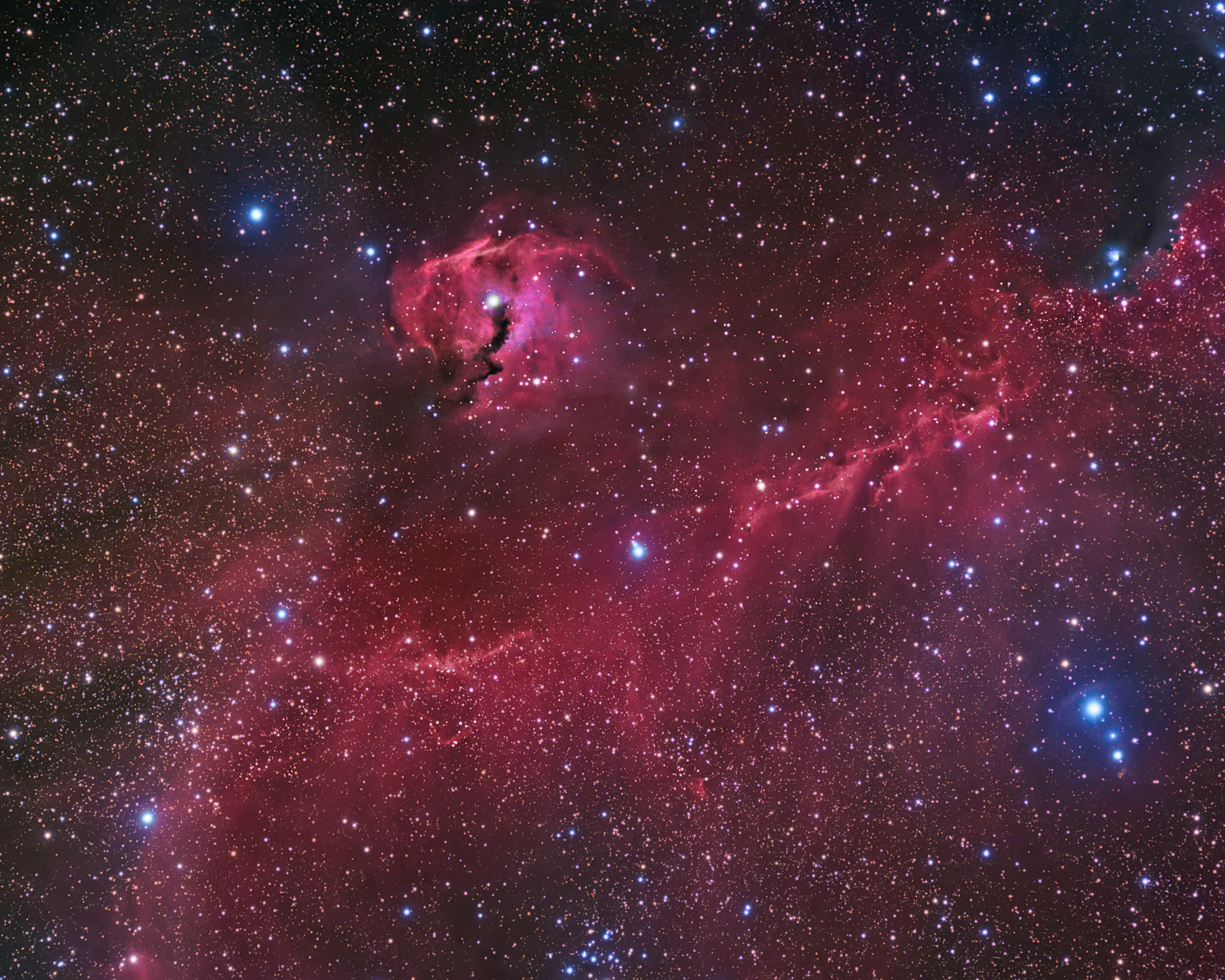
A broad expanse of glowing gas and dust presents a bird-like visage to astronomers from planet Earth, suggesting its popular moniker - The Seagull Nebula. This portrait of the cosmic bird covers a 1.6 degree wide swath across the plane of the Milky Way, near the direction of Sirius, alpha star of the constellation Canis Major. Of course, the region includes objects with other catalog designations: notably NGC 2327, a compact, dusty emission region with an embedded massive star that forms the bird's head (aka the Parrot Nebula, above center). Dominated by the reddish glow of atomic hydrogen, the complex of gas and dust clouds with bright young stars spans over 100 light-years at an estimated 3,800 light-year distance.
Un amplio espacio de gas y polvo brillante presenta una apariencia de ave para los astrónomos desde la Tierra, sugiriendo su nombre popular: La Nebulosa del Albatros. Esta imagen del ave cósmico abarca un ancho arco de 1.6 grados a lo largo del plano de la Vía Láctea, cerca de la dirección de Sirio, la estrella alfa de la constelación Canis Major. Por supuesto, la región incluye objetos con otras designaciones catalogadas: notablemente NGC 2327, una región compacta y polvorienta de emisión con una estrella masiva incrustada que forma la cabeza del ave (también conocida como la Nebulosa del Loro, arriba al centro). Dominada por el brillo rojizo del hidrógeno atómico, la compleja estructura de nubes de gas y polvo con estrellas jóvenes brillantes abarca más de 100 años luz a una distancia estimada de 3,800 años luz.