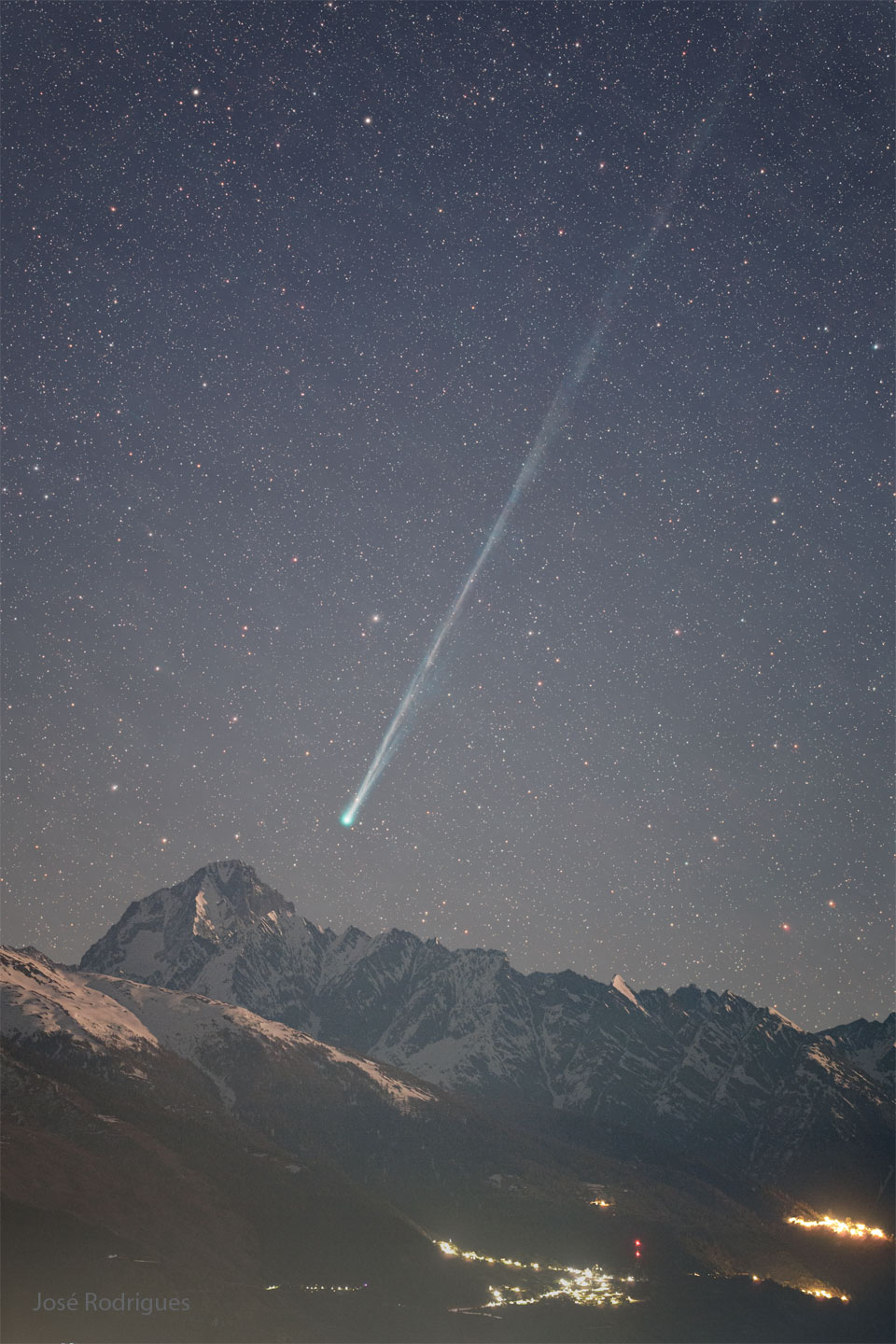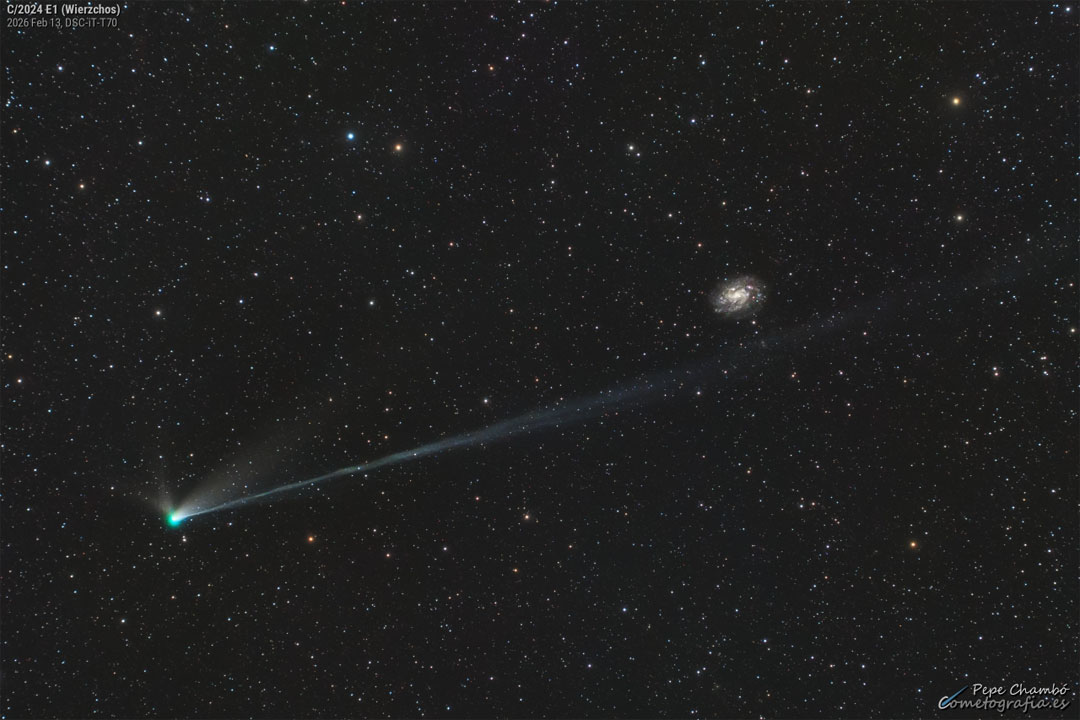
Fading now as it returns to the outer solar system Comet Lovejoy (C/2013 R1) still graces planet Earth's sky, a delicate apparition in binoculars or small telescopes. The comet, a relic of the solar system's formative years, is seen here rising in the morning twilight on January 12 among the stars of Ophiuchus, the Serpent Bearer. Posing near the comet is bright star Alpha Ophiuchi, also known as Rasalhague, from Arabic "the head of the serpent collector". Of course, the serpentine shape below is the ancient Great Wall of China, along the Panlongshan section northeast of Beijing. Panlongshan is translated as "a coiled dragon". A moving and fortuitous scene, it was captured with a digital camera and telephoto lens in two consecutive exposures. The exposures were merged to show a natural looking foreground and twilight sky.
Ahora desvaneciéndose a medida que regresa al sistema solar exterior, el Cometa Lovejoy (C/2013 R1) aún ilumina el cielo terrestre, una aparición delicada visible con binoculares o pequeños telescopios. El cometa, un relicto de los primeros años del sistema solar, se ve aquí alzándose en la aurora matutina del 12 de enero entre las estrellas de Ophiuchus, el Portador de la Serpiente. Cerca del cometa se encuentra la brillante estrella Alpha Ophiuchi, también conocida como Rasalhague, nombre derivado del árabe “la cabeza del recolector de serpientes”. Por supuesto, la forma serpentina que se observa abajo es la antigua Gran Muralla de China, en la sección de Panlongshan al noreste de Pekín. Panlongshan se traduce como “una serpiente enrollada”. Esta escena móvil y fortuita fue capturada con una cámara digital y un objetivo teleobjetivo en dos exposiciones consecutivas. Las exposiciones fueron fusionadas para mostrar un primer plano natural y un cielo de aurora matutina.