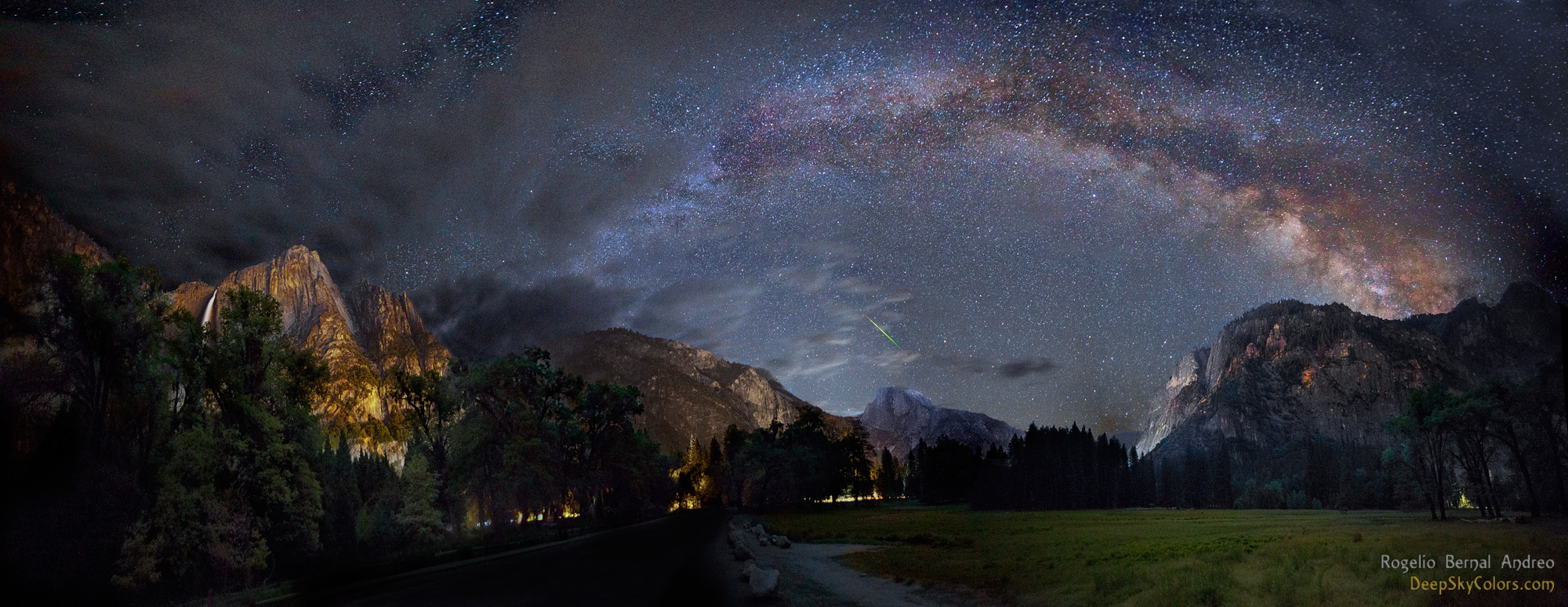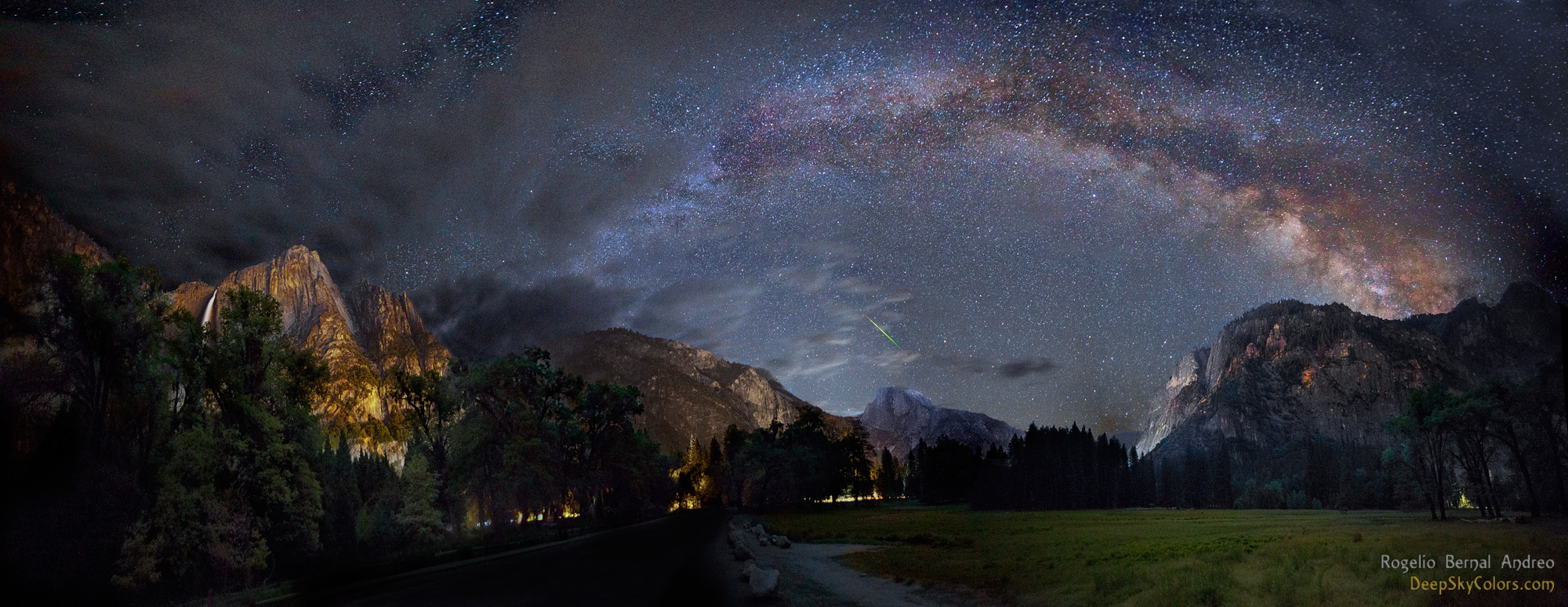
Captured one night last May this eight frame mosaic starts on the left, down Northside Drive through Yosemite National Park. It ends thousands of light-years away though, as the arc of the Milky Way tracks toward the center of our galaxy on the right, far beyond the park's rugged skyline. That night was still moonless when the storm clouds retreated, so the rocky faces of the surrounding mountains are lit by campfires and artificial lights. Yosemite Falls is at the left. The granite face of Half Dome juts above the far horizon, near the center of the view. The remarkable flash above it is a bright meteor. Part of the annual Eta Aquarid meteor shower the colorful streak is moving up, its trail pointing directly back to the shower's radiant, low in Aquarius. This year's Eta Aquarids should peak in the moonless early morning hours of May 6 as the Earth sweeps through dust from the tail of Comet Halley.
Capturada una noche del pasado mayo, esta mosaica de ocho imágenes comienza a la izquierda, bajando por Northside Drive a través del Parque Nacional Yosemite. Sin embargo, termina a miles de años luz de distancia, ya que el arco de la Vía Láctea se dirige hacia el centro de nuestra galaxia a la derecha, mucho más allá del horizonte rocoso del parque. Esa noche aún era sin luna cuando las nubes de la tormenta se retiraron, por lo que las caras rocosas de las montañas circundantes están iluminadas por fogatas y luces artificiales. Yosemite Falls se encuentra a la izquierda. La cara de granito de Half Dome sobresale por encima del horizonte distante, cerca del centro de la vista. La destacada chispa por encima de ella es un meteorito brillante. Parte de la lluvia de meteoros anual Eta Acuáridas, el rastro colorido se mueve hacia arriba, apuntando directamente hacia el radiante de la lluvia, bajo en Acuario. Las Eta Acuáridas de este año deberían alcanzar su máximo en las horas temprano de la mañana sin luna del 6 de mayo, cuando la Tierra atraviesa el polvo de la cola del Cometa Halley.