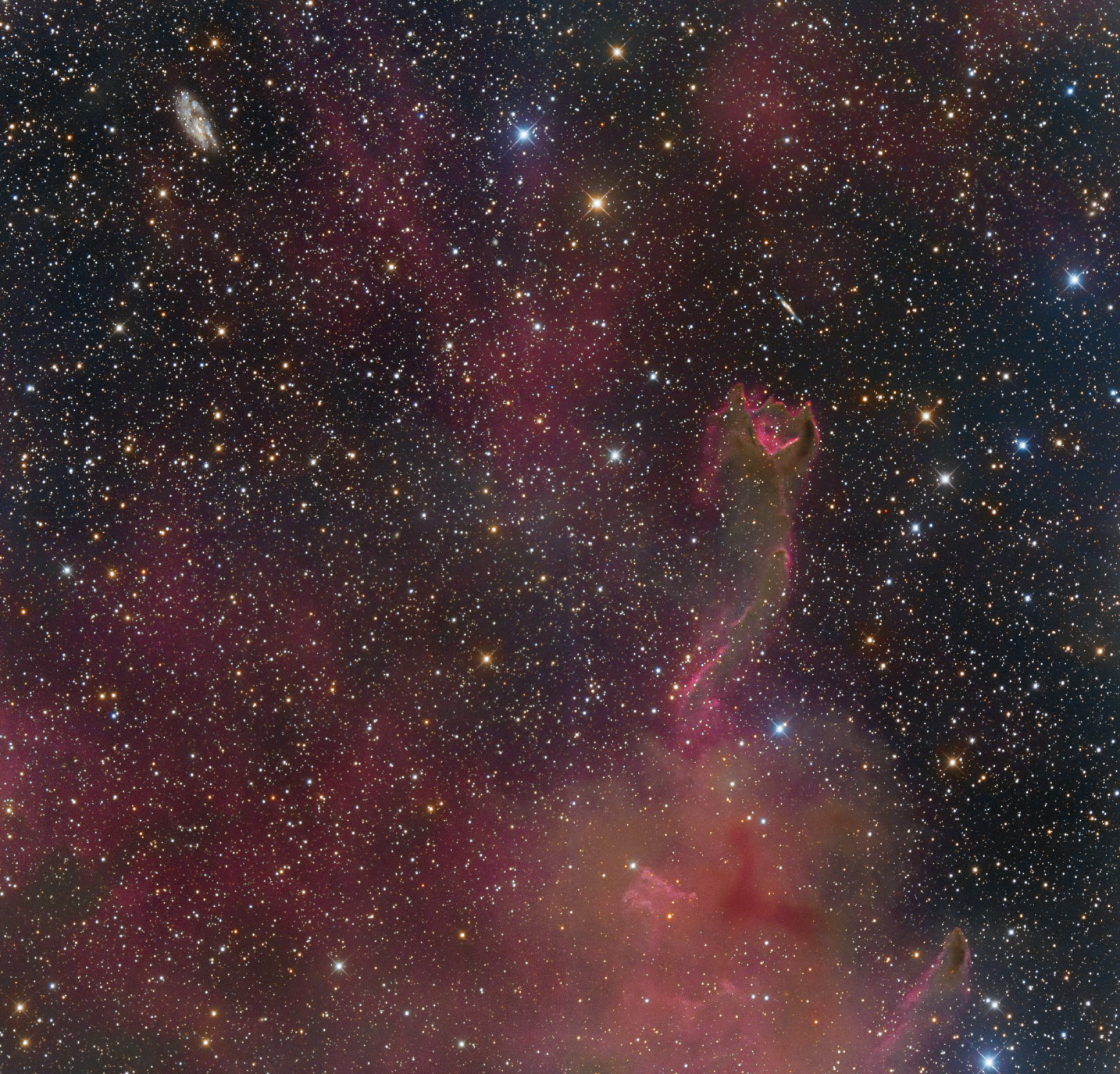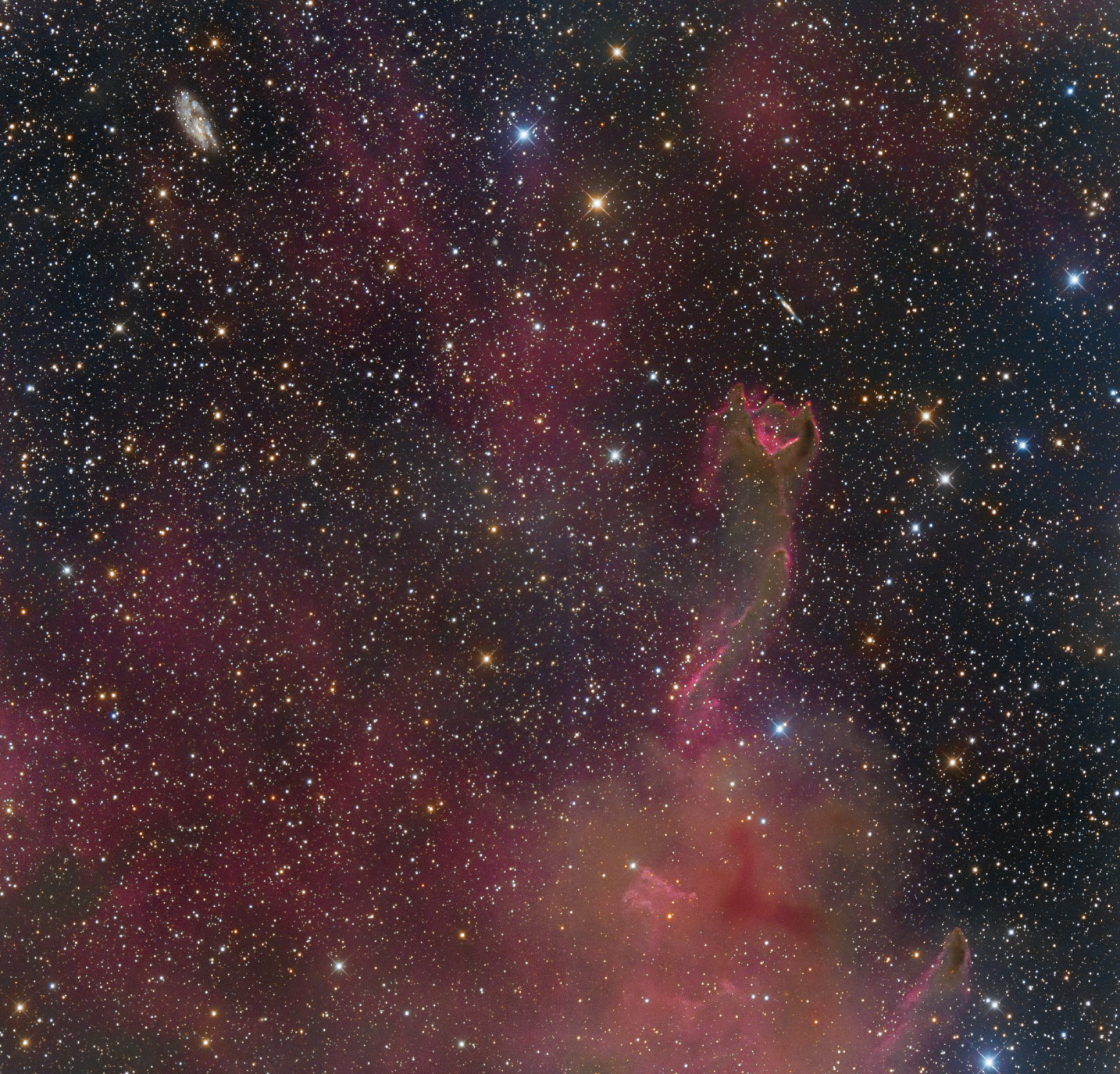
Can a gas cloud grab a galaxy? It's not even close. The "claw" of this odd looking "creature" in the above photo is a gas cloud known as a cometary globule. This globule, however, has ruptured. Cometary globules are typically characterized by dusty heads and elongated tails. These features cause cometary globules to have visual similarities to comets, but in reality they are very much different. Globules are frequently the birthplaces of stars, and many show very young stars in their heads. The reason for the rupture in the head of this object is not completely known. The galaxy to the left of the globule is huge, very far in the distance, and only placed near CG4 by chance superposition. Best Space Images: Free APOD Lecture in Paris on June 17
¿Puede una nube de gas agarrar una galaxia? Ni siquiera se acerca. La "garras" de este extraño "ser" en la fotografía anterior es una nube de gas conocida como una globula comética. Sin embargo, esta globula ha sido rota. Las globulas cométicas suelen estar caracterizadas por cabezas polvorientas y colas alargadas. Estas características le dan a las globulas cométicas similitudes visuales con cometas, pero en realidad son muy diferentes. Las globulas suelen ser lugares de nacimiento de estrellas, y muchas muestran estrellas muy jóvenes en sus cabezas. La razón de la ruptura en la cabeza de este objeto no se conoce completamente. La galaxia a la izquierda de la globula es enorme, muy distante y solo colocada cerca de CG4 por una superposición casual. Imágenes del mejor espacio: Charla gratuita de APOD en París el 17 de junio