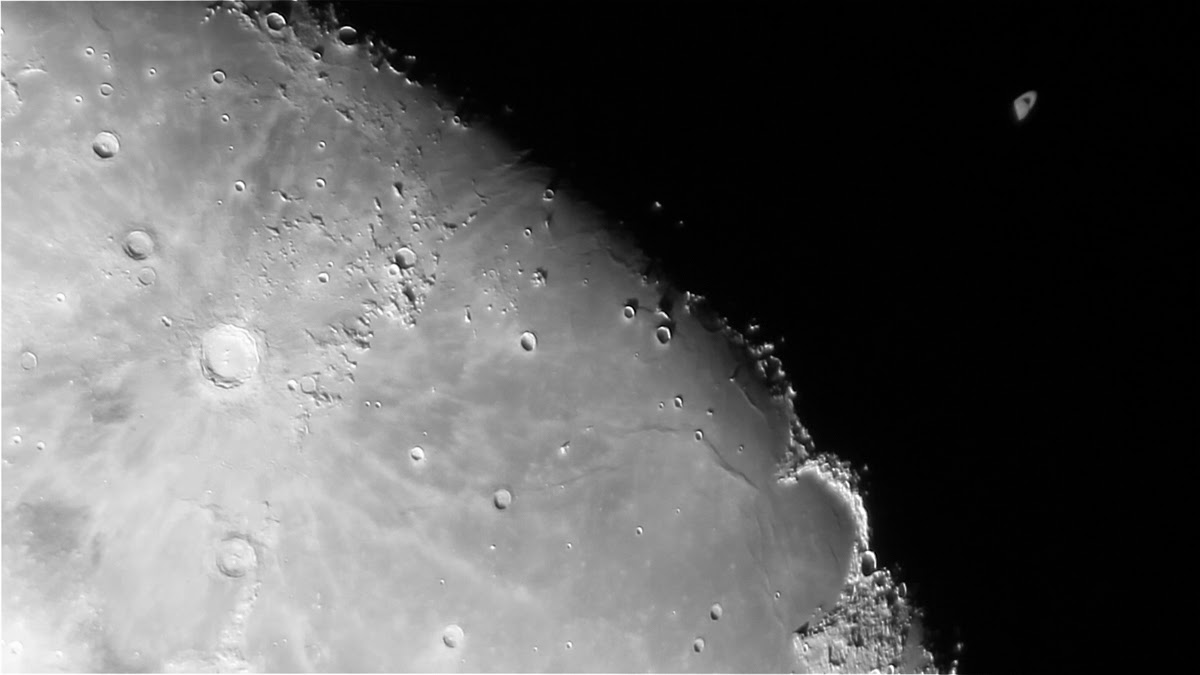
What happened to half of Saturn? Nothing other than Earth's Moon getting in the way. As pictured above on the far right, Saturn is partly eclipsed by a dark edge of a Moon itself only partly illuminated by the Sun. This year the orbits of the Moon and Saturn have led to an unusually high number of alignments of the ringed giant behind Earth's largest satellite. Technically termed an occultation, the above image captured one such photogenic juxtaposition from Buenos Aires, Argentina that occurred early last week. Visible to the unaided eye but best viewed with binoculars, there are still four more eclipses of Saturn by our Moon left in 2014. The next one will be on August 4 and visible from Australia, while the one after will occur on August 31 and be visible from western Africa at night but simultaneously from much of eastern North America during the day.
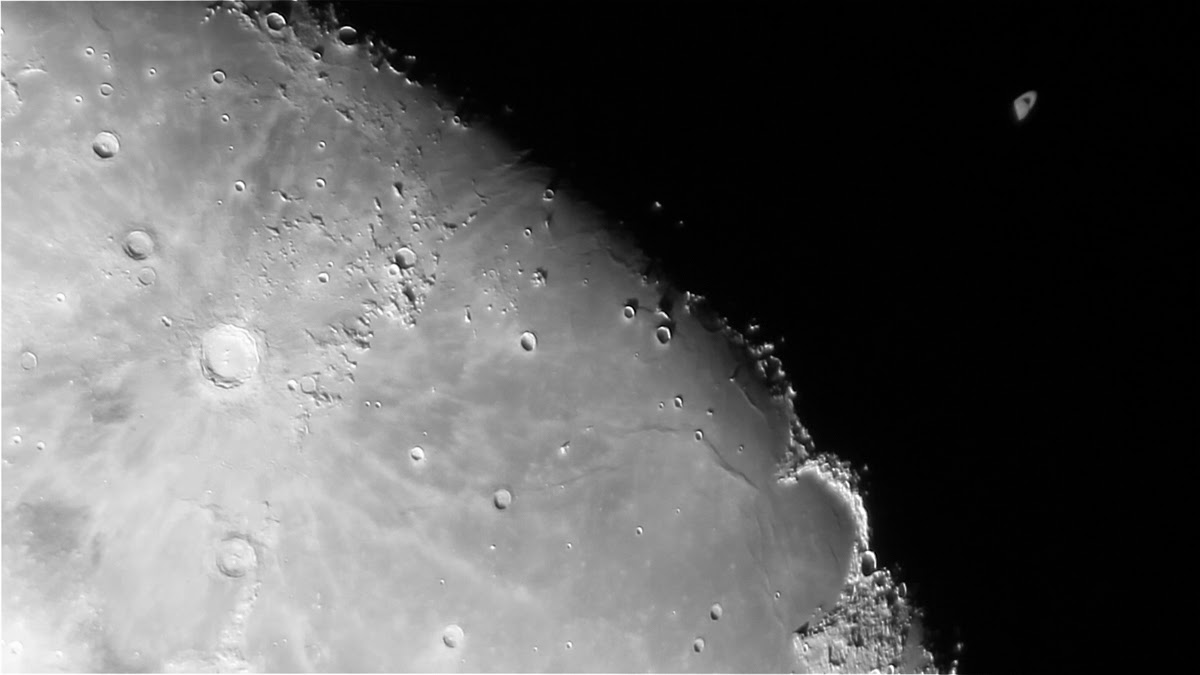
¿Qué le pasó a la mitad de Saturno? Nada más que la Tierra se interpuso en el camino. Como se puede ver en la imagen anterior, a la derecha, Saturno está parcialmente eclipsado por una oscura orilla de la Luna, que a su vez está solo parcialmente iluminada por el Sol. Este año, las órbitas de la Luna y Saturno han llevado a un número inusualmente alto de alineaciones del gigante anillado detrás de la mayor luna de la Tierra. Técnicamente denominado una ocultación, la imagen anterior capturó una de tales juxtaposiciones fotogénicas desde Buenos Aires, Argentina, que ocurrió a principios de la semana pasada. Visible a simple vista, pero mejor observada con binoculares, aún quedan cuatro eclipses más de Saturno por nuestra Luna en 2014. El próximo será el 4 de agosto y será visible desde Australia, mientras que el siguiente ocurrirá el 31 de agosto y será visible desde África occidental durante la noche, pero simultáneamente desde gran parte de América del Norte oriental durante el día.