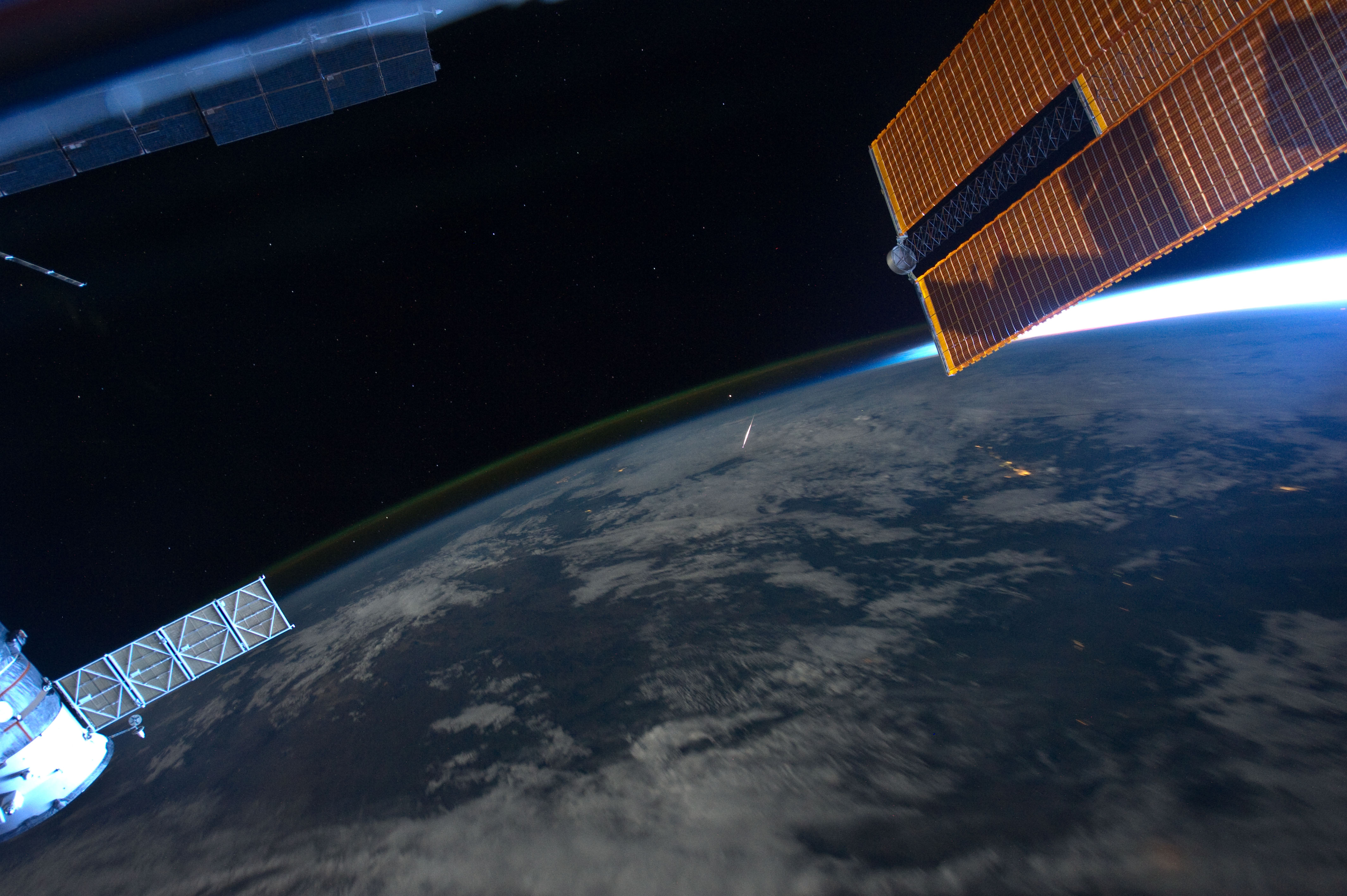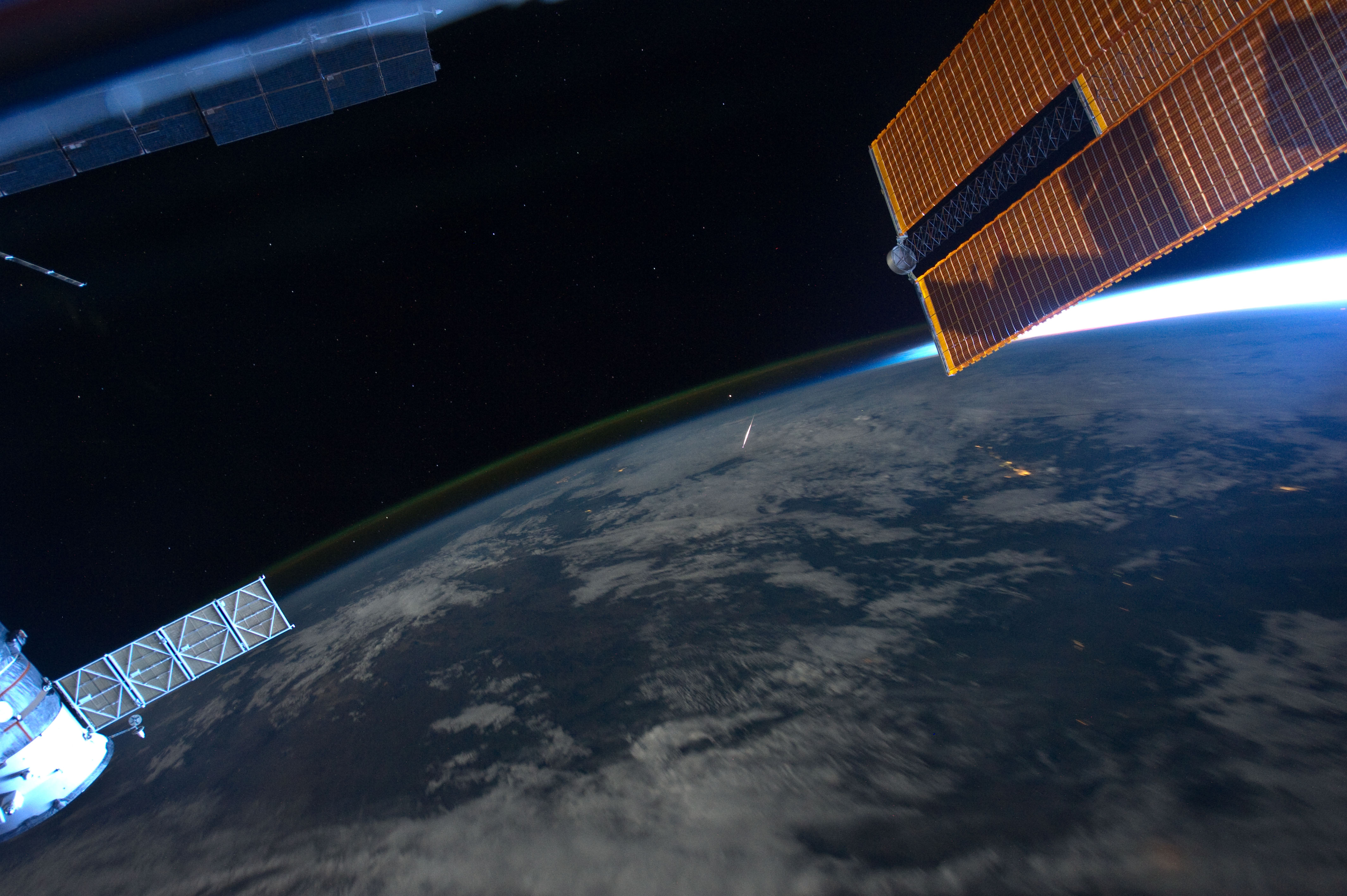
Denizens of planet Earth typically watch meteor showers by looking up. But this remarkable view, captured on August 13, 2011 by astronaut Ron Garan, caught a Perseid meteor by looking down. From Garan's perspective onboard the International Space Station orbiting at an altitude of about 380 kilometers, the Perseid meteors streak below, swept up dust left from comet Swift-Tuttle heated to incandescence. The glowing comet dust grains are traveling at about 60 kilometers per second through the denser atmosphere around 100 kilometers above Earth's surface. In this case, the foreshortened meteor flash is right of frame center, below the curving limb of the Earth and a layer of greenish airglow, just below bright star Arcturus. Want to look up at a meteor shower? You're in luck, as the 2014 Perseids meteor shower peaks this week. Unfortunately, the fainter meteors in this year's shower will be hard to see in a relatively bright sky lit by the glow of a nearly full Moon.
Los habitantes del planeta Tierra suelen observar las lluvias de meteoros mirando hacia arriba. Pero esta impresionante vista, capturada el 13 de agosto de 2011 por el astronauta Ron Garan, captó un meteorito Perseido mirando hacia abajo. Desde la perspectiva de Garan a bordo de la Estación Espacial Internacional, que orbita a una altitud de aproximadamente 380 kilómetros, los meteoros Perseidos se deslizan hacia abajo, recogiendo el polvo dejado por el cometa Swift-Tuttle, calentado hasta incandescencia. Las partículas brillantes del polvo cometario viajan a unos 60 kilómetros por segundo a través de la atmósfera más densa, aproximadamente a 100 kilómetros sobre la superficie terrestre. En este caso, el destello del meteorito acortado se encuentra a la derecha del centro de la imagen, debajo del borde curvo de la Tierra y una capa de brillo atmosférico verde, justo por debajo de la brillante estrella Arcturus. ¿Quieres mirar hacia arriba para observar una lluvia de meteoros? Te encuentras afortunado, ya que la lluvia de meteoros Perseidos de 2014 alcanza su máximo esta semana. Lamentablemente, los meteoros más tenues de esta lluvia serán difíciles de ver en un cielo relativamente brillante iluminado por el resplandor de una luna casi llena.