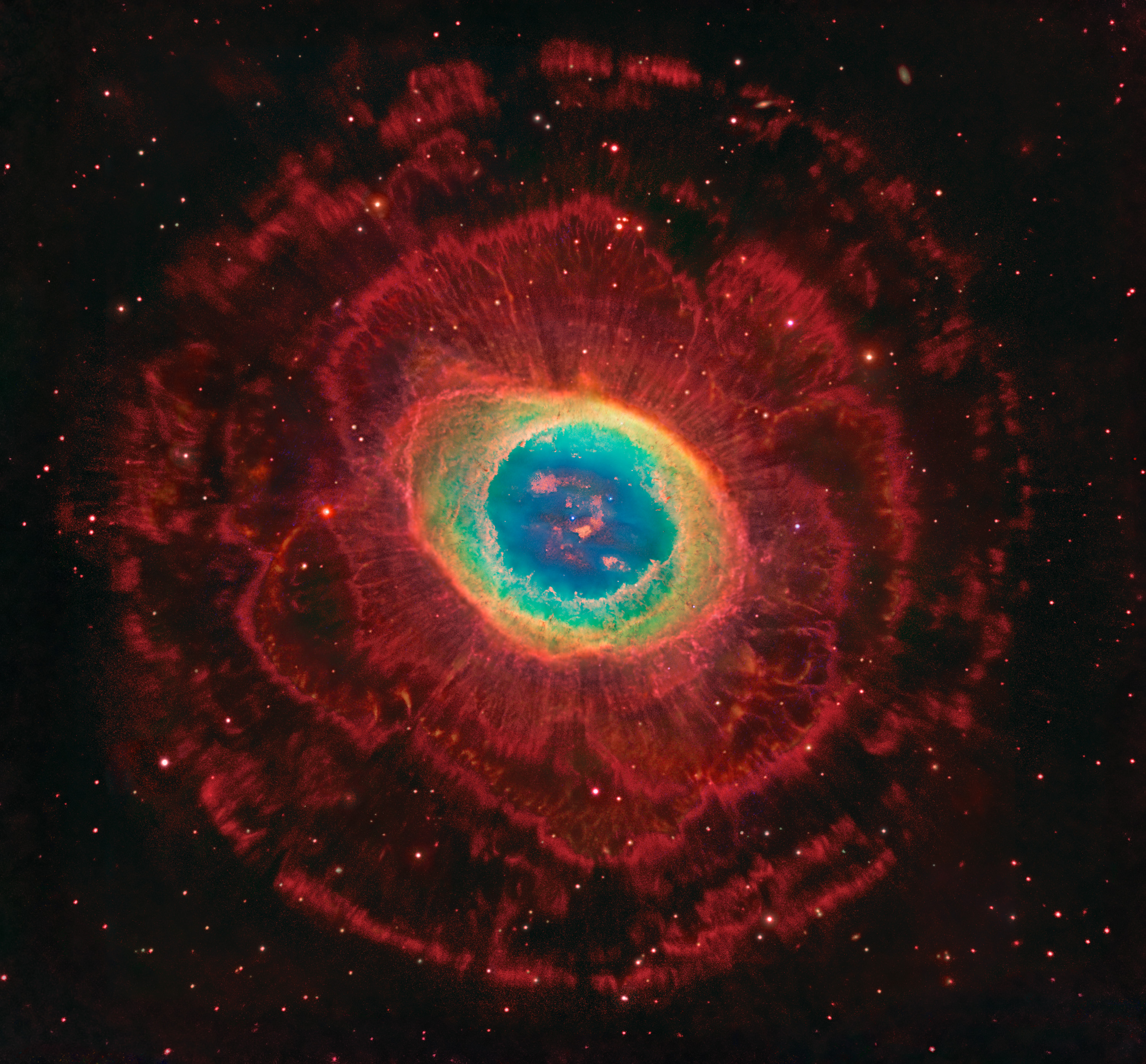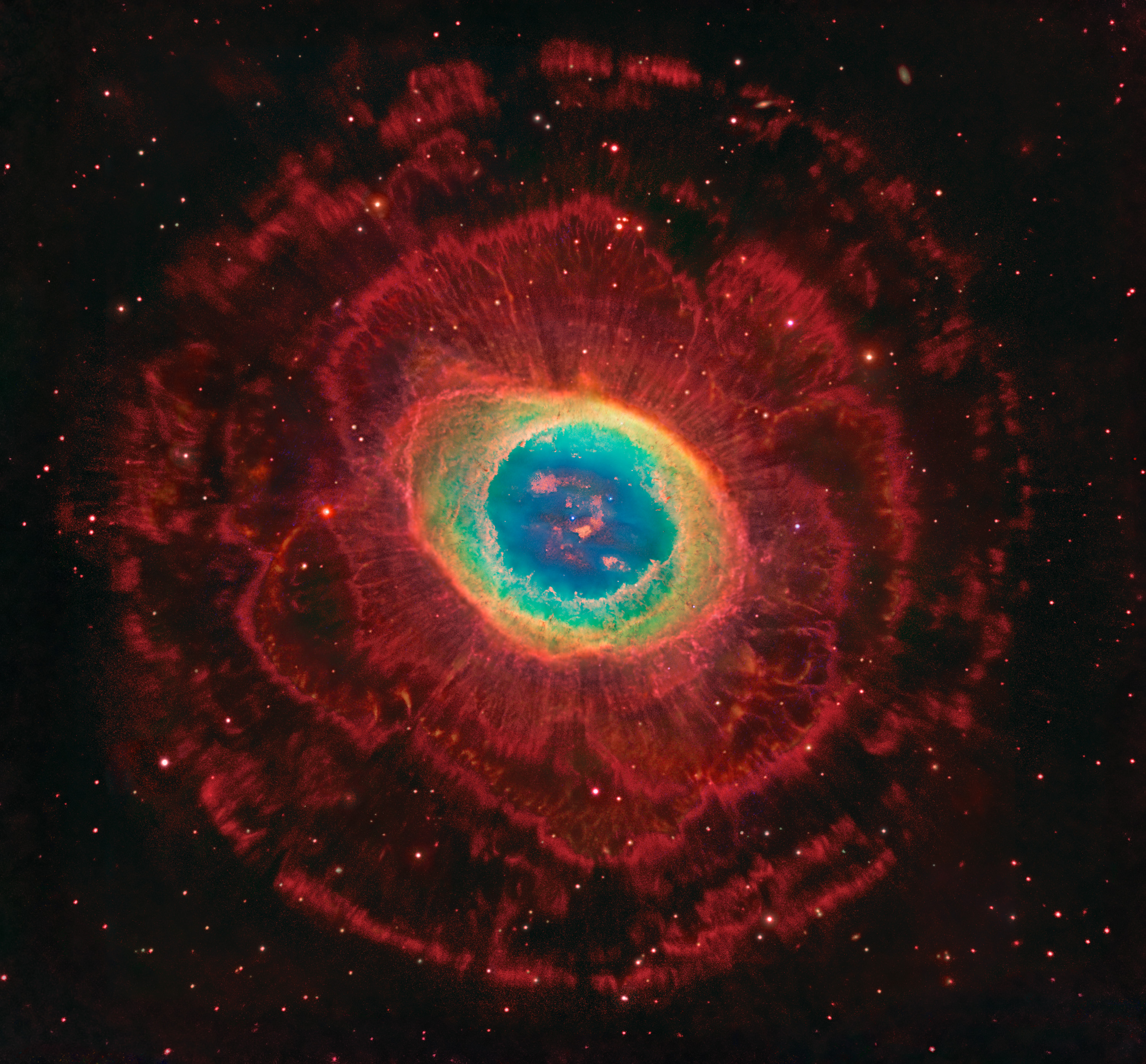
It is a familiar sight to sky enthusiasts with even a small telescope. There is much more to the Ring Nebula (M57), however, than can be seen through a small telescope. The easily visible central ring is about one light-year across, but this remarkably deep exposure - a collaborative effort combining data from three different large telescopes - explores the looping filaments of glowing gas extending much farther from the nebula's central star. This remarkable composite image includes narrowband hydrogen image, visible light emission, and infrared light emission. Of course, in this well-studied example of a planetary nebula, the glowing material does not come from planets. Instead, the gaseous shroud represents outer layers expelled from a dying, sun-like star. The Ring Nebula is about 2,000 light-years away toward the musical constellation Lyra. Follow APOD on: Facebook, Google Plus, or Twitter
Es un espectáculo familiar para los entusiastas del cielo que dispongan incluso de un pequeño telescopio. Sin embargo, la Nebulosa Anillo (M57) tiene mucho más que ofrecer de lo que se puede observar con un pequeño telescopio. El anillo central fácilmente visible tiene aproximadamente un año luz de diámetro, pero esta exposición profundamente detallada — un esfuerzo colaborativo que combina datos de tres grandes telescopios diferentes — revela los filamentos en espiral de gas brillante que se extienden mucho más allá de la estrella central de la nebulosa. Esta impresionante imagen compuesta incluye una imagen de banda estrecha de hidrógeno, emisión de luz visible y emisión de luz infrarroja. Por supuesto, en este ejemplo bien estudiado de una nebulosa planetaria, el material brillante no proviene de planetas. En su lugar, la envoltura gaseosa representa capas externas expulsadas por una estrella en su etapa final de vida, similar al Sol. La Nebulosa Anillo se encuentra a unos 2.000 años luz de distancia, hacia la constelación musical de Lira.