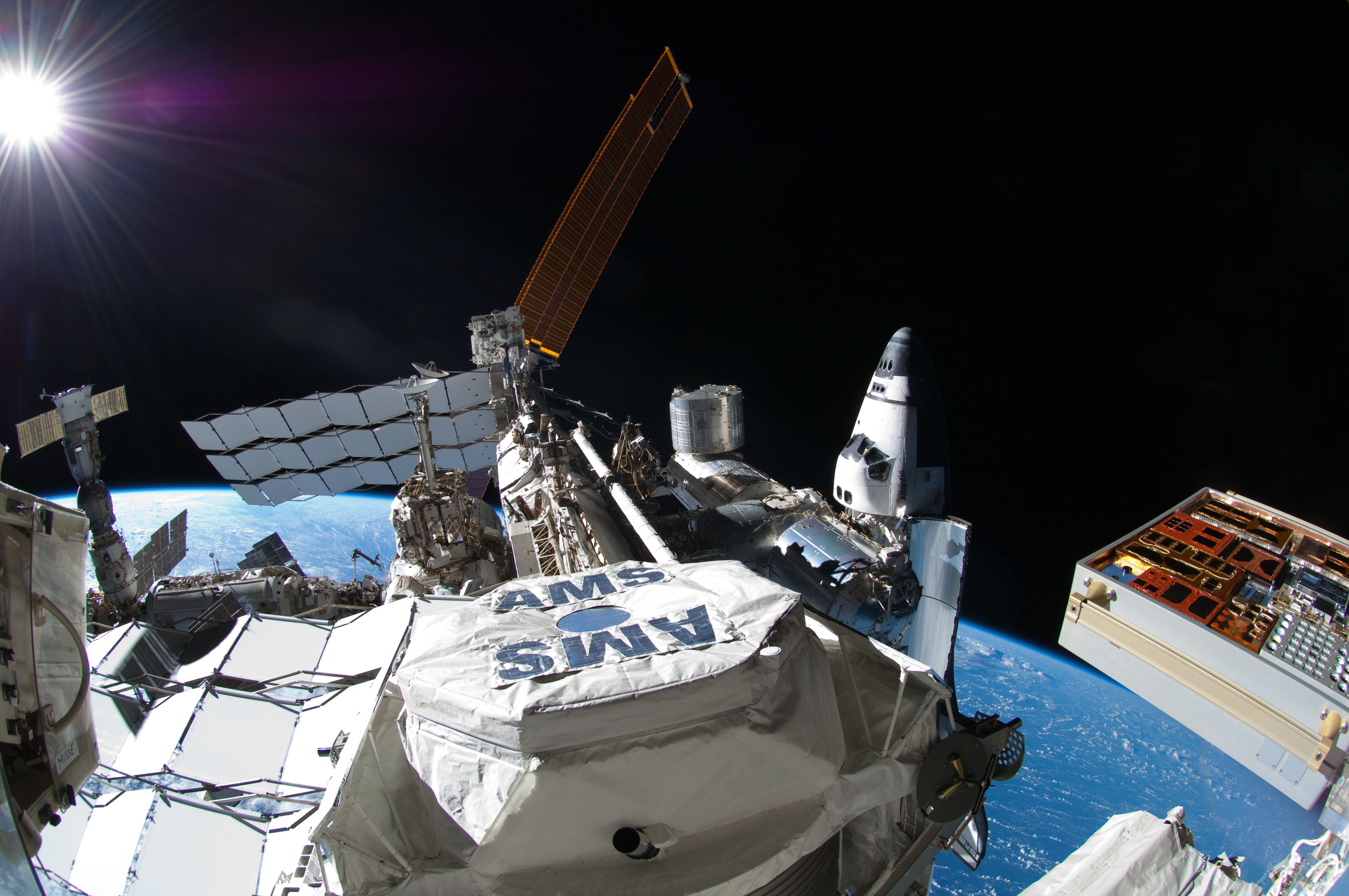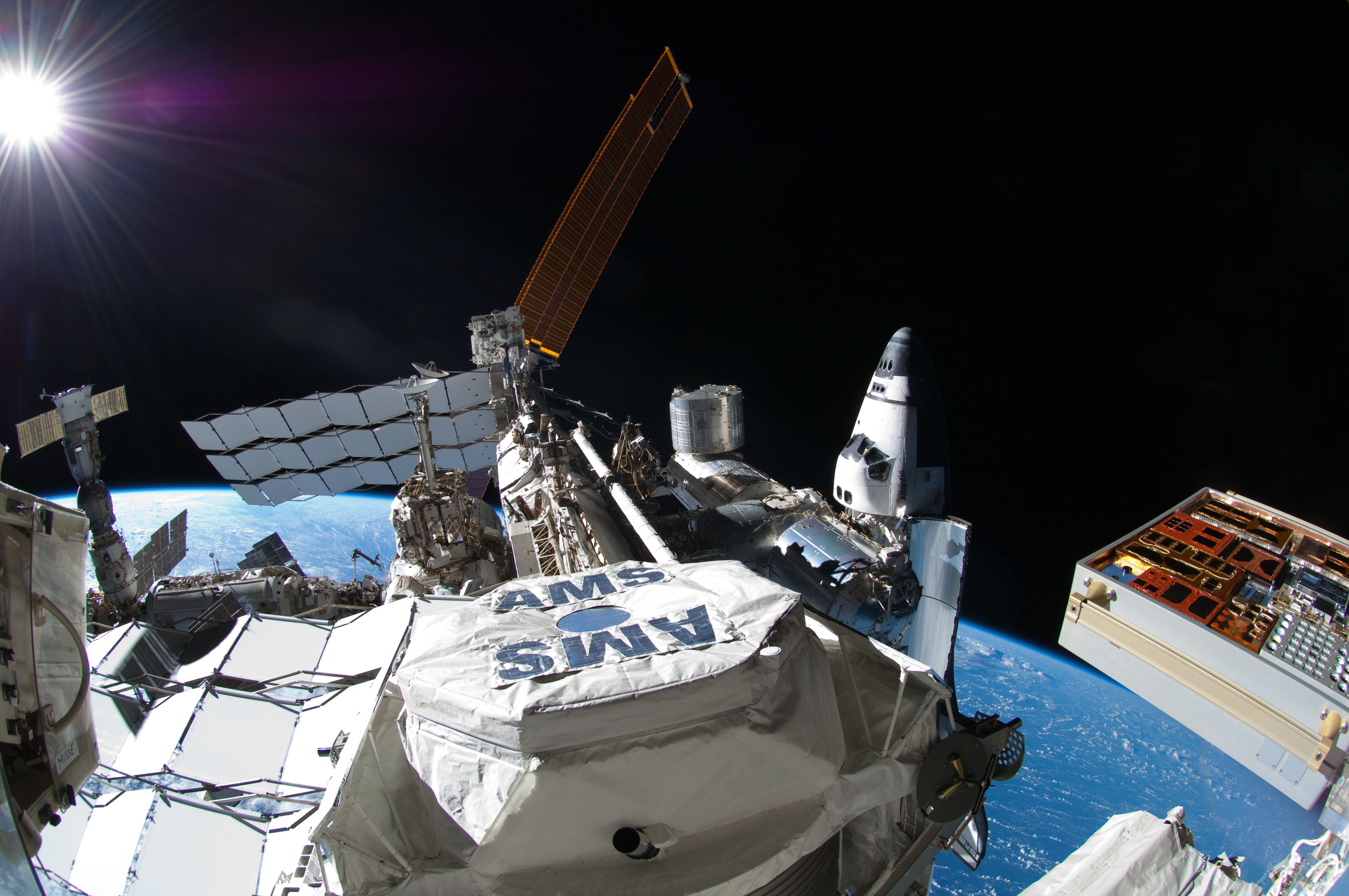
Where did all these high energy positrons come from? The Alpha Magnetic Spectrometer (AMS-02) onboard the International Space Station (ISS) has been meticulously recording how often it is struck by both high energy electrons and positrons since 2011. After accumulating years of data, it has now become clear that there are significantly more positrons than expected at the highest energies detected. The excess may have a very exciting and profound origin -- the annihilation of distant but previously undetected dark matter particles. However, it is also possible that astronomical sources such as pulsars are creating the unexplained discrepancy. The topic remains a very active area of research. Pictured here, the AMS is visible on the ISS just after being installed, with a US Space Shuttle docked on the far right, a Russian Soyuz capsule docked on the far left, and the blue Earth that houses all nations visible across the background. Follow APOD on: Facebook, Google Plus, or Twitter
¿De dónde provienen todos estos positrones de alta energía? El espectrómetro magnético Alfa (AMS-02), instalado en la Estación Espacial Internacional (ISS), ha estado registrando con precisión con qué frecuencia es golpeado tanto por electrones de alta energía como por positrones desde 2011. Tras acumular años de datos, ahora es claro que hay muchos más positrones de los esperados en las energías más altas detectadas. Este exceso podría tener una causa muy emocionante y profunda: la aniquilación de partículas de materia oscura distantes pero hasta ahora no detectadas. Sin embargo, también es posible que fuentes astronómicas como púlsares estén generando esta discrepancia inexplicable. El tema sigue siendo un área muy activa de investigación. En la imagen, el AMS es visible en la ISS poco después de su instalación, con una nave espacial estadounidense (Space Shuttle) amarrada a la derecha, una cápsula rusa Soyuz amarrada a la izquierda, y el planeta Tierra, azul, que alberga a todas las naciones, visible en el fondo.