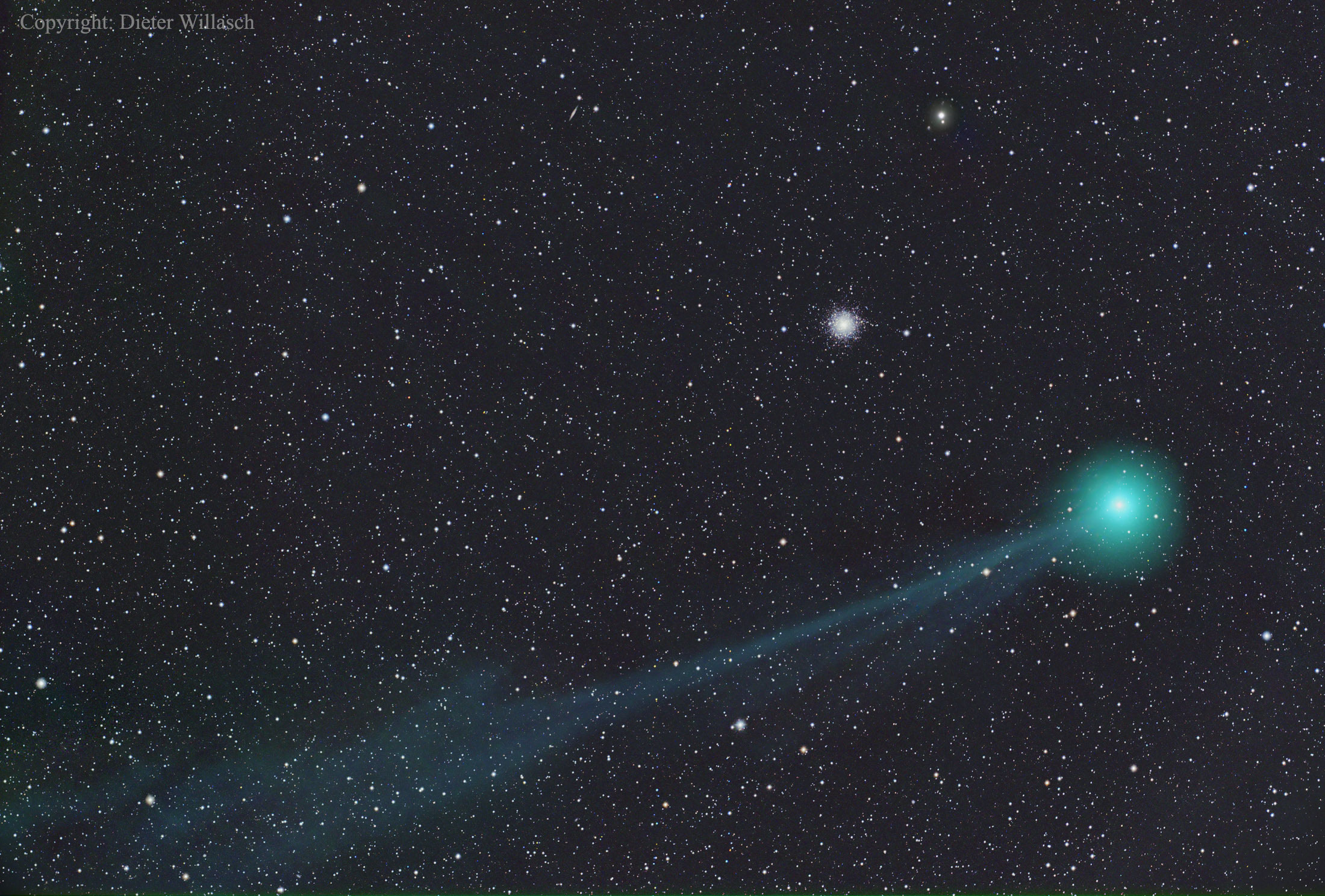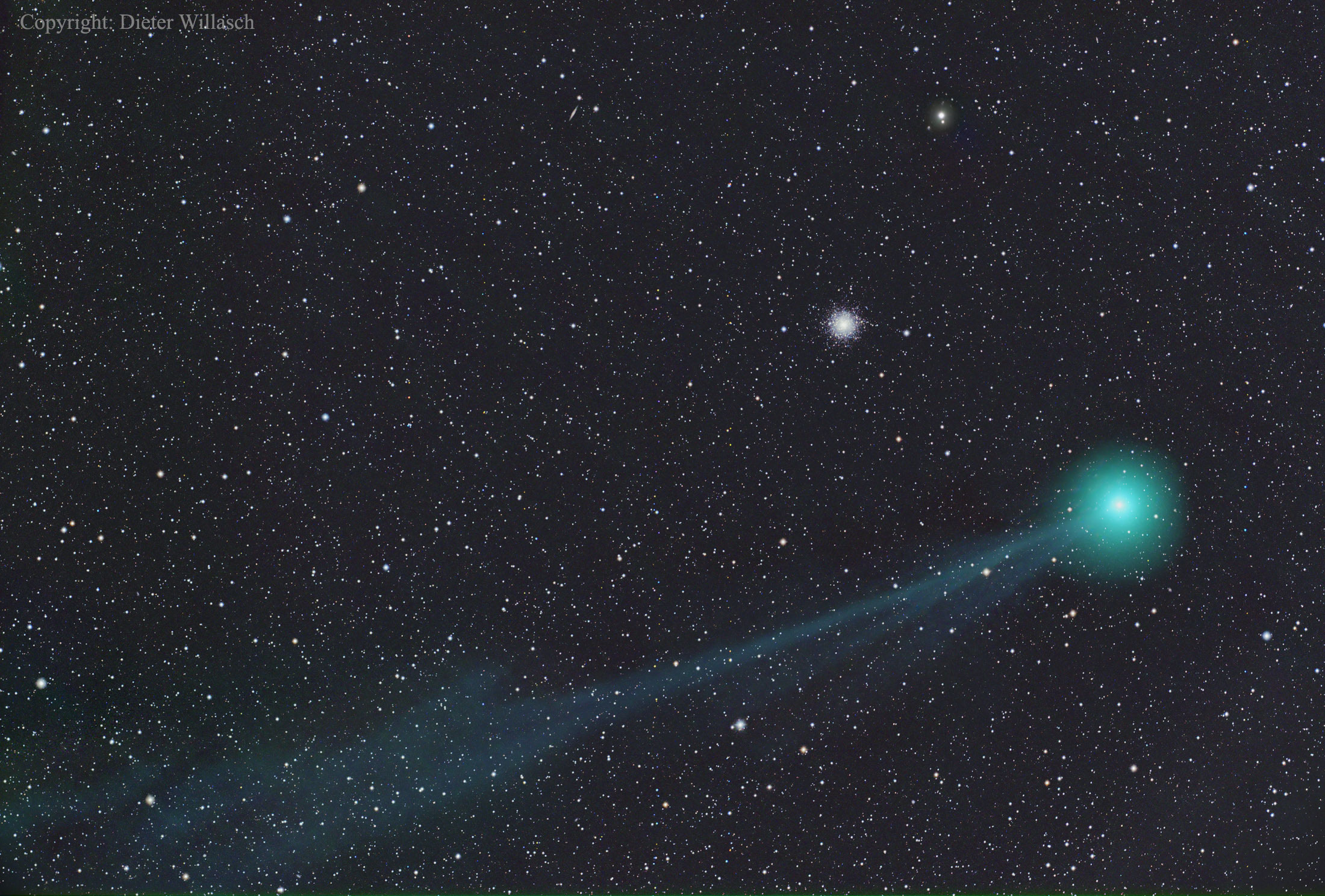
Comet Lovejoy has become visible to the unaided eye. To see the comet, just go outside an hour or so after sunset and look for a fuzzy patch to the right of Orion's belt. Binoculars and a star chart may help. Pictured here, Comet C/2014 Q2 (Lovejoy) was captured three days ago passing nearly in front of M79, the globular star cluster visible as the bright spot slightly above and to the left of the comet's green-hued coma. The nucleus of Comet Lovejoy is a giant dirty iceberg that is shedding gas into a long and intricate ion tail, extending across the image, as it nears the Sun. The comet is expected to become even easier to spot for northern observers during January, as it is rises earlier and, hopefully, continues to brighten.
El Cometa Lovejoy ya es visible a simple vista. Para ver el cometa, simplemente salga al exterior una hora o así después del atardecer y busque un parche difuso a la derecha de la cintura de Orión. Los binoculares y un mapa estelar pueden ayudar. En la imagen, el Cometa C/2014 Q2 (Lovejoy) fue capturado hace tres días pasando casi frente a M79, el cúmulo estelar globular visible como el punto brillante ligeramente arriba y a la izquierda de la coma verde del cometa. El núcleo del Cometa Lovejoy es un gran iceberg sucio que está liberando gas hacia una larga y compleja cola de iones, que se extiende a través de la imagen, a medida que se acerca al Sol. Se espera que el cometa sea aún más fácil de observar para los observadores del norte durante enero, ya que se levanta más temprano y, con suerte, continúa brillando más.