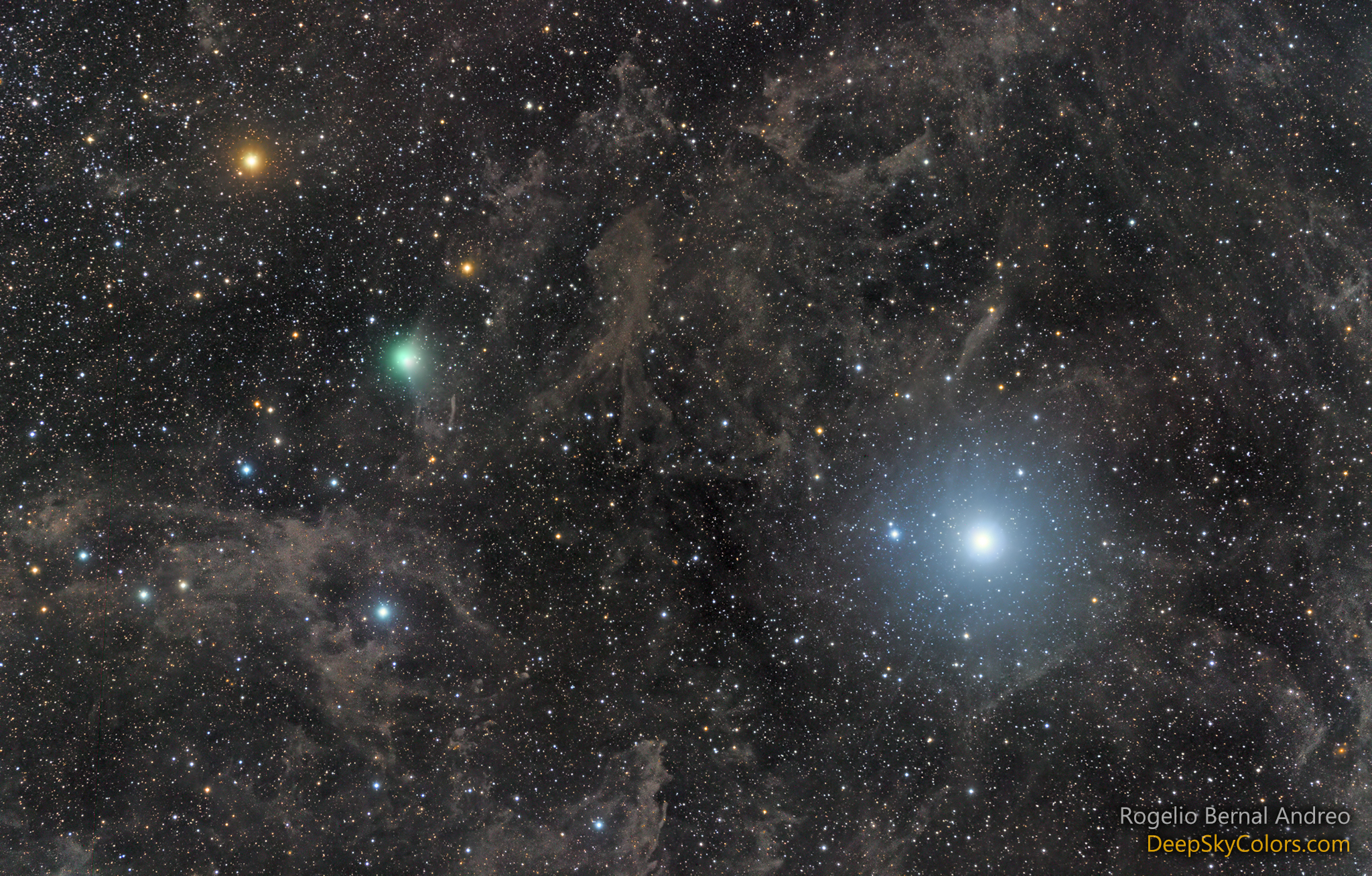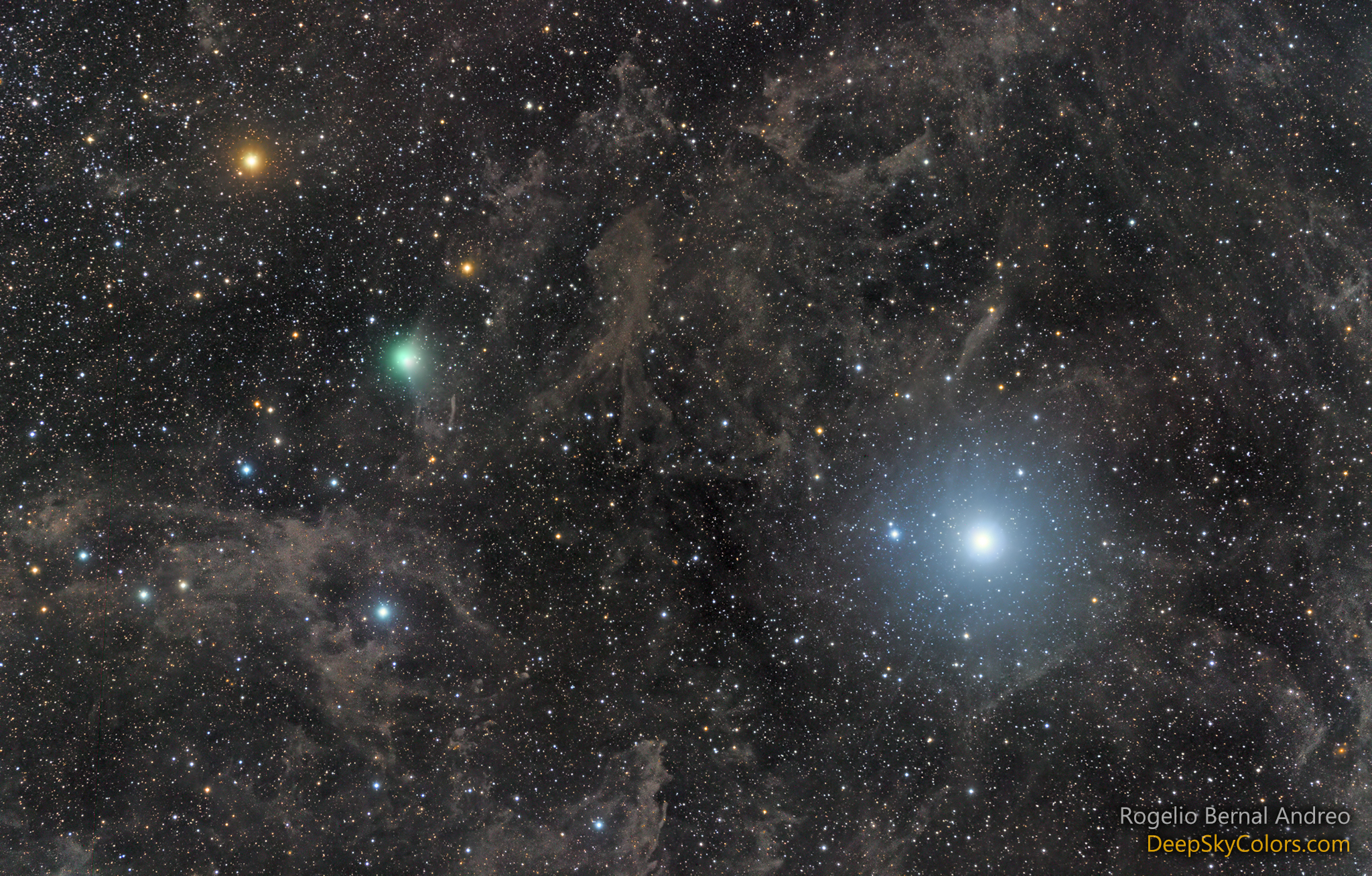
One of these two bright sky objects is moving. On the right is the famous star Polaris. Although only the 45th brightest star in the sky, Polaris is famous for appearing stationary. Once you find it, it will always appear in the same direction -- all night and all day -- for the rest of your life. This is because the northern spin pole of the Earth -- called the North Celestial Pole -- points near Polaris. On the left, about ten million times closer, is Comet Lovejoy, which noticeably changes its sky position by the hour. The featured image was taken last week. Officially designated C/2014 Q2 (Lovejoy), this disintegrating snowball is on a visit from the outer Solar System and will only appear near the North Star for a few more weeks. That should be long enough, however, for northerners with binoculars or a small telescope to see the greenish coma of this fleeting newcomer, perhaps with the help of a good star map.
Uno de estos dos objetos brillantes en el cielo está en movimiento. A la derecha se encuentra la famosa estrella Polaris. Aunque solo es la 45ª estrella más brillante del cielo, Polaris es famosa por parecer estacionaria. Una vez que la localices, siempre aparecerá en la misma dirección — durante toda la noche y durante todo el día — para el resto de tu vida. Esto se debe a que el polo norte de rotación de la Tierra — llamado Polo Celeste Norte — apunta cerca de Polaris. A la izquierda, aproximadamente diez millones de veces más cerca, se encuentra el cometa Lovejoy, que cambia notablemente su posición en el cielo cada hora. La imagen destacada fue tomada la semana pasada. Oficialmente designado C/2014 Q2 (Lovejoy), este núcleo en desintegración es visitante procedente del Sistema Solar exterior y solo aparecerá cerca de la Estrella Polar durante unas pocas semanas más. Eso debería ser suficiente tiempo, sin embargo, para que los habitantes del norte con binoculares o un pequeño telescopio puedan ver la coma verde de este visitante efímero, quizás con la ayuda de un buen mapa estelar.